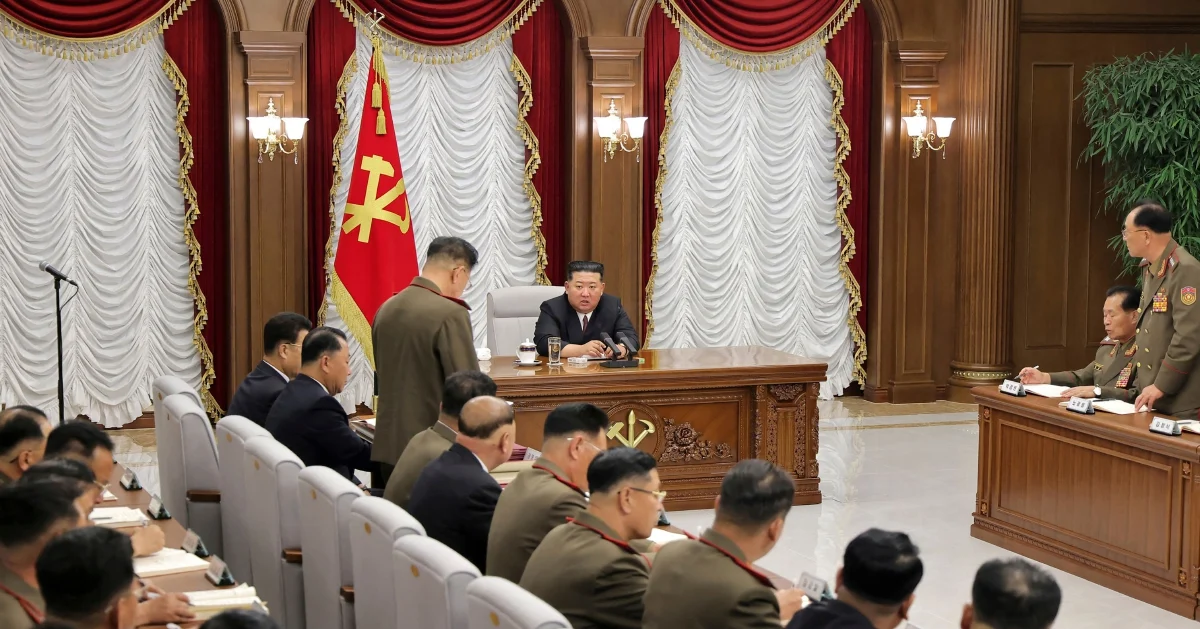
In a striking display of internal party discipline, North Korean leader Kim Jong Un has ordered the removal of a prominent military official from the Workers' Party of Korea following allegations of graft and bribery. The move, disclosed by Pyongyang's state media outlets, marks a rare public acknowledgement of corruption within the regime's defence establishment and underscores the leader's assertion of control over the military hierarchy.
The official expulsion represents a significant moment in North Korean politics, where high-level personnel changes are typically shrouded in secrecy. By characterizing the alleged misconduct as a "political crime," Kim Jong Un has elevated the severity of the charges beyond mere administrative malfeasance, signalling both zero tolerance for dishonesty within the party apparatus and the leadership's determination to maintain ideological purity among senior cadres. The public nature of the rebuke distinguishes this case from previous instances of quiet removals that often passed without official acknowledgement.
Corruption within authoritarian regimes like North Korea exists within a complex framework where personal enrichment blurs uncomfortably with state interests. Military officials in command of resources, procurement decisions, and logistical networks occupy positions uniquely suited to divert state assets for personal gain. The alleged bribery suggests a systemic vulnerability in oversight mechanisms, particularly acute given the military's expanded role in managing North Korea's civilian economy following the 1990s famine crisis. The fact that such misconduct became sufficiently visible to trigger intervention from the highest levels indicates either a particularly egregious breach or a deliberate decision to make an example.
For regional observers and analysts monitoring North Korea, the purge carries implications extending beyond personnel management. Military cohesion and loyalty form foundational pillars supporting Kim Jong Un's rule, particularly following the dramatic executions and removals that characterised his early years in power. The corruption allegations might reflect broader governance challenges as the regime navigates economic sanctions, chronic resource scarcity, and the need to maintain elite consensus around increasingly austere policies.
The timing and public disclosure also merit attention. North Korea's leadership typically manages party discipline through quiet removals, demotion, or worse, making such an explicit denunciation unusual. The decision to publicize this action through state media suggests either a confidence-building measure aimed at projecting competent governance, or a warning to other officials regarding the consequences of financial impropriety. Given the regime's chronic foreign currency shortages and pervasive black market activities involving military personnel, the message may be directed at preventing further leakage of state resources.
For Southeast Asian nations with strategic interests in Korean peninsula stability, such internal developments warrant careful monitoring. Military discipline and institutional health directly affect the predictability and rationality of regime behaviour. A military establishment weakened by corruption, infighting, or loss of confidence in leadership could theoretically increase volatility, though equally, it might suggest a functioning hierarchical structure capable of self-correction—a counterintuitive indicator of stability.
The broader context of North Korean elite politics reveals constant tension between Kim Jong Un's need to demonstrate competent governance and the reality of a system inherently prone to corruption through lack of transparency and rule of law. Military officials control vast resources and command significant personnel, creating natural opportunities for enrichment in an environment where legal redress mechanisms are absent and state accountability is theatrical rather than substantive. The alleged briber and bribe-taker in this case likely operated within a murky space where patronage networks and informal economies supplement official state structures.
Pyongyang's characterization of the misconduct as a political rather than criminal matter carries ideological weight within North Korea's Marxist-Leninist framework. By framing corruption as a political crime, the regime positions it as a betrayal of socialist principles and party discipline rather than a procedural violation, thereby justifying harsh punishment and extensive party investigation. This rhetorical framing enables the leadership to address endemic systemic problems while maintaining the facade of an internally cohesive, principled revolutionary party.
Comparatively, corruption purges serve different functions across authoritarian systems. In China, anti-corruption campaigns function as mechanisms for factional struggle and consolidating power. In Russia, they demonstrate state capacity and serve as warnings to elites. In North Korea's context, public denunciations are rarer and potentially more destabilizing, making this episode noteworthy as an exception to typical patterns of opacity surrounding disciplinary actions against senior figures. The willingness to acknowledge such problems publicly may reflect either a calculated confidence in regime stability or acknowledgement of corruption so widespread that concealment becomes counterproductive.
Moving forward, observers should track whether this expulsion initiates a broader anti-corruption campaign within military structures or represents an isolated corrective action against a particularly flagrant offender. The pattern of follow-up actions, if any, will indicate whether Kim Jong Un intends substantive reforms or merely symbolic gestures intended to project competence and control to both internal and external audiences.

