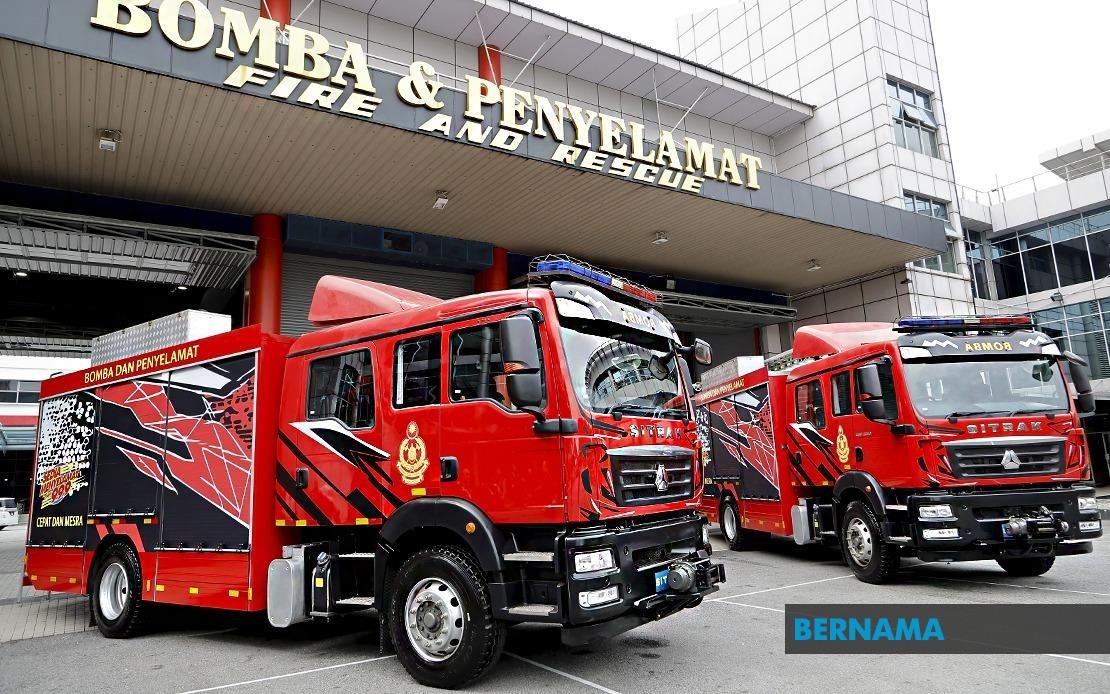
A moderate earthquake centred in North Sumatra sent tremors rippling across the Klang Valley on July 22, setting off a coordinated emergency response from Malaysia's Fire and Rescue Department (JBPM) and prompting hundreds of residents to seek reassurance on social media. The seismic event, which measured 5.7 on the Richter scale with its epicentre approximately 55 kilometres southwest of Langsa in Indonesia, was felt at multiple high-profile locations across the metropolitan area, though detailed structural assessments quickly confirmed that no significant damage had occurred.
The emergency response began shortly after the initial tremor, with JBPM receiving its first alert at 12.31 pm—just thirteen minutes after the earthquake struck at 12.18 pm. According to Selangor JBPM's assistant director of operations Ashrul Riezal Asbar, the Kajang Municipal Council building was the site of the initial report. The second notification came within nine minutes at the INTI International College Subang campus along Jalan SS15, while a third emergency call reached the Kuala Lumpur branch at 12.32 pm regarding tremors detected in Menara B2 Maju Link at Bandar Tasik Selatan.
Rapid deployment of trained teams proved essential to public reassurance. Fire and rescue personnel from the Kajang and Subang Jaya stations arrived at their respective locations and conducted comprehensive structural evaluations, discovering no cracks or signs of instability in either facility. The thorough nature of these inspections underscores the professional protocols that JBPM activates whenever seismic activity affects inhabited structures, an important consideration given Malaysia's position in a region where occasional earthquake activity from neighbouring Indonesia is not uncommon.
At Menara B2 Maju Link, the response revealed a textbook emergency scenario. Upon arrival, the Sungai Besi station team found that building occupants had already executed a voluntary evacuation, gathering in open areas after experiencing approximately fifteen seconds of continuous shaking. The precautionary measure reflected appropriate safety awareness among the building's occupants, though the subsequent structural inspection by qualified rescue personnel determined that the tremors had caused no cracks, damage, or compromise to the building's integrity.
The psychological dimension of the earthquake became evident through the digital responses that flooded social media platforms, particularly Threads, where residents sought mutual confirmation and reassurance about what they had experienced. Many individuals in the Klang Valley expressed initial uncertainty about the cause of the shaking, with some wondering whether the sensations they felt were genuine seismic activity or merely the vibrations from heavy vehicles or construction work. The rapid circulation of posts and comments on social media effectively served as a grassroots early warning system, allowing residents across dispersed areas to quickly establish that the tremors were indeed genuine and widespread.
One Threads user from Shah Alam's Section 26 posted a brief account of the tremors, describing the experience in real time as the event unfolded. Another user documented how workplace distractions initially prevented her from recognizing the tremor's true cause. As she continued working, her table began shaking unexpectedly, a sensation she initially attributed to her own perception or imagination. Only when she consulted her colleagues and cross-referenced multiple social media sources did she confirm that the movement was indeed earthquake-related, highlighting how social networks have become essential sources of corroborating information during acute events.
The geographic distribution of reported tremors across Kajang, Subang Jaya, and Bandar Tasik Selatan demonstrates how waves of seismic energy can propagate across considerable distances, particularly through densely built environments where buildings act as sensitive indicators of ground movement. The Klang Valley's concentration of commercial and residential high-rises means that relatively modest earthquakes originating across the Strait of Malacca can be detected by numerous sensitive occupants, many of whom have become accustomed to perceiving minor seismic events that official monitoring systems may not necessarily highlight for public attention.
For Malaysian readers, this incident serves as a reminder of the country's exposure to seismic phenomena originating in the highly active Indonesian archipelago, particularly the Sumatran subduction zone where significant tectonic stress accumulates. While most tremors detected in Malaysia cause no damage, the professional protocols demonstrated by JBPM during this event illustrate the institutional readiness that protects public safety. The department's capacity to dispatch teams rapidly and conduct comprehensive structural assessments provides an essential layer of assurance that buildings housing thousands of daily occupants are regularly vetted for safety.
The episode also underscores the evolving role of social media in crisis communication. Rather than relying solely on official channels or waiting for formal alerts, residents increasingly use digital platforms to crowdsource information and verify their own observations. This decentralized approach to information gathering has both advantages and challenges: while it facilitates rapid community awareness, it can also amplify uncertainties and occasionally spread misinformation if users lack technical knowledge about seismic phenomena.
As regional development continues to intensify across Southeast Asia, understanding earthquake dynamics and ensuring that building codes adequately protect occupants becomes increasingly important. Malaysia's relatively stable position within the tectonic framework means that severe earthquakes are uncommon, but the country's proximity to Indonesia's seismically active zones ensures that tremor-related alerts will continue to occur periodically. The professionalism demonstrated by Malaysia's emergency services during this routine but important event demonstrates institutional capacity that, while often taken for granted during calm periods, becomes vital during actual crises.

