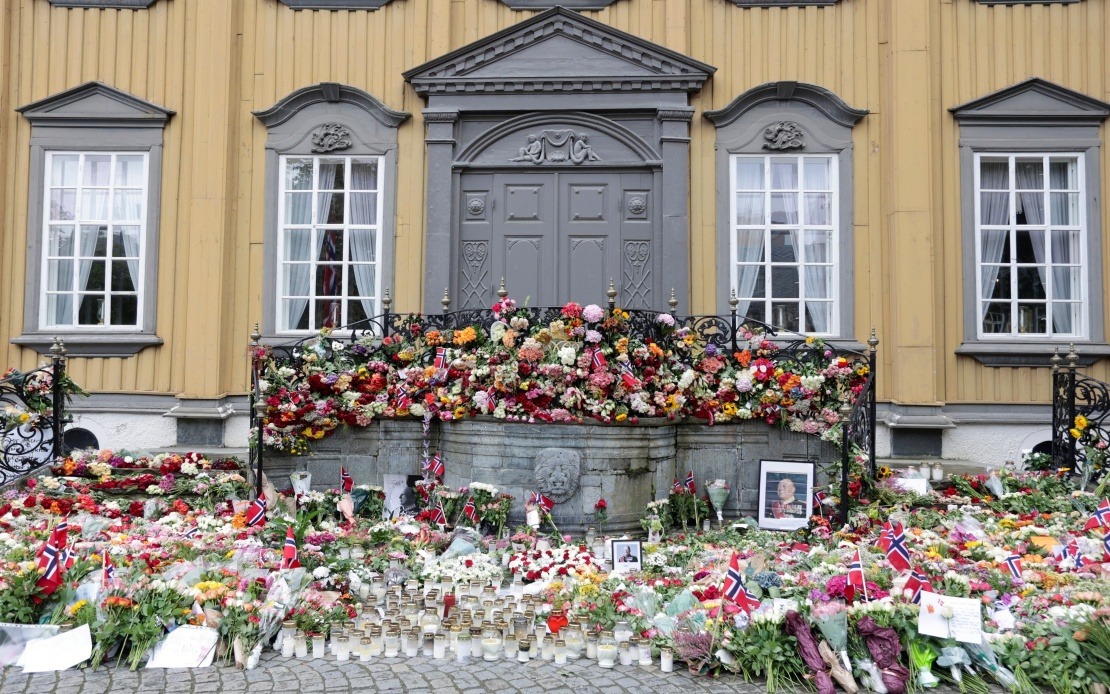
Norway observed a day of national mourning on Sunday as churches and cathedrals throughout the kingdom opened their doors for memorial services honouring King Harald V, who died on Friday aged 89. The comprehensive observance underscored the deep affection held by the Norwegian people for their late sovereign, whose reign spanned decades of significant change and development in the Scandinavian nation.
From the capital city of Oslo to the northern reaches of the country, tens of thousands of Norwegians gathered in places of worship to pay their respects and reflect on the monarch's legacy. The turnout demonstrated the widespread emotional connection citizens maintained with their royal house, a connection rooted in Norway's unique form of constitutional monarchy that positions the king as an accessible and valued symbol of national unity.
Outside the Royal Palace in Oslo, growing tributes accumulated throughout the day as citizens left flowers, candles, and handwritten messages expressing their grief and gratitude. These spontaneous displays of mourning are characteristic of how Norwegians publicly grieve significant national figures, transforming public spaces into collective memorials where individual sorrow becomes shared national experience.
The Norwegian Royal House formally announced that the state funeral will take place on September 9, providing the nation with a defined moment to bid final farewell to the late king. The timing allows for proper ceremonial preparation and provides citizens and international dignitaries with opportunity to attend what is expected to be one of Norway's most significant state occasions in recent memory.
King Harald V's passing marks the end of an era in Norwegian monarchy. His reign witnessed Norway's evolution from a relatively isolated Nordic nation to an integrated participant in European affairs, even as the country maintained its independence from the European Union. His leadership during this period helped navigate complex questions of national identity while preserving traditional values.
Under the established rules of succession in Norway's constitutional framework, Harald V's eldest son immediately assumed the throne upon his father's death. The new monarch, aged 53, has adopted the regnal name Haakon VIII, continuing a naming tradition that honours the medieval kings of Norway. This smooth and immediate transition exemplifies the stability that constitutional monarchy provides to the Nordic state system.
The accession of Haakon VIII represents a generational shift in Norwegian leadership. As crown prince, he had undertaken an extensive public role, gradually assuming greater responsibilities and public engagement. His elevation to the throne marks the completion of a succession process that has been carefully planned and executed over many years, ensuring institutional continuity during a period of national transition.
For Malaysian observers of European affairs, Norway's response to its king's death illustrates the particular way Nordic societies balance modernity with tradition. The spontaneous public mourning, the orderly succession, and the planned state ceremony all reflect a culture where monarchy remains integrated into contemporary democratic life rather than relegated to ceremonial irrelevance. This contrasts with some other constitutional systems and demonstrates how different democracies can maintain ceremonial institutions while preserving substantive democratic governance.
The funeral on September 9 will provide an opportunity for the international community to recognise Norway's transition and extend formal respects to both the late king's memory and his successor. Heads of state and government officials from across Europe and beyond are expected to attend, transforming the ceremony into a significant diplomatic occasion that will reinforce Norway's place within European and international affairs.
As Haakon VIII begins his reign, he inherits not only the symbolic authority of the Norwegian throne but also the practical responsibilities of representing his nation both domestically and internationally. The new king enters his role with the advantage of extensive preparation and the goodwill demonstrated by the public response to his father's passing, elements that typically support a smooth and successful transition in constitutional monarchies.

