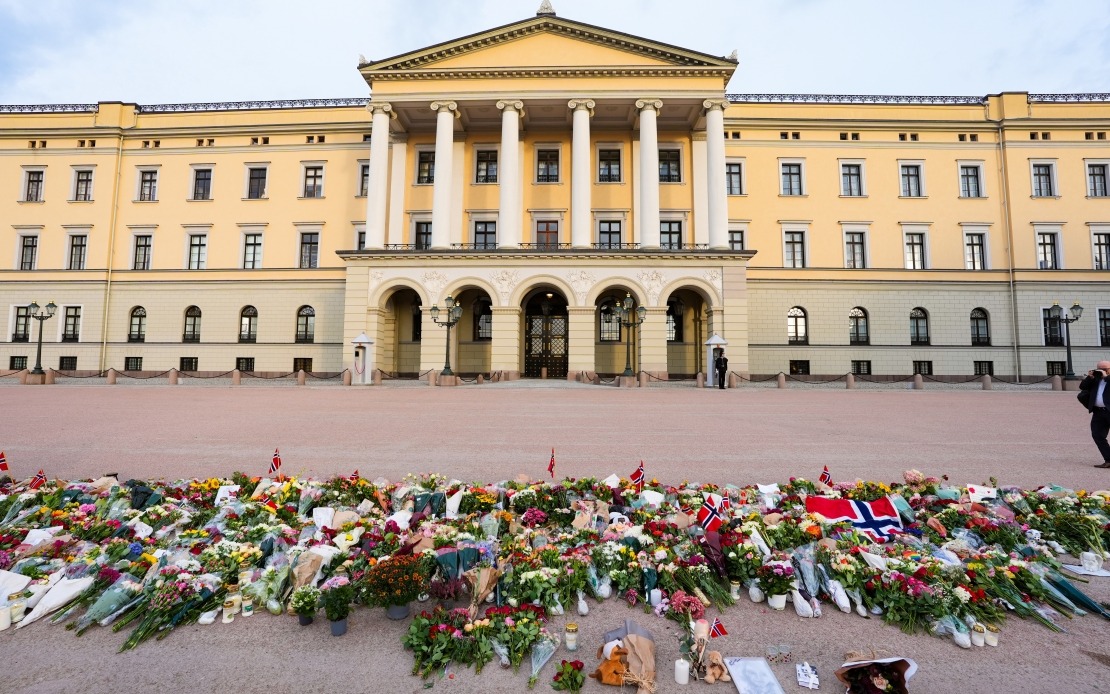
Norway's King Harald V passed away Friday morning, bringing to a close one of Europe's longest reigning monarchies. The 89-year-old sovereign died peacefully at the National Hospital in Oslo at 6:35 am local time, according to an announcement from the Royal Palace. His passing marks the end of a 35-year reign that saw the Nordic nation navigate significant political and social transformations while maintaining its constitutional monarchy framework.
The king's hospitalization began on August 17 following a routine medical examination, but his condition deteriorated more rapidly than initially anticipated. Palace officials subsequently revealed that Harald had been undergoing cortisone treatment for hemolytic anemia, a blood disorder characterized by the destruction of red blood cells. This condition had led to fluid accumulation throughout his body, complicating his overall health status in his final years.
According to Norwegian public broadcaster NRK, the monarch's decline accelerated when he developed a bacterial infection in his bloodstream while hospitalized. This sepsis-like development represented a critical turning point in his condition, ultimately proving fatal despite medical interventions. The palace's announcement that he had "passed away peacefully" suggested his death came without prolonged suffering, a detail that resonated across Scandinavia and beyond.
Under Norway's constitutional framework, succession operates automatically without formal coronation ceremonies or the elaborate rituals seen in some neighboring European monarchies. Crown Prince Haakon immediately assumed the throne following his father's death, becoming Norway's new head of state. The government has scheduled an extraordinary Council of State meeting at the Royal Palace where the new monarch will be formally received, and his official regnal name will be announced—though he is expected to continue as King Haakon VII.
The new king is obligated under the Norwegian Constitution to take an oath before parliament, a requirement that underscores Norway's parliamentary democracy principles and the constitutional limitations placed on monarchical power. This ceremony will likely occur within weeks, formalizing his accession before the nation's legislative body. The absence of coronation pageantry reflects Norway's modern approach to monarchy, where ceremonial grandeur takes secondary importance to constitutional procedure and democratic legitimacy.
Harald's ascension to the throne came on January 17, 1991, following the death of his father, King Olav V. His three-and-a-half-decade reign witnessed Norway's continued integration into Western institutions, its management of North Sea oil wealth, and its navigation of evolving social attitudes toward the monarchy itself. Throughout his tenure, Harald cultivated a reputation as a relatively accessible and engaged monarch, participating in cultural activities and maintaining public visibility in ways that strengthened the institution's contemporary relevance.
At the time of his death, Harald held the distinction of being Europe's oldest reigning monarch—a position that reflected both the longevity of modern monarchies and the exceptional health span of contemporary European royals. His longevity allowed for an extraordinarily extended period of institutional stability, though it also meant that questions about succession planning and generational change within the monarchy had dominated Norwegian political discourse in recent years.
The transition to King Haakon VII represents a significant generational shift for Norway. The new monarch, born in 1973, represents a different era of Nordic royal leadership, having come of age during Norway's modern period as an oil-rich nation and advanced democracy. His accession will likely see gradual adjustments in how the monarchy engages with contemporary issues including climate change, technological transformation, and evolving European geopolitical challenges.
For Malaysia and broader Southeast Asia, Harald's death and Norway's seamless succession exemplify constitutional monarchy operating at its most institutionally mature. Unlike some regional contexts where succession questions generate political tension, the Norwegian transition demonstrates how clear constitutional rules and established democratic norms can ensure stability during moments of dynastic change. The absence of coronation spectacle or contested succession reflects a monarchy deeply embedded within functioning parliamentary democracy rather than existing as a parallel source of political authority.

