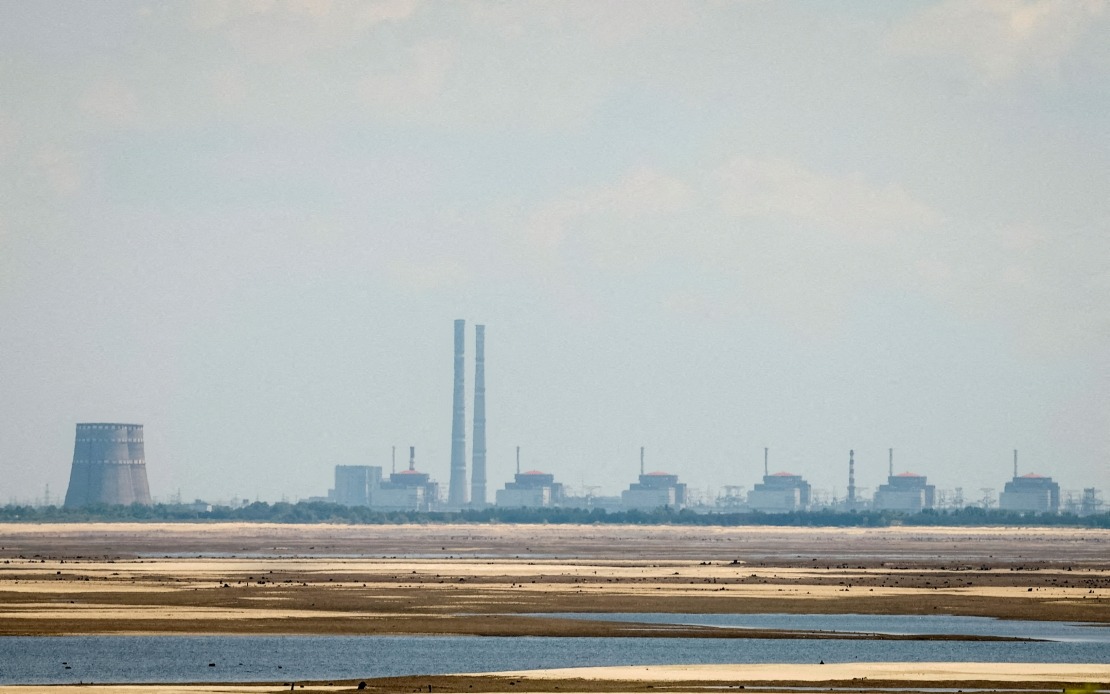
Europe's largest nuclear power station has experienced yet another critical infrastructure failure, marking the 21st occasion in which the Zaporizhzhia Nuclear Power Plant has been severed from its external electricity supply since the Ukraine crisis intensified. The latest incident, which occurred when the facility lost connection to the 330 kV Ferosplavna-1 transmission line, represents a recurring nightmare for nuclear regulators worldwide and underscores the precarious position in which this essential energy asset now finds itself.
The International Atomic Energy Agency, which maintains a permanent monitoring presence on site, attributes the outage directly to military activity in the region. According to their assessment, combat-related operations triggered the electrical protection systems governing the transmission lines that connect the Zaporizhzhia facility to the broader power grid. This pattern of disruptions—occurring 21 times in a matter of months—reveals the extent to which geopolitical conflict has penetrated into the technical infrastructure supporting one of the world's most consequential nuclear installations.
When external power sources become unavailable, nuclear facilities depend entirely upon backup systems to prevent catastrophic failure. At Zaporizhzhia, the emergency diesel generators engaged automatically following the transmission line disconnection, assuming responsibility for powering the cooling systems that keep the reactor cores stable and the spent fuel pools manageable. This redundancy exists precisely because nuclear operators understand that continuous cooling is non-negotiable; any sustained interruption could precipitate a meltdown with continental ramifications.
International Atomic Energy Agency Director General Rafael Grossi has used increasingly forceful language to characterise the situation, warning that the plant now exists in a state of extreme fragility. His recent statement emphasises that nuclear safety at Zaporizhzhia has become hostage to military developments beyond the facility's control. The IAEA chief calls explicitly for maximum military restraint from all parties operating in the vicinity, recognising that the primary mechanism preventing disaster is the restraint of armed actors rather than technical safeguards alone—an unusual and deeply troubling position for nuclear regulators to occupy.
The vulnerability extends beyond simple power loss incidents. Each disruption to external supply forces the facility to rely on finite diesel fuel reserves and aging backup generators, systems designed for occasional emergency use rather than the sustained, recurring demand now being placed upon them. Every activation cycle introduces wear and increases the likelihood of mechanical failure at precisely the moment when failure would prove most catastrophic. Engineers at nuclear stations worldwide understand that redundancy degrades with use, and the frequency of activation at Zaporizhzhia has far exceeded normal operational expectations.
Since the Ukraine conflict escalated, the Zaporizhzhia plant has transformed from a routine energy producer into a symbol of fragility in the modern geopolitical order. The facility, which sits within a contested zone, cannot be reliably supplied by conventional electrical networks because those networks have themselves become military targets or collateral damage zones. This creates a self-reinforcing cycle: military activity damages transmission infrastructure, forcing reliance on emergency generators, which then consume resources at unsustainable rates while remaining vulnerable to further disruption.
For Southeast Asian observers and policymakers, the Zaporizhzhia experience offers troubling lessons about nuclear facility vulnerability during regional conflict. Most ASEAN nations maintain or contemplate nuclear energy programmes, and the Ukrainian case demonstrates that physical distance from active combat zones may prove insufficient protection. Modern warfare, characterised by long-range strike capabilities and infrastructure targeting, can render nuclear facilities dangerously unstable even when direct military assault is not the primary objective.
The 21 power loss incidents also raise questions about the adequacy of international nuclear governance frameworks during conflict. The IAEA, despite its presence on site and its technical expertise, possesses limited enforcement capacity when military actors prioritise strategic objectives over nuclear safety considerations. This gap between technical knowledge and political enforcement capability represents a systemic vulnerability in the global nuclear safety architecture, one that affects not only Zaporizhzhia but potentially any civilian nuclear facility situated near zones of armed conflict.
The recurring pattern of outages demonstrates that temporary measures and emergency protocols, however well-designed, cannot serve as permanent solutions to infrastructure instability caused by military operations. The international community faces an uncomfortable reality: nuclear safety ultimately depends upon cessation of hostilities in the immediate vicinity rather than upon engineering ingenuity or regulatory vigilance. This represents a fundamental challenge to the post-Cold War assumption that nuclear energy could develop safely within contexts of relative international stability.
Looking forward, the Zaporizhzhia situation will likely influence nuclear policy discussions throughout Asia-Pacific and beyond. Nations considering nuclear expansion programmes must now factor in conflict-related infrastructure vulnerability as a genuine operational risk rather than a theoretical concern. The facility's precarious condition serves as a stark reminder that nuclear power stations, whatever their benefits and efficiencies, require political stability and respect for civilian infrastructure as prerequisites for safe operation—conditions increasingly difficult to guarantee in modern geopolitical environments.

