The Organisation of Islamic Cooperation has formally welcomed the signing of a landmark defense agreement between three major Muslim-majority powers, marking what its leadership describes as a significant moment for regional cooperation. The three-nation pact, inked during a trilateral summit in Mecca on Friday, brings together Turkey, Saudi Arabia, and Pakistan in a formal defense arrangement that signals deepening strategic alignment among nations with substantial military and geopolitical influence across the Islamic world and beyond.
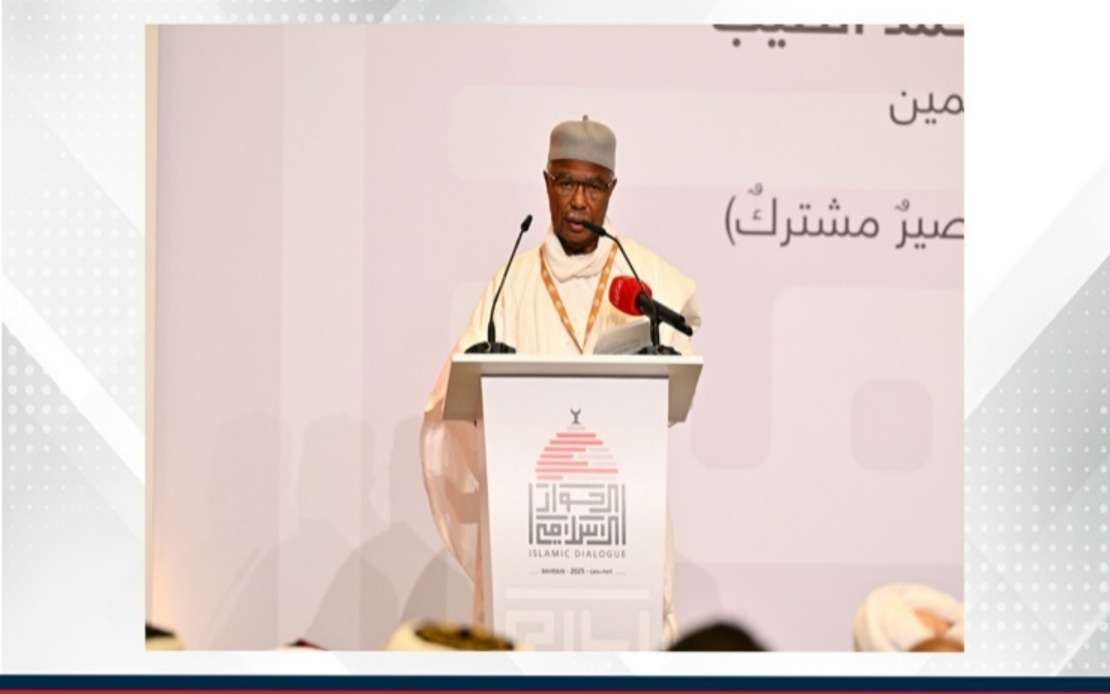
OIC Secretary-General Sharein Brahim Taha issued a statement expressing strong appreciation for the accord, framing it as an important strategic development that demonstrates the three signatories' dedication to enhancing both regional and international cooperation frameworks. His endorsement carries particular weight given the OIC's role as the primary multilateral voice representing 57 member states with predominantly Muslim populations, collectively home to nearly two billion people. By positioning the agreement within the broader context of Muslim-world solidarity, Taha has effectively elevated the pact beyond a bilateral arrangement to symbolic significance for Islamic nations generally.
The Mecca Joint Defence Agreement, signed at Al-Safa Palace during the summit, establishes collective security provisions that form the agreement's core architecture. Under its terms, an armed attack against any one of the three signatory nations is deemed an attack against all three, creating a mutual defense obligation structure reminiscent of traditional military alliance frameworks. This language carries substantial implications for regional deterrence dynamics, as it creates a presumption of collective response to external aggression against any member state. The symbolic location of the signing in Islam's holiest city underscores the religious and cultural dimensions these nations wish to emphasize, beyond purely strategic considerations.
According to Turkish officials who provided background information on the arrangement, the agreement is expressly designed as a defensive cooperation framework rather than an offensive alliance. Officials emphasized that the pact targets no specific country and is instead oriented toward strengthening commitments to global peace, stability, and shared prosperity through distributed security responsibilities and coordinated security approaches. This framing attempts to position the agreement as a stabilizing rather than destabilizing force, though observers will inevitably assess its implications within existing regional power balances, particularly regarding Iran and India.
The three signatory nations bring distinct strategic assets to the partnership. Turkish President Recep Tayyip Erdoğan leads a NATO member with significant military capabilities and influence spanning Eastern Europe, the Middle East, and the Mediterranean. Saudi Crown Prince Mohammed bin Salman controls the world's second-largest proven oil reserves and chairs a nuclear-armed regional rival to Iran. Pakistani Prime Minister Shehbaz Sharif represents a nation of over 230 million people with demonstrated nuclear capabilities and substantial conventional military forces. The combination of these three actors creates a bloc with considerable collective power across multiple strategic domains.
For Southeast Asian readers, this development carries implications worthy of attention despite its apparent regional focus on Middle Eastern and South Asian concerns. The agreement demonstrates how major Muslim-majority nations are formalizing military and strategic partnerships outside traditional Western alliance structures, a pattern that reflects broader geopolitical realignment occurring across the Indo-Pacific region. Malaysia, Indonesia, and other ASEAN members with Muslim majorities may observe how such partnerships evolve and whether they seek deeper coordination with regional bodies like the OIC on security matters.
OIC Secretary-General Taha characterized the accord as a fundamental pillar supporting both regional security and stability across the broader Muslim world, suggesting that the organization views it as addressing shared security challenges facing Islamic nations collectively. He highlighted how the pact embodies a commitment to strengthening solidarity and constructive partnerships among OIC members, implying that deepening defense cooperation represents a path toward addressing common threats while promoting shared interests. This framing positions the agreement within the context of broader Muslim-world cooperation initiatives, potentially encouraging similar arrangements among other member states.
The agreement's emphasis on burden-sharing through a common security approach reflects a pragmatic recognition that individual nations cannot address all security challenges alone. By pooling resources, intelligence, and military capabilities, the three signatories create economies of scale in defense planning and response capacity. This approach aligns with broader international trends toward regional security cooperation, though the specific mechanics of how burden-sharing will operate in practice remain largely undefined in publicly available information.
Taha expressed optimism that the pact will contribute meaningfully to achieving peace and prosperity within the region and across the wider international community. Such aspirational language is standard in diplomatic contexts, yet it signals that OIC leadership views the agreement as advancing the organization's core mandate of promoting cooperation among member states. The generalized framing regarding benefits to the international community broadly suggests the OIC hopes the arrangement will be perceived as constructive rather than merely serving narrow national interests of the three signatories.
The Turkish leadership's emphasis that the agreement targets no specific country warrants particular scrutiny given regional tensions involving Iran, India, and other powers. This language likely reflects deliberate diplomatic positioning intended to assuage concerns from nations not included in the arrangement while maintaining the accord's substantive value as a deterrent mechanism. How other regional actors interpret and respond to the pact will shape its practical impact on regional stability and security calculations in the months ahead.

