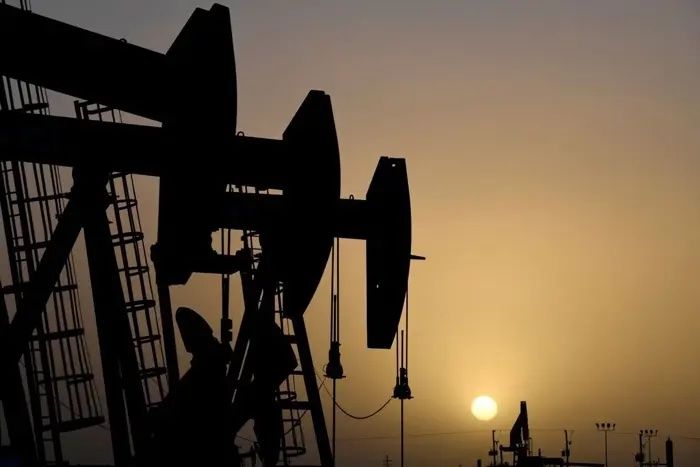
Crude oil markets surged on Friday as military tensions between Washington and Tehran reached a new flashpoint, with both Brent and West Texas Intermediate futures posting substantial gains that extended this week's remarkable rally. The escalation threatens to disrupt two critical global energy chokepoints—the Strait of Hormuz and the Red Sea—raising the spectre of a supply crisis that could reverberate through Southeast Asian economies heavily dependent on imported oil.
Brent crude futures climbed 70 cents to settle at US$84.93 per barrel, representing a 0.83% increase, while US West Texas Intermediate rose 81 cents to US$79.76, up 1.03%. The movements erased losses from the previous trading session and signalled strong risk appetite among investors betting on sustained supply constraints. Over the week, both benchmarks have advanced approximately 12%, with Brent recording a third consecutive weekly gain and WTI posting its second weekly advance in succession.
The broader market narrative reflects investor anxiety about a rapidly destabilising security environment in the Middle East. According to Tim Waterer, chief market analyst at KCM Trade, the possibility of the Red Sea emerging as a second major supply disruption represents a qualitatively new threat to global energy availability. He characterised the situation as a "dual-risk scenario," wherein geopolitical premiums have become firmly embedded within both major crude benchmarks, effectively adding a security surcharge to every barrel traded globally.
The immediate trigger for Friday's rally originated from escalating military operations across the Persian Gulf region. For the first time since a memorandum of understanding had reportedly paused hostilities last month, American forces conducted two major waves of air strikes in a single day on Wednesday, targeting installations near Iran's southern coastline. Bombing operations continued throughout Thursday, with the US Central Command announcing a sixth consecutive night of strikes beginning Friday afternoon aimed at degrading Iranian military capacity. This represents a dramatic intensification from the previous period of relative restraint.
Tehran responded with volleys of missiles and unmanned drones targeting American military facilities housed in neighbouring states, including a recent expansion at an air base in Jordan. The tit-for-tat cycle of escalation reflects the complete breakdown of whatever diplomatic framework had previously constrained the two adversaries. Separately, Qatar's defence ministry reported that its forces intercepted an Iranian missile attack early Friday morning, with the interior ministry confirming that shrapnel from defensive operations injured a child, underscoring how regional tensions now directly affect civilian populations.
More ominously for global oil markets, intelligence sourcing and regional reporting indicate that Iran has instructed its Houthi allies—the Yemen-based political and military movement—to maintain readiness for closing the Red Sea shipping corridor if American strikes target Iranian energy infrastructure. This conditional threat transforms the Houthi militia from a regional irritant into a potential instrument of economic coercion. Since the Houthis have already demonstrated capacity to harass shipping in the Red Sea, such an order carries genuine operational weight and represents a new dimension to the crisis.
Fatih Birol, executive director of the International Energy Agency, publicly acknowledged the severity of this strategic risk during Thursday remarks at the Council on Foreign Relations in Washington. Birol stated plainly that the agency remains deeply concerned about the trajectory of events and warned that if conditions fail to improve within coming weeks, the global energy outlook would face genuine headwinds. His comments represent an unusually candid assessment from an institution typically measured in its public pronouncements, signalling that professional energy analysts view current developments as genuinely destabilising.
For Malaysian policymakers and energy-dependent businesses, the implications merit serious consideration. Malaysia imports approximately 80% of its crude oil requirements and maintains significant petrochemical and refining industries dependent on stable feedstock costs. A sustained elevation of Brent and WTI prices would add inflationary pressure to domestic fuel prices and energy-intensive manufacturing. Furthermore, should the Red Sea become partially or wholly closed to traffic, alternative shipping routes through the Suez Canal and around the Cape of Good Hope would lengthened supply chains and increase transportation premiums.
The current market structure suggests that crude prices have not reached their ceiling under a sustained geopolitical crisis scenario. Analysts at IG noted that West Texas Intermediate could test the mid-$80s range if it maintains support above critical technical levels in the mid-$70s. Such a trajectory would place meaningful upward pressure on regional energy costs and could necessitate policy interventions from energy-importing nations throughout Southeast Asia.
The convergence of multiple risk factors—active US-Iran military operations, explicit threats to close critical sea lanes, and demonstrated willingness from proxy forces to execute economic disruption—has created an unprecedented pressure cooker for global energy markets. Unlike previous Middle East crises that typically resolved through diplomatic intervention or military exhaustion, the current standoff involves nuclear-armed adversaries with competing strategic interests and limited channels for de-escalation. This structural reality has likely imprinted itself into crude prices, suggesting that the current price levels may persist until and unless political developments dramatically alter the regional security calculus.

