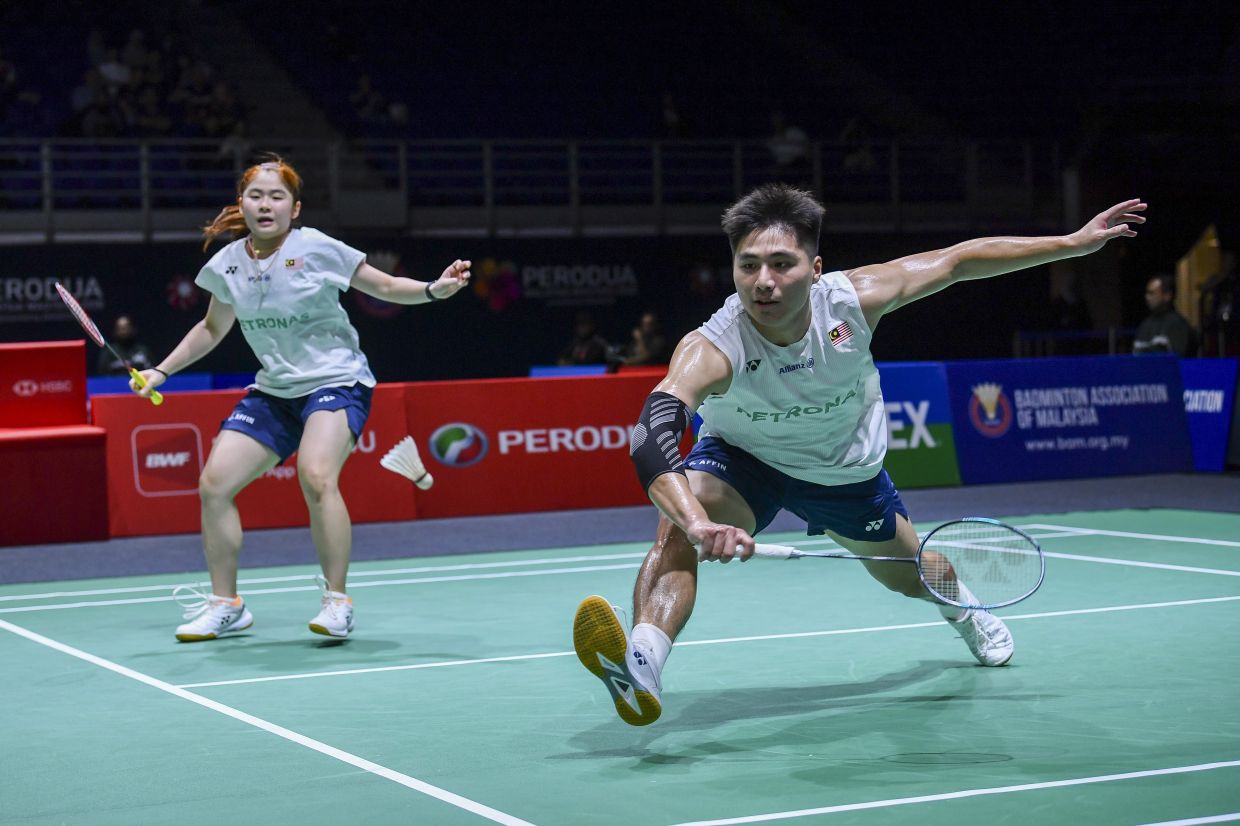
Shuttler Jimmy Wong is embracing a renewed sense of purpose after settling back into the Badminton Association of Malaysia's competitive environment, where he rejoined the national squad in April with a clear focus on reaching the 2028 Los Angeles Olympics alongside mixed doubles partner Cheng Su Yin. The 23-year-old's return to the structured support system marks a pivotal moment in his career trajectory, underpinned by realistic ambition tempered with measured expectations about the challenges ahead in international badminton.
Jimmy's pathway to Olympic qualification hinges on a concrete and achievable intermediate target: breaking into the top 32 world rankings before 2024 concludes. Currently positioned 118th in the mixed doubles standings alongside Su Yin, this improvement would unlock access to the elite-tier tournaments—Super 750 and Super 1000 events—where meaningful ranking points and global exposure converge. Such progression represents more than mere statistical advancement; it signals readiness to compete against the world's premier partnerships on a consistent basis, a prerequisite for any serious Olympic contender in badminton's brutally competitive landscape.
The presence of Nova Widianto in Jimmy's coaching structure has proven transformative during this transitional phase. Widianto's credentials as an Olympic silver-medallist and former world champion bring practical experience that transcends conventional coaching wisdom, offering insights into managing pressure situations and navigating the psychological demands of elite-level competition. For a young player like Jimmy, exposure to someone who has performed at sport's highest echelon provides both tactical refinement and confidence-building intangibles that no textbook can deliver. The coach's influence extends beyond court techniques into developmental maturation, helping Jimmy understand the mental and emotional demands of sustained international competition.
Jimmy's cautious approach to target-setting reflects maturity beyond his years. Rather than accumulating a lengthy wish list of achievements that might invite psychological burden, he deliberately constrains his objective framework to prevent self-imposed pressure from undermining performance. This philosophy recognises a fundamental reality in professional sport: athletes operating under excessive external expectations frequently underperform, while those maintaining balanced perspective often achieve breakthroughs. His emphasis on delivering consistent best efforts in each match, rather than obsessing over distant goals, demonstrates a sophisticated understanding of process-oriented excellence.
The partnership with Cheng Su Yin, while nascent in development, has already demonstrated capacity for competitive upsets. Their stunning victory over world No. 1 Feng Yanzhe-Huang Dongping during the opening round of the Singapore Open served as a statement moment, proving they possess the technical and tactical capabilities to trouble established pairings. Such scalp victories, though ultimately followed by second-round elimination in that tournament, provide confidence that the duo's upward trajectory is grounded in genuine competitive merit rather than momentary fortune. These performances signal that with continued refinement and accumulated tournament experience, higher-ranking placements remain within reach.
Malaysia's mixed doubles programme has historically punched above demographic weight in international badminton, producing world-class pairings that have captured continental and global honours. Jimmy and Su Yin's emergence within this proud lineage carries meaningful implications for the national badminton infrastructure. Their success would validate current coaching methodologies and talent identification processes while potentially inspiring younger cohorts to pursue mixed doubles specialisation, a category where Malaysia maintains competitive advantage. The progression of promising young pairs also offsets natural attrition as established pairings inevitably retire, ensuring continuity in the nation's badminton prowess.
From a Southeast Asian perspective, Malaysia's Olympic badminton representation carries broader significance beyond individual achievement. Strong performances in Los Angeles 2028 would enhance regional profile in a sport where several Asian nations field competitive delegations. Jimmy and Su Yin's potential qualification and subsequent performance could establish Malaysia as a consistent mixed doubles power entering the subsequent Olympic cycle, influencing sponsorship dynamics, talent recruitment, and the sport's commercial viability within domestic markets. Their journey also reflects the broader trend of Malaysian athletes strategically planning multi-year pathways toward Olympic qualification rather than treating Games participation as opportunistic outcomes.
The structural support now surrounding Jimmy—encompassing world-class coaching, access to high-level training facilities, and integration within a formalised national programme—represents institutional commitment to developing competitive pathways. This ecosystem, often taken for granted by casual observers, proves decisive in determining whether talented individuals transform potential into accomplished careers. Jimmy's appreciation for these support mechanisms, explicitly articulated in his comments about coaching guidance, underscores his understanding that individual talent alone proves insufficient at elite levels; systematic institutional backing amplifies natural ability and accelerates development timelines.
The tournament schedule ahead will prove critical in determining whether Jimmy and Su Yin's ranking improvement trajectory maintains momentum. Consistency in performance across diverse competition formats and opponents—from regional competitions to continental championships—will either affirm their upward movement or expose tactical vulnerabilities requiring remediation. Each tournament entry between now and year-end therefore constitutes both an opportunity to accumulate ranking points and a diagnostic assessment of technical preparation levels. Tournament results will likely inform whether the ambitious top-32 target remains realistic or requires recalibration.
Jimmy's journey also illuminates the calculated career decisions that modern badminton professionals navigate. His decision to return to the national system after prior experience outside the formal structure suggests recognition that Olympic-level aspirations demand the collaborative infrastructure and competitive environment that only national federations can reliably provide. This repositioning reflects a maturation beyond early-career idealism, embracing pragmatic realities about what achievement at sport's highest level demands. For Malaysian badminton followers, his recommitment to the national programme signals serious intent, distinguishing genuine Olympic candidates from aspirational dreamers.
Looking forward, Jimmy's 2024 campaign will function as a developmental crucible where ambition confronts reality. The gap between 118th and 32nd ranking positions, while seemingly arbitrary numerically, represents genuine qualitative leaps in opponent calibre and competitive intensity. Whether Jimmy and Su Yin successfully navigate this climb will determine not only their individual Olympic prospects but also provide crucial data about the national programme's capacity to develop emerging talent into world-competitive pairings. Their trajectory thus carries implications extending well beyond personal achievement into the health and future competitiveness of Malaysian badminton's mixed doubles contingent.

