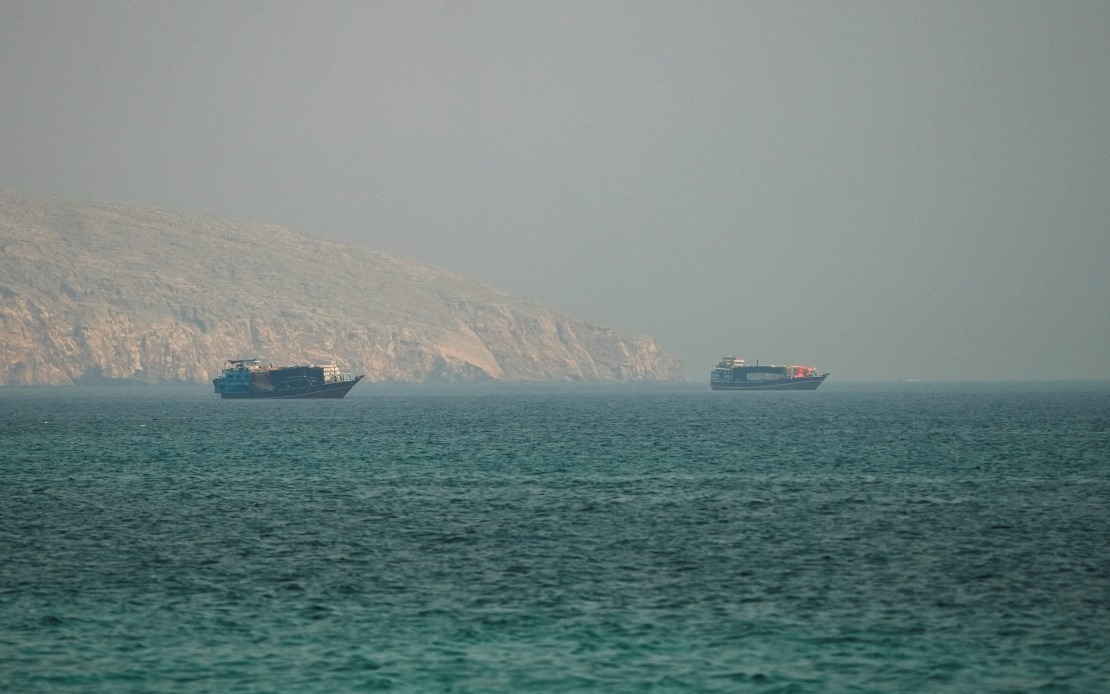
Oman has drawn a clear line against the imposition of mandatory transit tolls on vessels navigating the Strait of Hormuz, signalling instead its openness to exploring voluntary payment structures for navigational support services. An Omani delegation presented this position during the 137th session of the International Maritime Organisation Council in London this week, underscoring the sultanate's commitment to maintaining free passage principles enshrined in international law. The intervention represents a carefully calibrated diplomatic stance as tensions simmer over shipping fees in one of the world's most critical maritime corridors, through which approximately one-third of global seaborne trade passes annually.
According to reports citing sources familiar with the matter, Oman has recently circulated a proposal to the United States and several Western nations outlining an alternative framework wherein shipping companies would voluntarily contribute to the costs of maritime services rather than face imposed levies. This proposal draws inspiration from established voluntary contribution models already operational in the Strait of Malacca and Singapore, both of which have successfully balanced revenue generation with maintaining the principle of free transit. The Omani approach reflects growing recognition that sustainable maritime governance requires cooperation rather than unilateral imposition, a consideration of particular relevance to Southeast Asian nations whose economic lifelines depend on unimpeded passage through similarly strategic waterways.
The Omani representative's remarks during the IMO Council session reaffirmed the sultanate's foundational position that transit passage rights must remain protected under existing international legal frameworks. This emphasis on legal compliance carries significance beyond the immediate dispute, signalling that Oman views any resolution as requiring adherence to established conventions rather than ad hoc arrangements dictated by regional powers. For Malaysia and other trading nations dependent on the Strait of Hormuz, this stance offers some reassurance that changes to the status quo will not be imposed unilaterally but will instead be subject to international scrutiny and dialogue.
The backdrop to these discussions involves Iran's reported collection of transit fees from vessels passing through the strait, a practice that has drawn sharp criticism from regional and international actors. During the same IMO Council session, the United Arab Emirates alongside several other nations submitted a formal proposal condemning these reported toll collections, framing them as violations of international maritime norms. This move represents a coordinated diplomatic effort to isolate Iran's unilateral actions and pressure it toward accepting internationally sanctioned alternatives. For Southeast Asian maritime nations, the precedent matters greatly, as any successful challenge to Iran's actions could either strengthen the principle of free transit or alternatively legitimise fee-based governance models that might eventually spread to other strategic waterways.
Iran has responded to these criticisms by submitting its own proposal at the IMO Council, asserting that it has maintained ongoing consultations with Oman regarding management and coordination arrangements for the waterway. The Iranian submission emphasises that any measures taken have been coordinated in accordance with international law and applicable national regulations, a framing that attempts to cast unilateral toll collection within a framework of legitimate administration. The fact that Oman features prominently in Iran's counter-argument reflects the sultanate's geopolitical significance as a neutral broker capable of engaging both regional powers and the Western-aligned coalition that dominates global maritime governance institutions.
Oman's proposal to explore voluntary contributions represents a sophisticated middle path that acknowledges the legitimate need for maintaining maritime infrastructure while respecting the fundamental principle of free transit. The voluntary model circumvents the confrontational dynamics of mandatory tolls whilst providing a revenue mechanism that could theoretically support coastal state operations and security measures. This approach has precedent in Southeast Asia through the successful implementation of similar arrangements in the Strait of Malacca, where Malaysia, Singapore, and Indonesia have balanced navigational assistance costs with maintaining passage rights. The replication of this model in the Hormuz context could serve as a template for other potential maritime disputes in the region.
The timing of Oman's proposal and its presentation at the IMO Council reflects careful diplomatic choreography aimed at de-escalating tensions whilst maintaining support from Western powers concerned about Iranian actions. By positioning itself as a constructive problem-solver rather than an ally of either Iran or the United States-led coalition, Oman preserves its ability to mediate future disputes and maintain relationships across the regional divide. This balancing act holds lessons for smaller Southeast Asian nations navigating great power competition, demonstrating how technical and economic arguments can sometimes succeed where purely geopolitical positioning fails.
For Malaysian policymakers and businesses reliant on Strait of Hormuz transit, the Omani initiative signals potential relief from unilateral toll collection whilst introducing uncertainty around any new fee structures that might emerge from negotiations. The voluntary model, if adopted, could establish precedent for other maritime chokepoints and potentially influence discussions around similar arrangements in Southeast Asian waters. Malaysia's own experience managing the Strait of Malacca revenue arrangements positions it uniquely to understand both the benefits and complexities of voluntary contribution systems, making Malaysian input valuable in any broader regional maritime governance discussions.
Oman has committed to continuing engagement with the IMO, its member states, and international partners to preserve safe and open shipping lanes, protect maritime life, and strengthen the resilience of global supply chains. This commitment reflects the sultanate's awareness that its own prosperity depends fundamentally on maintaining the health of international maritime commerce. The statement also implicitly acknowledges that sustainable solutions require multilateral cooperation rather than zero-sum positioning, a principle equally applicable to Southeast Asian maritime disputes and governance challenges.
The broader context of these negotiations involves recognition that maritime infrastructure and security measures do require funding and coordination, but that the mechanisms for generating revenue and ensuring responsibility must respect international legal norms and the interests of the broader maritime community. Oman's proposal attempts to thread this needle by proposing contributions that are genuinely voluntary rather than effectively coercive through the threat of interference with passage. Whether this framework can be successfully negotiated and implemented will significantly influence how maritime governance evolves not only in the Persian Gulf but across Southeast Asia and other regions where coastal states seek legitimate revenue from strategic waterways while preserving the international commerce upon which their own development depends.

