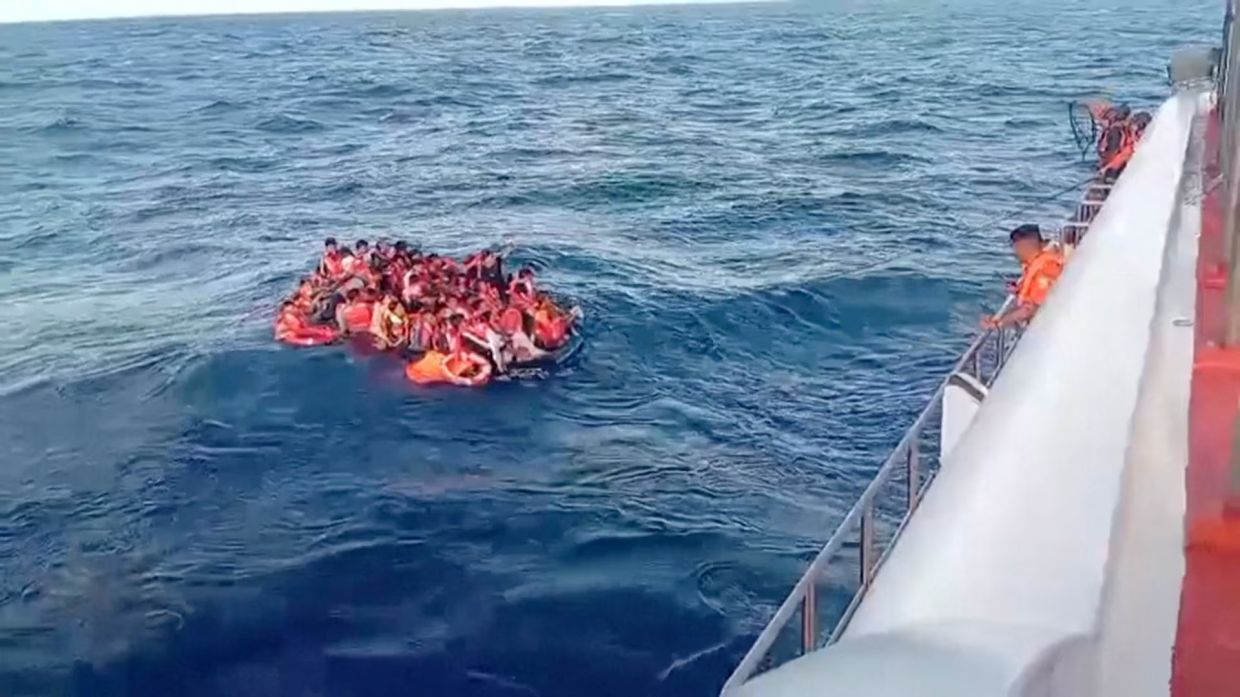
A maritime disaster unfolded off the coast of Bali in the early hours of Wednesday when the Putri Yasmin, a passenger ferry operating between Indonesia's two major tourist islands, became engulfed in fire. The blaze erupted at approximately 4:15 a.m. local time as the vessel made its way from Bali toward the neighbouring island of Lombok, triggering one of the region's most significant rescue operations in recent months. By Thursday morning, authorities confirmed that one Indonesian woman had perished in the incident, whilst 211 others were successfully evacuated to safety.
The coordinated rescue effort demonstrated the capacity of Indonesia's maritime response infrastructure when mobilised effectively. The National Search and Rescue Agency, Indonesian Navy, maritime police, and merchant vessels in the vicinity all converged on the stricken ferry, working in tandem to remove passengers and crew from the burning ship before conditions deteriorated further. Survivors were systematically transported to ports on both Bali and Lombok, with local authorities subsequently reporting that the evacuation "was completed safely and smoothly" according to their official statement released Thursday morning.
However, the rescue operation exposed significant administrative irregularities that warrant closer scrutiny. The ferry's manifest had listed 131 passengers and crew members, including 17 crew, yet the actual number of people rescued substantially exceeded this figure. The discrepancy points to a pattern of unregistered passengers boarding vessels—a widespread problem across Indonesia's maritime sector that creates chaos during emergencies and undermines the accuracy of safety protocols. Authorities have not yet clarified how many undocumented travellers were aboard or how this gap was discovered during the evacuation process.
Indonesia's National Transportation Safety Committee has commenced a formal investigation into the Putri Yasmin incident, working alongside the Lembar Port Authority to determine the fire's origin. Preliminary assessments are underway to evaluate material losses encompassing the vessel itself, vehicles carried as cargo, and other freight. The investigation will prove crucial in establishing whether the blaze resulted from mechanical failure, electrical malfunction, human error, or structural defects—each scenario carrying different implications for the maritime industry.
The Putri Yasmin fire underscores persistent vulnerabilities in Indonesia's passenger ferry system, a transportation mode upon which the nation's sprawling archipelago depends fundamentally. With more than 17,000 islands comprising the Indonesian territory, maritime transport remains the economic and social lifeblood connecting communities across this vast geography. Yet the sector continues to grapple with enforcement gaps and outdated safety standards that leave passengers exposed to preventable hazards.
For Malaysia and other Southeast Asian nations that similarly rely on inter-island ferry services, the incident carries instructive warnings about the costs of regulatory laxity. The region shares comparable geographic challenges and maritime transport dependencies, making experiences from neighbouring countries particularly relevant. Malaysia's own ferry operators and regulatory authorities can extract valuable lessons from how the Putri Yasmin fire unfolded and how administrative gaps enabled boarding irregularities.
Weather patterns and seasonal conditions also merit attention in understanding maritime accident risks across the region. The waters between Bali and Lombok, whilst generally traversable, can present unpredictable conditions during certain periods, and rescue operations in such environments test the limits of emergency response systems. The successful outcome of Wednesday's evacuation cannot obscure the reality that weather-related complications have frequently transformed maritime incidents into catastrophes elsewhere in the archipelago.
The death toll of one—tragic as it remains—might reasonably be considered fortunate given the scale of the fire and the number of people aboard. This relative outcome reflects both effective rescue coordination and the random nature of maritime disasters, where survival often depends on proximity to exits, response times, and factors beyond systematic control. Nonetheless, the single fatality represents a preventable loss that underscores why comprehensive safety improvements remain urgent.
Indonesia's transport ministry faces mounting pressure to strengthen oversight of the domestic ferry industry. The manifest discrepancy revealed by the Putri Yasmin incident suggests that registration and ticketing systems remain porous, enabling operators to overload vessels beyond officially acknowledged capacities. Addressing this requires sustained political commitment and enforcement resources that frequently prove insufficient given competing budgetary demands across government agencies.
As investigations proceed, the broader question of how Indonesia's maritime sector can be modernised without compromising the affordable transport access upon which millions depend remains unresolved. Balancing safety imperatives against economic realities and accessibility concerns will determine whether tragic incidents like the Putri Yasmin fire catalyse meaningful reform or fade into the archipelago's continuing cycle of maritime mishaps.

