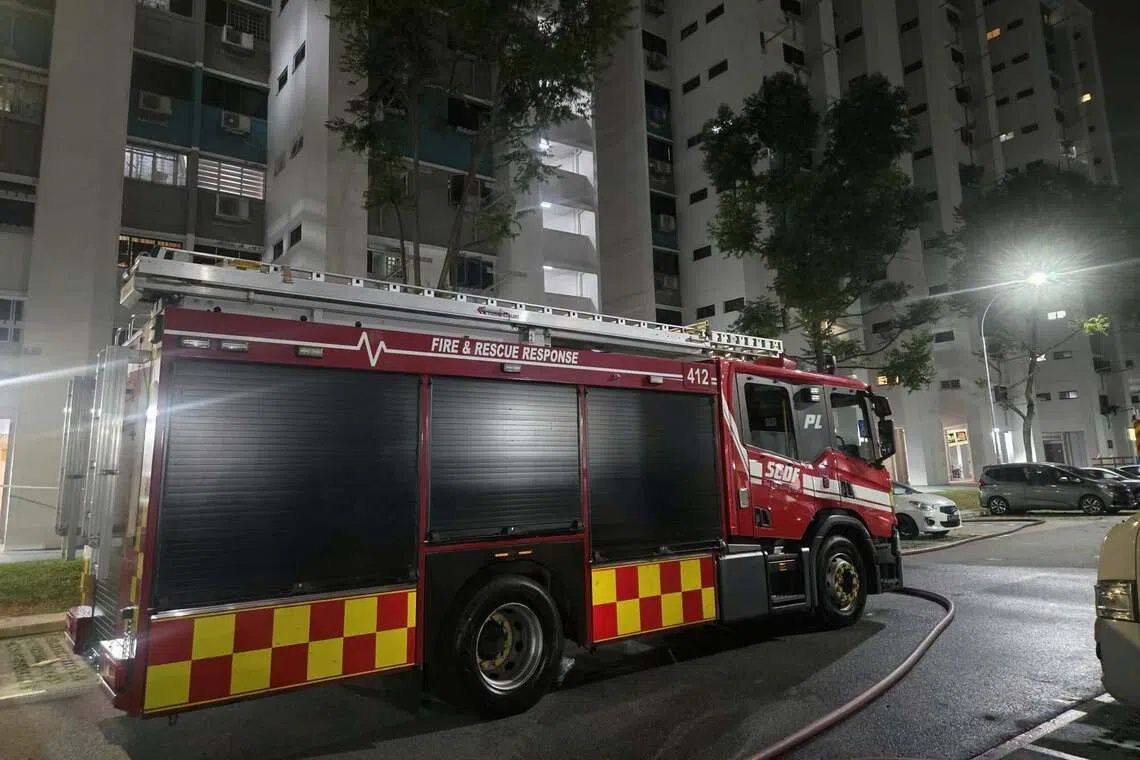
A residential fire in Singapore's Jurong East neighbourhood claimed the life of one person and displaced 50 residents early on August 16, adding to a troubling string of fatal apartment fires across the island's public housing estates over the past three weeks. The Singapore Civil Defence Force (SCDF) responded to the alarm at Block 339 Jurong East Avenue 1 at 3.55 am, arriving to find thick black smoke billowing from a unit on the third storey of the housing development.
When emergency personnel entered the burning apartment, they discovered a person lying unresponsive in the living room, where the flames had concentrated their destructive force. Despite immediate efforts, the individual was pronounced dead at the scene by attending paramedics. The identity of the deceased and the circumstances surrounding their presence in the flat at the time remain undisclosed. The SCDF has initiated a formal investigation into the origin and cause of the blaze, though preliminary findings have not yet been released to the public.
The evacuation of 50 residents from surrounding units reflects both the intensity of the fire and the swift response protocols employed by Singapore's emergency services to prevent the spread of flames to neighbouring homes. High-density public housing presents unique firefighting challenges, particularly during overnight hours when residents are most vulnerable and response times face additional constraints. The speed with which residents were cleared from the building likely prevented what could have been a significantly higher casualty toll.
This tragedy represents an escalation in a disturbing trend affecting Singapore's Housing and Development Board (HDB) housing stock. Since late July, at least four confirmed fatal fires have struck HDB flats, signalling either a dangerous coincidence or an underlying systemic issue requiring urgent attention. The first incident occurred on July 28 at Block 39 Circuit Road, where a 70-year-old resident perished in flames that consumed a ground-floor unit. The speed and frequency of these incidents have prompted concern among residents and housing authorities alike about fire prevention measures and building safety protocols.
Just three days after the Circuit Road tragedy, another fatal fire broke out in an eighth-floor flat at Block 309 Clementi Avenue 4, claiming the life of a 65-year-old man. That particular blaze proved hazardous even for trained emergency responders, resulting in injuries to two firefighters who were overcome while battling the flames. The injuries sustained by SCDF personnel underscore the extreme danger posed by these residential fires and the risks undertaken by first responders attempting to save lives in these high-stakes situations.
The most recent prior incident before August 16 occurred on August 3 at Block 684 Race Course Road, where a five-storey unit ignited with such ferocity that multiple residents required hospitalisation. Five people aged between 55 and 88 were transported to medical facilities, with the oldest victim, an 88-year-old man, succumbing to injuries two days later on August 5. This case exemplifies how HDB fires can affect the most vulnerable demographic—elderly residents who may have limited mobility or difficulty evacuating quickly.
The recurring nature of these incidents within a compressed timeframe raises questions about whether Singapore's fire prevention infrastructure, despite the city-state's reputation for rigorous building standards, adequately addresses emerging risks in ageing housing estates. Many HDB blocks are several decades old, and while regular maintenance programmes exist, the potential for hidden electrical faults, accumulated combustible materials, or inadequate fire suppression systems in older units cannot be discounted. The pattern also raises awareness about the critical importance of functional smoke detectors, clearly marked emergency exits, and resident familiarity with evacuation procedures.
For residents across Singapore's extensive HDB network, these incidents serve as a sobering reminder of fire safety fundamentals. Electrical appliances left unattended, combustible materials stored near heat sources, and blocked emergency pathways represent common risk factors in domestic fire scenarios. The SCDF regularly conducts public awareness campaigns, yet the persistence of fatal fires suggests that education efforts may need reinforcement or that some residents remain complacent about fire hazards in their homes.
The investigation into the August 16 Jurong East fire will likely examine whether the unit had functioning smoke detectors, whether occupants had an evacuation plan, and whether any specific appliances or activities contributed to ignition. Fire investigators will also assess whether the building's common areas, escape routes, and fire suppression infrastructure met regulatory standards. The findings could prompt broader reviews of fire safety protocols across the HDB estate system and inform policy discussions about preventive maintenance and resident education programmes.
Singapore's dense urban environment and high concentration of public housing mean that residential fires inherently pose greater risks than in less densely populated areas. With thousands of HDB blocks housing millions of residents, even statistically rare fire occurrences can result in significant loss of life when they do transpire. The clustering of four fatal fires within three weeks, whether coincidental or indicative of a broader problem, demands transparent investigation and swift corrective action to restore public confidence in housing safety standards.

