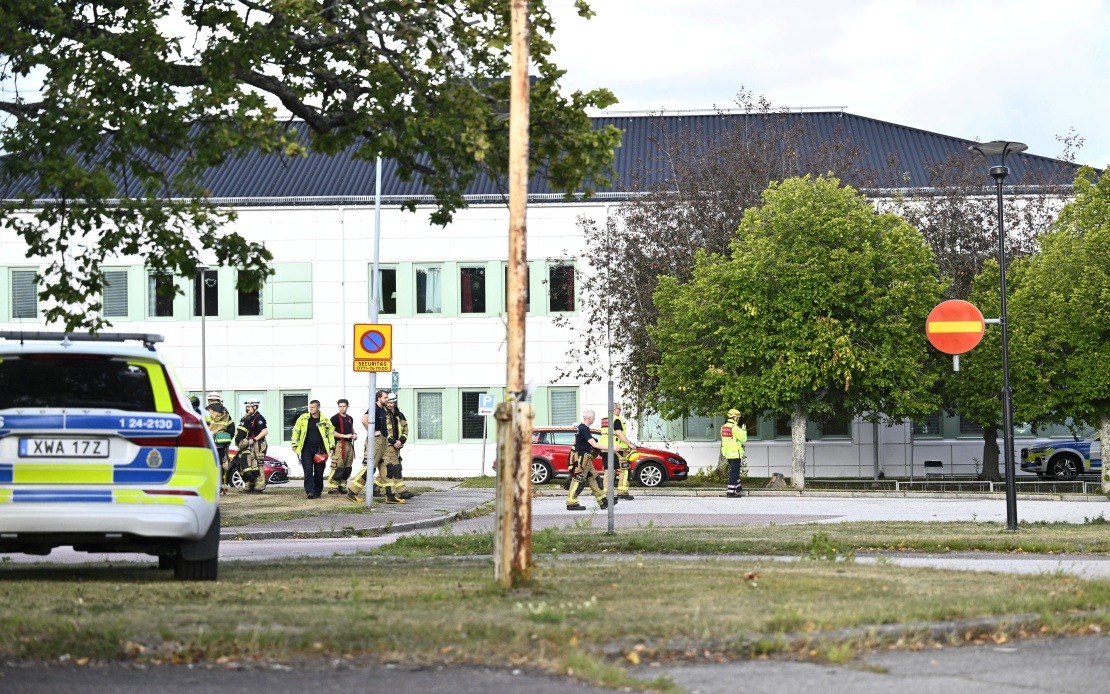
A deadly sword attack at a school in central Sweden has claimed one life and left two others with serious injuries, triggering an immediate emergency response and widespread lockdowns across the affected municipality. The assault occurred at Brinell School in Fagersta at approximately 2.06 pm local time on Wednesday, prompting rapid mobilisation of police and emergency services to contain the situation and prevent further harm to students and staff.
The two victims who sustained serious injuries are both male minors under 18 years of age, though authorities have characterised their conditions as serious but stable following emergency medical treatment. A third individual suffered minor injuries during the chaotic incident. The rapid response by emergency personnel appears to have prevented potentially greater casualties, though the exact circumstances of how the attacker was subdued remain unclear from initial reports.
Investigators have detained an 18-year-old male suspect in connection with the attack. According to Swedish broadcaster SVT, the suspect is a former student of Brinell School and maintains connections to two addresses within Fagersta. The fact that the attacker had previous attendance at the institution raises troubling questions about warning signs that may have preceded the violence, a pattern increasingly familiar to observers of school safety across European nations.
The implications of a former student carrying out such violence extend beyond the immediate tragedy. Educational institutions throughout the region responded with extraordinary caution, with seven separate facilities placed under lockdown protocols following the incident. The affected sites included Olympen, Fagerstahallen, Risbroskolan, Skogsglantan, Bjorksta, Prastkragen, and Norrbybacken. This coordinated defensive measure reflects the heightened anxiety that such incidents generate in communities and the cascading effects of violence that extend far beyond the initial attack site.
Malaysian observers of school safety and public security may draw parallels to the critical importance of comprehensive threat assessment and prevention protocols in educational settings. While the Nordic nations have historically enjoyed relatively low rates of such violence compared to global averages, the occurrence demonstrates that no society is immune to this category of tragedy. The incident underscores the necessity for vigilant monitoring systems and early intervention mechanisms that can identify potential threats before they materialise into loss of life.
Justice Minister Gunnar Strommer promptly released a statement confirming government awareness and involvement in the crisis response. "We have been informed of a serious incident in Fagersta. The police are on site and are working very intensively on the incident. The government is in close contact with the police and is monitoring developments on an ongoing basis," the minister declared. This high-level acknowledgment reflects the seriousness with which Swedish authorities treat such breaches of public safety and their commitment to maintaining governmental oversight during emergencies.
The response from Fagersta Municipality and regional authorities demonstrates the established protocols for managing active threats in Swedish communities. The decision to extend lockdowns to multiple educational and recreational facilities beyond the primary attack site suggests a precautionary approach designed to prevent any possibility of secondary incidents or copycat actions. Such measures, while disruptive to daily life, represent a calculated assessment that erring on the side of caution serves the broader public interest during periods of acute danger.
For Southeast Asian nations grappling with evolving security challenges, the Swedish incident offers instructive lessons about institutional preparedness. Malaysia, as a multicultural and densely populated nation with complex security considerations, can benefit from studying how advanced democracies implement school safety protocols and coordinate emergency responses across multiple agencies. The coordination between police, emergency medical services, municipal authorities, and the national government exemplifies the integrated approach necessary for effective crisis management.
The use of a sword as a weapon in this attack differs from the firearms-based violence more common in certain Western contexts, yet demonstrates that determined attackers can inflict lethal harm using a variety of means. This reality reinforces the importance of comprehensive security frameworks that address multiple threat vectors rather than focusing narrowly on single categories of weaponry. Institutions must develop adaptable response systems capable of addressing varied scenarios and attack methodologies.
The status of the detained suspect and the ongoing investigation into his motives will likely reveal additional details about the precipitating factors behind the violence. Understanding whether the attack stemmed from personal grievances, mental health crises, ideological motivations, or other drivers remains crucial for prevention of future incidents. Swedish law enforcement agencies will undoubtedly conduct thorough forensic and psychological examinations to establish the precise sequence of events and contributing circumstances.
Communities in Fagersta now face the challenging process of collective trauma recovery and restoration of normal operations across affected institutions. Psychological support services for witnesses and students will become essential components of the recovery infrastructure. Schools and recreational facilities throughout the region will likely implement enhanced security reviews and staff training in preparation for potential future threats, reflecting a permanent shift in baseline security posture resulting from this single incident.

