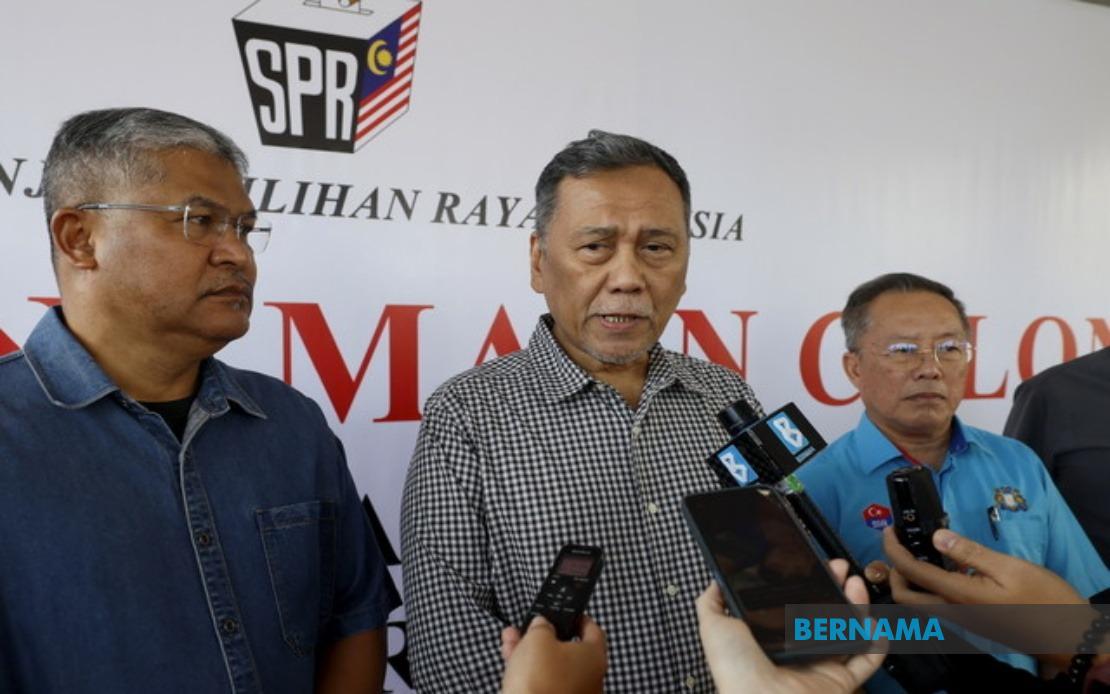
With nomination day set to commence tomorrow, Malaysia's Election Commission has disclosed that 593 nomination forms for the Johor state election have been distributed to prospective candidates, though firm commitments remain modest at 133 declarations confirmed through deposit payments. Election Commission chairman Datuk Seri Ramlan Harun indicated during an inspection at the Maharani constituency nomination centre in Muar that the final tally would likely climb, given candidates retain until the opening of the nomination process to complete their registration obligations.
The gap between forms sold and deposits paid reflects the typical pattern in Malaysian state elections, where aspirants often acquire nomination papers speculatively whilst assessing their realistic prospects and securing internal party endorsements. Ramlan urged remaining candidates to process their payments expeditiously to facilitate smoother administration across the state's 56 nomination centres. His remarks underscore the logistical complexity of managing simultaneous registrations across disparate locations, particularly when security arrangements demand careful orchestration to prevent confrontational incidents between rival camps.
The Election Commission has positioned 56 nomination centres throughout Johor following two successive days of operational trial runs, ensuring staff familiarity with procedures and systems before the formal commencement. This methodical preparation reflects lessons from previous electoral exercises and signals institutional commitment to orderly administration. However, the staggered confirmation of candidates—with more than two-thirds of form holders still uncommitted financially—suggests certain registered aspirants may ultimately withdraw, either through party reassessment or personal recalculation of electoral viability.
Security protocols assume particular prominence given Johor's political dynamics and the intensity of competition between coalitions. Returning officer Zainal Eran articulated detailed arrangements segregating party supporters through physical barriers, permitting only three individuals per candidate—the contender, proposer, and single supporter—to traverse the nomination centre's interior whilst relegating broader party contingents to demarcated exterior zones. These precautions acknowledge potential flashpoints when rival formations congregate simultaneously and reflect institutional experience managing electoral temperatures in a state where political passions run considerable.
The coalition landscape reveals Pakatan Harapan's comprehensive strategy fielding candidates across every seat through its three component parties: PKR contesting 20 constituencies, Amanah 19, and DAP 17. This distribution reflects negotiated power-sharing within the opposition alliance and strategic positioning to maximise seat capture across Johor's varied demographic and geographic terrain. The allocation recognises PKR's historical dominance in peninsular opposition politics whilst allocating Amanah's religious-communal appeal and DAP's urban-focused representation.
Barisan Nasional equally contests all 56 seats through UMNO's predominance with 36 nominations, alongside MCA's 16 candidates and MIC's four representatives. This composition maintains the traditional formula underpinning BN's governmental coalition, with UMNO assuming the dominant role befitting its foundational position within the alliance framework. The distribution reflects demographic realities and constituency characteristics across Johor, with UMNO concentrated in strongholds whilst MCA and MIC target constituencies with significant Chinese and Indian electorates respectively.
Perikatan Nasional projects a more diffuse presence through multiple partners, with PAS contesting 11 seats, Bersatu 16, the Malaysian Indian People's Party five, and Pejuang one. This fragmented approach reveals coalition tensions and competing territorial claims within the Perikatan framework, suggesting negotiations yielded divided allocations rather than consolidated strategies. The relatively modest PAS presence—despite its positioning as an ostensible major Perikatan partner—hints at the coalition's internal complexities and potential concerns regarding seat efficiency.
Additional contestants include the Malaysian United Democratic Alliance contesting four seats and Parti Sosialis Malaysia fielding a single candidate, reflecting minor political movements seeking electoral platforms. Most significantly, Parti Bersama Malaysia prepares for its electoral debut through 15 state seat nominations, representing a newer entrant attempting to establish credibility in Johor's competitive environment. These smaller players collectively demonstrate Johor's openness to diverse political representation, though their electoral impact typically remains marginal.
The Johor State Legislative Assembly's June 1 dissolution initiated this electoral calendar, with nomination day tomorrow followed by early voting on July 7 and polling day scheduled for July 11. This compressed timetable compresses campaign periods and intensifies candidate activities, particularly for aspirants still completing registration formalities. The Election Commission's preparedness appears robust, yet the significant divergence between forms distributed and deposits confirmed suggests tomorrow's nomination process may witness last-minute activity and potentially some candidate withdrawals as political calculations crystallise.
For Malaysian observers and Southeast Asian electoral analysts, the Johor election carries implications extending beyond state boundaries. Johor remains Malaysia's largest state by both population and economic significance, and electoral outcomes there frequently influence federal political equations. The competition intensity demonstrated through comprehensive candidate fielding by major coalitions underscores Johor's strategic importance within Malaysian politics and the contested terrain these elections represent for competing visions of governance and representation.

