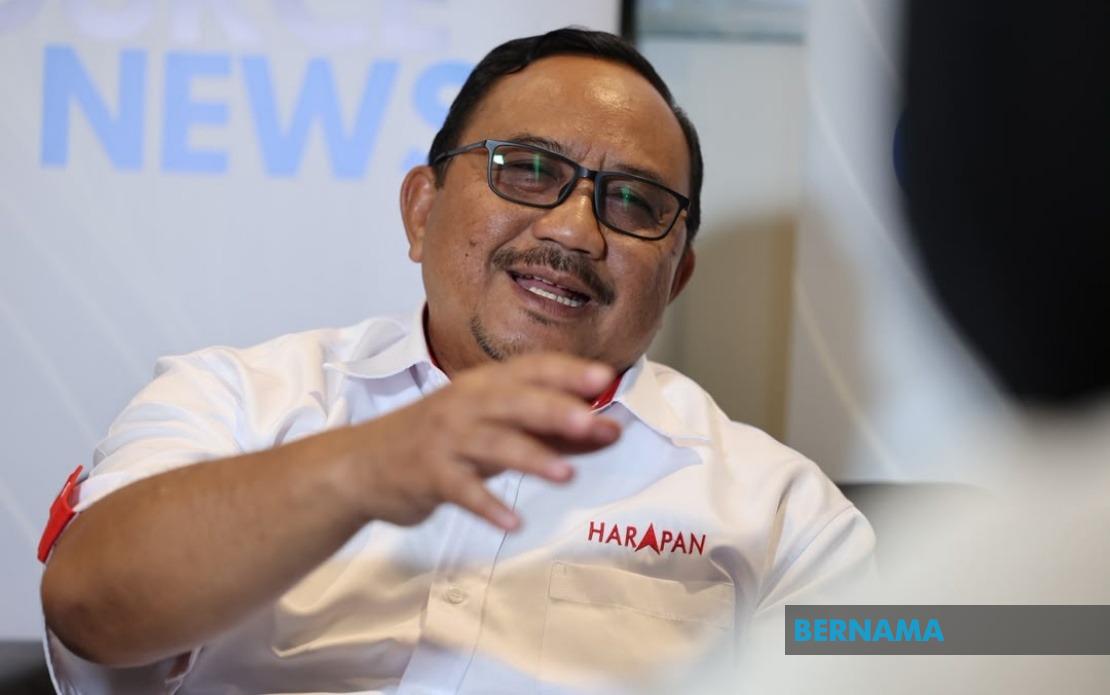
As campaigning intensifies ahead of Johor's state election, Batu Pahat MP Onn Abu Bakar has presented an infrastructure solution aimed at addressing one of rural Malaysia's persistent challenges: inadequate internet connectivity. The proposal for a Wireless Bridging System (WBS) project has been formally submitted to the Academy of Sciences Malaysia and seeks government backing through the Science, Technology and Innovation Ministry to serve seven communication-starved areas within the Senggarang state constituency.
The initiative represents a targeted approach to resolving digital inequality in a constituency where many residents endure frustratingly weak mobile signals, typically limited to one or two bars. Seven locations have been identified as priority zones requiring intervention: Jalan Kampung Sungai Keluang Darat, Jalan Kampung Parit Kadir, Jalan Kampung Parit Seri Bahrom, Kampung Punggur Darat, Sri Merlong, Simpang 6, and the vicinity of Seri Bahrom Mosque. These areas represent pockets of digital exclusion within a broader landscape where nationwide infrastructure expansion has often bypassed smaller and more remote communities.
Onn, who is running as the Pakatan Harapan candidate for the Senggarang seat in the 16th Johor state election, has positioned digital infrastructure improvement as a cornerstone of his development vision for the constituency. He has articulated a philosophy centred on ensuring no resident remains stranded in an increasingly digital world, emphasising that access to reliable internet has become essential for education, commerce, healthcare, and social participation. The WBS initiative forms part of what he terms his "Six Commitments" for comprehensive constituency development, reflecting growing recognition among Malaysian political figures that broadband access is now a fundamental public service requirement rather than a luxury.
The proposed funding range of RM100,000 to RM200,000 represents a modest investment relative to the scale of digital infrastructure challenges across rural Malaysia, yet reflects pragmatic acknowledgement of budgetary constraints and the potential for university partnerships to amplify limited resources. The project will be executed collaboratively with Universiti Tun Hussein Onn Malaysia (UTHM), leveraging academic expertise and research capability to ensure technical viability and sustainable implementation.
Professor Muhammad Ramlee Kamarudin from UTHM's Electrical and Electronic Engineering Faculty has confirmed that the WBS technology proposal was formally submitted to MOSTI in February and presented during early March discussions with ministry officials. The university's engagement reflects broader institutional commitment to addressing rural digital inequality through applied research and community-focused technological deployment. Several villages throughout the Batu Pahat parliamentary region continue struggling with inadequate 4G and 5G network coverage, making this intervention timely and regionally relevant.
UTHM's credibility on this initiative derives from proven field experience with WBS technology deployment. The university has successfully implemented comparable systems in Kampung Simbuan Tulid, Keningau, Sabah, where evidence indicates the technology delivers substantial improvements in stability and reliability for rural internet access. This precedent provides empirical foundation for scaling the approach to Senggarang's identified blind spots, suggesting that the proposal rests on demonstrated technical feasibility rather than theoretical promise.
Professor Muhammad Ramlee has committed to ongoing supervision of implementation through 2027, ensuring continuity beyond initial deployment and establishing accountability mechanisms for long-term effectiveness and sustainability. This extended timeframe reflects understanding that technology infrastructure requires continuous maintenance, monitoring, and adaptive management to remain functional and relevant within evolving communications landscapes. Such commitment from the university partner represents important safeguard against the common pattern whereby development projects suffer from inadequate post-implementation oversight.
Onn has leveraged his position as a Member of Parliament to advocate directly with relevant agencies including the Malaysian Communications and Multimedia Commission and the Communications Ministry. This institutional advantage allows him to navigate bureaucratic processes more effectively and maintain political pressure for funding allocation and technical resource provision. Parliamentary status provides platform and credibility that strengthen arguments for project approval, though ultimate funding decisions rest with government agencies.
Senggarang's electoral contest reflects broader political competition dynamics shaping the July 11 Johor state election. The three-cornered contest features Onn Abu Bakar representing the Pakatan Harapan-PKR alliance, Mohd Yusla Ismail contesting for the Barisan Nasional-UMNO coalition, and Datuk Mohd Rashid Hasnon running as the Perikatan Nasional-Bersatu candidate. Digital infrastructure represents one among several development planks upon which candidates are building their electoral campaigns, yet its emphasis reflects shifting voter expectations regarding connectivity as prerequisite for prosperity and social inclusion.
The timing of the WBS proposal during election season raises questions about its political instrumentalisation, a common phenomenon whereby development initiatives cluster around polling periods. However, the substantive merits of addressing digital inequality remain independent of electoral cycles, and infrastructure gaps have persisted across multiple election periods without resolution. The genuine contribution would be whether promising proposals translate into post-election implementation or whether they fade once electoral imperatives diminish.
For Malaysia's broader digital transformation agenda, rural connectivity initiatives carry significance beyond individual constituencies. As the nation pursues ambitions in digital economy development, Industry 4.0 participation, and knowledge-based service expansion, excluding rural communities from adequate internet access perpetuates regional inequality and wastes human capital potential. WBS technology, if successfully deployed and scaled, could represent cost-effective mechanism for addressing coverage gaps where conventional infrastructure investment proves economically unfeasible.
The Senggarang proposal exemplifies increasing recognition that solving digital inequality requires multi-stakeholder engagement involving government funding, university research partnerships, and political commitment from elected representatives. Early voting is scheduled for July 7, with main polling occurring on July 11, determining which candidate and political coalition will bear responsibility for translating these infrastructure promises into concrete outcomes that tangibly improve residents' daily experience and economic opportunity.

