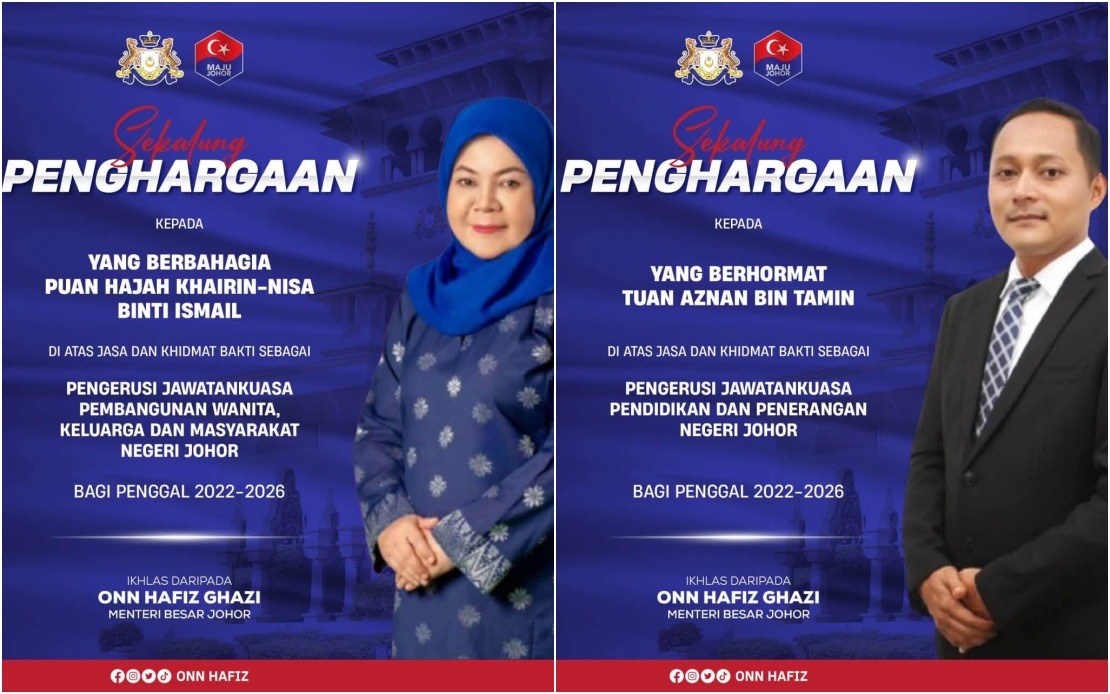
Johor's Menteri Besar Datuk Onn Hafiz Ghazi has defended a reshuffling of the State Executive Council as a deliberate move to inject fresh energy into the state administration while maintaining institutional continuity. Speaking from Johor Bahru on July 19, Onn Hafiz characterised the cabinet reorganisation not as a departure from previous direction, but as a natural evolution necessary to propel Johor towards sustained progress and prosperity for its populace.
The reshuffle involved a significant transition within the ten-member exco, with six sitting assemblymen retaining their portfolios and four newcomers entering the state government fold. This mixture of continuity and change underscores an administrative strategy common across Malaysian state governments: rotating talent to prevent stagnation while preserving institutional knowledge. The new exco members were formally sworn in before Tunku Mahkota Ismail at Istana Bukit Serene, marking the commencement of a fresh political cycle in Malaysia's southernmost peninsula state.
At the heart of Onn Hafiz's statement lies a carefully calibrated message designed to mollify those departing from executive positions. Acknowledging the four outgoing members—Datuk Zahari Sarip, K. Raven Kumar, Aznan Tamin and Khairin-Nisa Ismail—he emphasised that their removal from specific portfolios does not diminish their past contributions. This distinction is politically significant; in Malaysian politics, exco reshuffles can carry undertones of disfavour or internal power struggles, and explicit recognition of departing members serves to mitigate such perceptions.
Onn Hafiz framed the reshuffle within a broader philosophy of governance, suggesting that administrative positions are vessels for service rather than permanent entitlements. He argued that experience, wisdom and dedication to public service transcend specific roles, implying that valuable leaders remain valuable regardless of portfolio assignment. This rhetorical approach attempts to transform what might be perceived as a setback for departing exco members into a natural progression within collective governance efforts.
The four outgoing members collectively invested substantial time and energy during the 2022-2026 term, with Onn Hafiz crediting them as instrumental architects of state achievements across that period. Their departures encompass a range of administrative responsibilities, suggesting the reshuffle addresses multiple portfolio areas. The Menteri Besar's public acknowledgment that state successes were built substantially upon their efforts serves both to preserve their political standing and to demonstrate gratitude from the top tier of Johor's leadership.
For Malaysian observers tracking state-level governance dynamics, this reshuffle illustrates the cyclical nature of cabinet management within the federation's thirteen state governments. Regular adjustments to exco composition allow chief ministers to respond to evolving administrative needs, reward loyal assemblymen with elevated status, or introduce new perspectives into executive deliberations. Johor, as the country's second-largest state by population and a significant economic engine, particularly warrants close scrutiny regarding its administrative configurations.
The introduction of four fresh faces into the exco represents approximately forty percent turnover in executive positions, a substantial but not unprecedented transformation. This proportion suggests Onn Hafiz seeks meaningful renewal without wholesale institutional disruption. The retention of six existing members provides continuity in handling ongoing portfolios and policies, while newcomers presumably bring alternative viewpoints or represent constituencies requiring elevated representation within state government circles.
Onn Hafiz's emphasis on facing challenges collectively and maintaining development priorities reflects the pressures confronting Malaysia's states in a period of economic uncertainty and rising public expectations. State governments across the nation grapple with balancing infrastructure development, fiscal responsibility, social services delivery, and political stability. Cabinet composition directly impacts a government's capacity to address these multifaceted demands, making reshuffle decisions strategically consequential.
The formal ceremony at Istana Bukit Serene underscores the constitutional weight of exco appointments in Malaysian governance structures. State executive councils exercise significant authority over education, health, agriculture, local government and numerous other portfolios affecting daily life. The presence of the Regent at the oath-taking ceremony reflects the ceremonial importance Johor attaches to executive appointments, reinforcing the gravity of portfolio assignments within the broader constitutional framework.
Onn Hafiz's statement reveals awareness that exco reshuffles generate political reverberations extending beyond administrative circles. Public messaging that frames transitions as normal, positive and respectful to predecessors helps manage perceptions among party members, coalition partners and the broader electorate. By emphasising continuity alongside renewal, the Menteri Besar attempts to project stability even as administrative structures undergo modification.
Looking forward, the reshuffle's success will be measured not merely by formal appointments but by demonstrable progress on Johor's development agenda. State governments ultimately derive legitimacy from delivery of tangible improvements in infrastructure, services and economic opportunity. The four outgoing exco members' legacies will be assessed based on projects completed and initiatives launched during their tenure, while the four newcomers face immediate pressure to demonstrate competence and commitment to their portfolios.
For the incoming exco members, the reshuffle represents both opportunity and accountability. Their appointment by Onn Hafiz signals confidence in their administrative capabilities and political reliability. However, they inherit portfolios with established expectations, ongoing projects and public scrutiny. Success requires both mastering complex policy domains and building credibility within state bureaucracies and among constituent communities.

