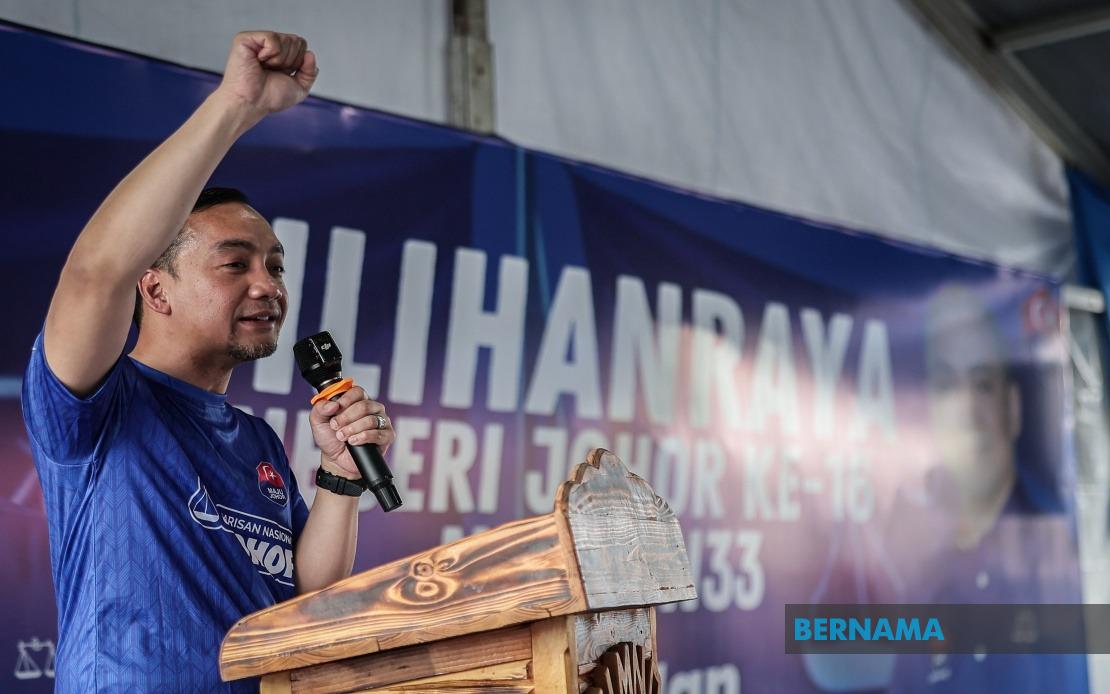
Johor's Barisan Nasional coalition leadership believes it has captured genuine electoral momentum in the Endau constituency, where returning candidate Alwiyah Talib is generating what party officials describe as unexpectedly strong grassroots support ahead of polling on July 11. The optimism underscores a pivotal moment in the state's political realignment, with Alwiyah's defection from Perikatan Nasional back to BN serving as a symbolic anchor for the coalition's messaging around unity and reinvigorated governance.
Datuk Onn Hafiz Ghazi, who chairs BN as Johor's Menteri Besar, attributed the positive reception to Alwiyah's track record of constituent service and her embodiment of pragmatic coalition-building. Speaking during a campaign event in Mersing on June 29, Onn Hafiz characterised her as a tested administrator whose political journey—from BN to Bersatu and now returning to the original coalition—reflected deeper currents of realignment within Johor's political landscape rather than opportunism.
Alwiyah's repatriation into BN ranks carries symbolic weight beyond electoral mathematics. Onn Hafiz explicitly framed her return within the "Rumah Bangsa" concept, a UMNO initiative championed by party president Datuk Seri Dr Ahmad Zahid Hamidi that emphasises coalition cohesion, cross-ethnic cooperation, and inclusivity. This language suggests BN is attempting to rebrand itself as a tent large enough to accommodate politicians from competing coalitions, provided they demonstrate commitment to constituent welfare and administrative competence.
The Endau seat represents particularly instructive terrain for this unity narrative. In 2022, Alwiyah secured the constituency for Perikatan Nasional with a 3,041-vote majority in a five-way contest, demonstrating resilient personal support despite shifting coalition allegiances. Her earlier victory in 2018 under the BN banner before moving to Bersatu shows she has maintained electoral credibility across different political formations—a rarity in Malaysian politics and one that complicates opposition counter-narratives about coalition-hopping as purely self-interested.
Onn Hafiz's remarks also indexed the broader state machinery's readiness for the election campaign. He noted that party structures in both Endau and the neighbouring Tenggaroh constituency appeared well-organised and motivated, suggesting internal discipline and resource allocation conducive to competitive campaigning. This operational assessment carries weight in Malaysian state elections, where ground-level party machinery—canvassing networks, voter registration drives, and community engagement—often determines outcomes in marginal constituencies.
The campaign environment in Johor has proceeded without major incidents or controversies, according to the Menteri Besar, a claim that implicitly contrasts with some earlier state election cycles marked by acrimonious exchanges or logistical disruptions. This relative calm may favour BN, which typically benefits from voter fatigue with divisive campaigns and preference for stable, predictable governance messaging. Alwiyah's personal brand—affectionately known locally as "Kak Awi"—appears to complement this softer political atmosphere, emphasising approachability and constituent-focused work rather than ideological stridency.
For Malaysian and Southeast Asian observers, the Endau contest illustrates broader coalition dynamics within a mature electoral system. The willingness of established BN figures to welcome back defectors, combined with the framing of such returns as philosophically coherent rather than pragmatically opportunistic, reflects sophisticated coalition management. It contrasts with more rigid bloc politics in some regional democracies, though it also raises questions about ideological consistency and the stability of coalition identities.
The July 11 polling date creates a compressed campaign window—roughly two weeks from the announcement. Early voting scheduled for July 7 may advantage well-organised parties with reliable voter mobilisation infrastructure, another potential BN strength. The stakes in Endau specifically extend beyond that single seat; a BN victory, particularly with an expanded majority, would validate the Rumah Bangsa inclusivity messaging and demonstrate that coalition-building exercises can yield measurable electoral returns.
Alwiyah's candidacy also speaks to the evolving role of female political leadership in Malaysian state politics. Her multiple electoral successes, including retention of the seat under different coalition banners, position her as more than a symbolic representative—she commands genuine constituent loyalty that transcends party branding. This earned political capital may prove decisive in a competitive state election where personality-driven voting often coexists with institutional party loyalty.
Onn Hafiz's confidence reflects confidence in both Alwiyah's personal appeal and broader BN campaign architecture, yet the 3,041-vote margin in 2022 suggests Endau remains competitive terrain. Opposition mobilisation, potential voter fatigue with BN governance, or unexpected campaign developments could shift dynamics between now and July 11. The constituency thus functions as an important bellwether for the broader state contest, with implications for Johor's political trajectory and national coalition stability extending well beyond this single election cycle.

