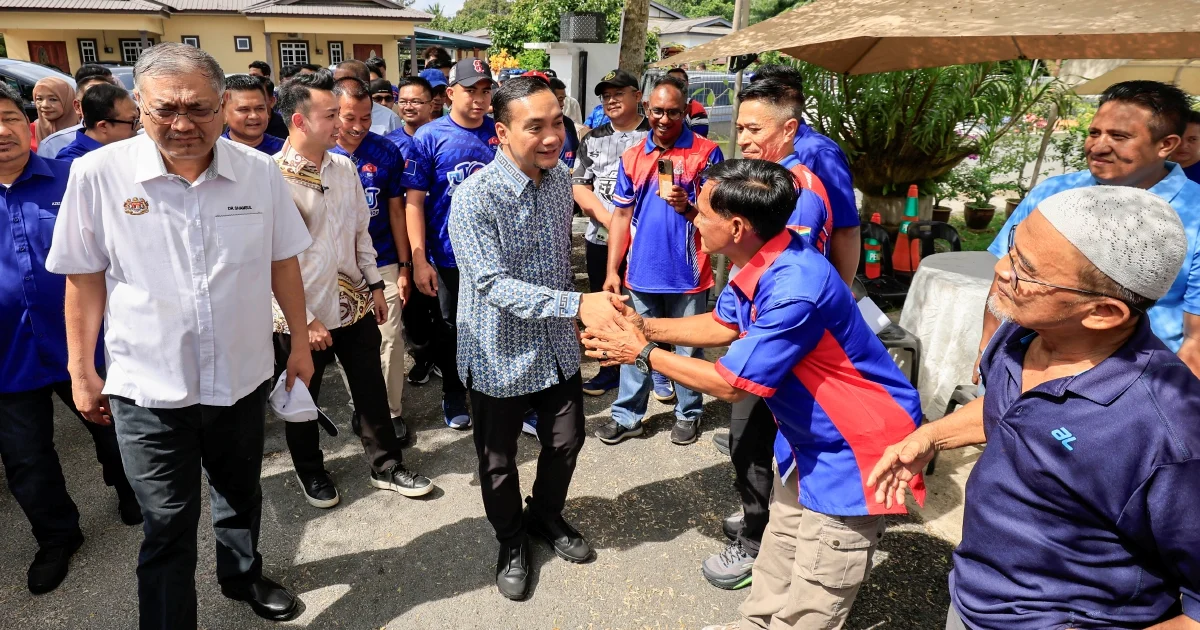
Johor Menteri Besar Onn Hafiz Mohd Salleh has defended the right of any political party to independently formulate its election strategy, following Pas's move to encourage supporters to back Barisan Nasional candidates in contests where Perikatan Nasional abstains. His remarks, delivered at Simpang Renggam, reflect a pragmatic acknowledgment of the complex inter-party dynamics that characterise Malaysia's multi-coalition political landscape.
The statement comes as Pas, the Islamist party that broke from Perikatan Nasional's grip at the federal level but remains influential in select states, navigates a delicate balancing act between maintaining credibility with its grassroots and cooperating tactically with centrist coalitions. Onn Hafiz's intervention suggests a recognition within the Johor establishment that such manoeuvres, while sometimes controversial within party structures, represent legitimate political calculations in Malaysia's fluid environment.
Pas's directive carries particular weight given its substantial membership and the party's historical significance in Malaysian Islam-based politics. The instruction to back BN candidates in uncontested PN seats essentially creates a informal alliance that could reshape outcomes in marginal constituencies without requiring formal pacts or public coalition announcements. This approach allows both Pas and other political forces to maintain organisational independence while achieving electoral coordination that benefits larger groupings.
The backdrop to these developments involves the ongoing repositioning of Malaysian coalitions following the 2022 general election, which fragmented the traditional two-bloc system. Perikatan Nasional, comprising Pas and other conservative parties, initially sought to consolidate as a cohesive alternative to Barisan Nasional and Pakatan Harapan. However, mounting internal tensions, particularly around governance priorities and resource allocation, have prompted tactical separations and selective cooperations at state and federal levels.
For Johor specifically, Onn Hafiz's statements carry administrative implications. As Menteri Besar of Malaysia's southern economic powerhouse, he operates within a political reality where multiple coalitions claim influence. Pas's electoral positioning in the state directly affects the balance of power and the feasibility of implementing state-level policies. A coordinated approach where Pas directs support toward BN in certain contests potentially stabilises the political environment that Onn Hafiz requires for governance.
The autonomy Onn Hafiz emphasises also reflects broader principles about how Malaysian democracy functions in practice. Unlike nations with rigid party-list proportional systems, Malaysia's single-member constituency framework and multiparty landscape necessitate complex negotiations and strategic alignments. Parties frequently adjust their positions between elections and even mid-term, responding to shifting grassroots sentiment and leadership calculations. Recognising this flexibility as legitimate, rather than treating it as betrayal, suggests a maturing discourse around electoral pragmatism.
Pas members and sympathisers may view the directive to support BN in certain races with mixed reactions. The party's ideological positioning as a religious and conservative force sometimes sits uneasily with Barisan Nasional's secular governance traditions. Yet by maintaining the condition that such support applies only where Perikatan Nasional does not field candidates, Pas preserves a degree of autonomy and can argue that cooperation, rather than subordination, characterises the arrangement. This distinction matters considerably for party morale and internal cohesion.
From the broader Southeast Asian perspective, Malaysia's coalition fluidity mirrors patterns seen in Indonesia, Thailand, and the Philippines, where multiparty systems frequently produce complex alignments that confound Western observers accustomed to stable two-party frameworks. The region's political parties often demonstrate willingness to cooperate across ideological lines when electoral arithmetic demands, and Pas's approach fits within regional norms of strategic flexibility.
For voters, the implications remain uncertain. Constituencies where Pas members actively campaign for BN candidates might experience different levels of engagement than those contested directly by Perikatan Nasional. The quality and intensity of electoral campaigns could vary, potentially affecting turnout and outcomes in ways that transcend official party positions. Additionally, voters in these areas should monitor whether local elected representatives, once in office, govern according to BN platforms or remain responsive to Pas-affiliated constituency concerns.
Onn Hafiz's comments also signal tolerance from the Johor state administration toward parties making independent strategic calculations. Unlike administrations that demand absolute loyalty or rigid coalition discipline, his stance suggests space for negotiation and pragmatic coalition-building. This posture may encourage other parties to engage in dialogue rather than confrontation, potentially reducing political turbulence in the state.
Looking forward, the sustainability of such arrangements depends on whether electoral benefits materialise and whether party members perceive the strategies as advancing collective interests. Should Pas members feel that directing support toward BN undermines their own party's growth, internal discontent could prompt reversals. Conversely, if the approach yields legislative seats and policy influence that might otherwise be unattainable, it could become a permanent feature of Pas's electoral toolkit.
The coming election cycle will test whether Pas's strategy achieves its objectives and whether Onn Hafiz's framing of party autonomy gains acceptance within the broader Malaysian political community. The outcome will likely influence how other parties approach inter-coalition cooperation and whether Malaysia's political landscape becomes more stable or further fragmented.

