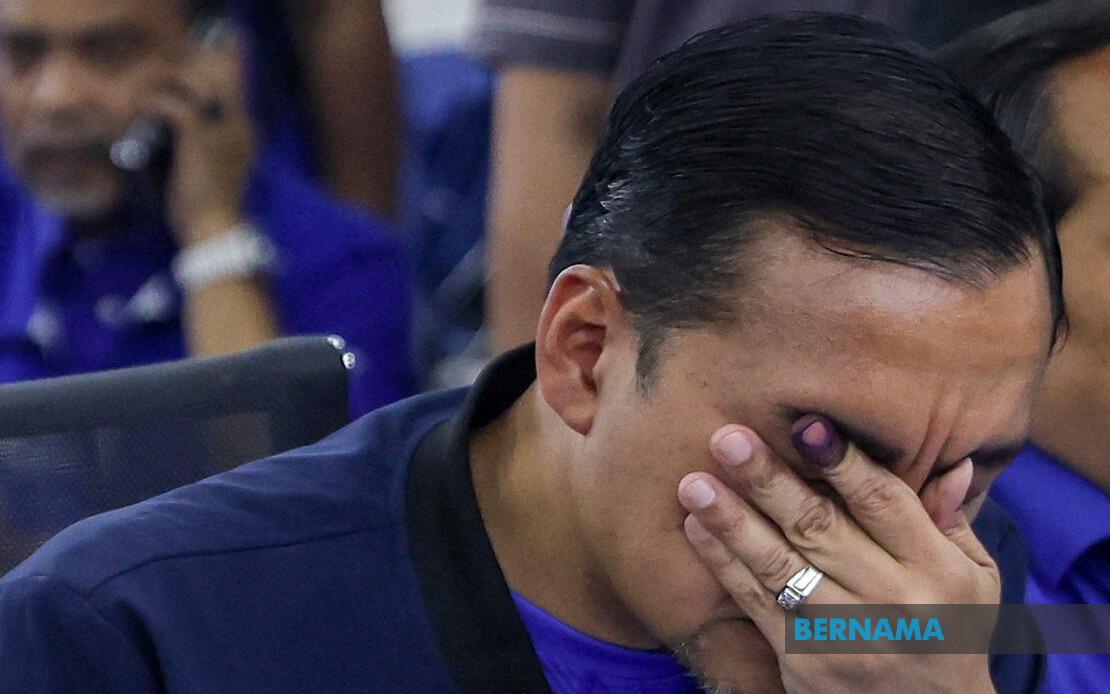
Johor Menteri Besar Datuk Onn Hafiz Ghazi has consolidated his grip on the Machap state constituency, successfully defending his seat for Barisan Nasional in the 16th state election held on July 11. The result marks another electoral victory for the state BN chairman, who polled 20,382 votes in a two-cornered contest against Pakatan Harapan's Nur Hafiz Roslan, winning by a commanding majority of 15,375 votes.
The scale of Onn Hafiz's victory underscores the political dominance he has established in his constituency and reflects the broader confidence voters have placed in his leadership at the state level. The Machap seat has emerged as a personal stronghold, with the Menteri Besar's performance improving significantly compared to his previous electoral contest. The decisive nature of this victory is particularly noteworthy given the different electoral dynamics compared to the 2022 poll, which featured a multi-cornered race.
In the previous state election three years ago, Onn Hafiz retained Machap with a majority of 6,543 votes, but that contest involved four candidates competing for the seat. The 2022 race included challengers from Perikatan Nasional, MUDA, and PEJUANG, fragmenting the anti-BN vote. The 2025 election, contested only between the Menteri Besar and the Pakatan Harapan candidate, presented a clearer two-way choice for voters in the constituency.
The increased majority this year—more than double the 2022 figure—suggests that Onn Hafiz has expanded his voter base or consolidated support that was previously split among opposition parties. This improvement is significant for BN's strategic position in Johor, a state that remains crucial to the ruling coalition's federal dominance. Machap's performance also carries implications for the broader coalition's standing in the state legislature.
Onn Hafiz's victory comes as BN Chairman as well as Menteri Besar, roles that position him as a key figure in both state and national politics. His performance in Machap directly influences perceptions of his political capital and his ability to deliver electoral results for the coalition at the grassroots level. The substantial majority reflects either strong personal popularity or effective party organisation—or likely both—in mobilising supporters across the constituency.
The Electoral Commission's official declaration of results confirms Onn Hafiz's retention of the seat, formally cementing his role as the representative of Machap voters for another electoral term. The constituency's characteristics, voter demographics, and campaign strategies deployed by both BN and Pakatan Harapan will likely be analysed by political observers seeking to understand voting patterns across Johor in this election cycle.
For Malaysian political analysts and BN strategists, Machap represents a bellwether constituency worth monitoring. How voters in this state seat respond to different political messages, personalities, and policy proposals offers insights into the broader dynamics shaping electoral outcomes across Johor. The constituency has demonstrated consistent support for the BN candidate, though the 2022 election showed that opposition parties could still mobilise meaningful support even in Onn Hafiz's political base.
The regional significance of Johor elections extends beyond state governance. As the country's southern anchor and a strategic economic region, Johor's political orientation influences investor confidence, federal-state relations, and the government's policy implementation capacity. Elections here therefore merit attention not only from Malaysian political observers but also from regional analysts tracking political stability in Southeast Asia's third-largest economy.
Onn Hafiz's strengthened position in Machap may enhance his influence within BN's leadership structures and his capacity to shape state-level policy agendas. His electoral performance provides political capital he can deploy to negotiate with federal counterparts or consolidate his standing among state-level BN colleagues. The Machap victory thus carries significance beyond the constituency's boundaries.
The two-candidate contest in Machap differed from the multi-party competition that characterised 2022, suggesting that opposition consolidation may have strengthened one challenger, or that voter choice simplified around clearer ideological lines. Understanding whether voters actively shifted toward BN or whether opposition votes consolidated behind a single Pakatan Harapan candidate requires deeper electoral analysis. The pattern established in Machap may replicate elsewhere in Johor, making this constituency a valuable case study for election observers tracking coalition performance across the state.

