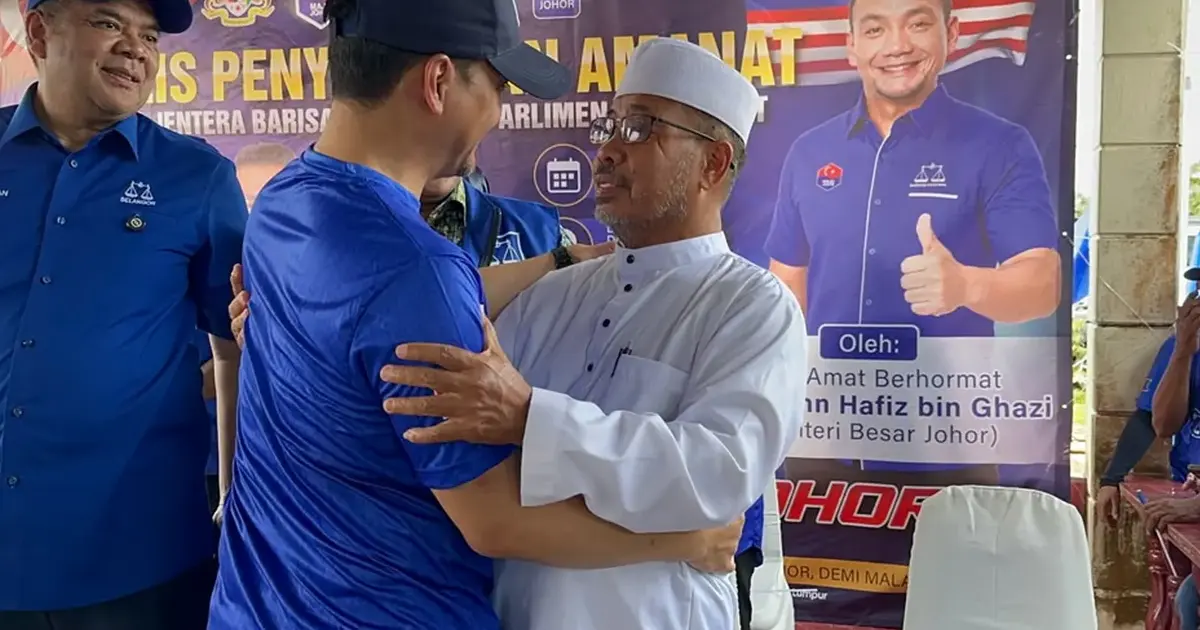
Johor Menteri Besar Onn Hafiz has expressed his appreciation for the presence of Parti Islam Se-Malaysia leaders at a Barisan Nasional campaign event held in Batu Pahat, underscoring the delicate balance of coalition politics in Malaysia's southern heartland ahead of what observers expect to be a closely contested electoral period.
The show of solidarity from PAS representatives at the gathering reflects the ongoing complexity of Barisan Nasional's relationship with its Islamic-based partner. While the two groups maintain formal ties within the broader coalition framework, their presence at shared events carries symbolic weight in a political landscape where messaging and perception management remain critical tools for maintaining grassroots support and demonstrating unity to voters.
Batu Pahat, a constituency with significant Malay-Muslim demographics, has historically been a stronghold where both Barisan Nasional and its Islamist allies have competed for voter confidence. The decision by PAS figures to attend the Barisan Nasional event, despite the party not fielding its own candidates in the three seats within the Batu Pahat parliamentary division, suggests an effort to preserve coalition cohesion and avoid unnecessary friction that could harm both parties' electoral prospects.
The political arithmetic in Batu Pahat reflects the broader distribution of seats between coalition partners in Johor and nationally. Bersatu, representing Perikatan Nasional, is contesting two of the three available seats in the area, a configuration that emerged from negotiations among the political forces seeking to present a unified front while managing competition for representation. This arrangement necessitates careful coordination to prevent the fragmentation of votes that could benefit opposition candidates.
Onn Hafiz's characterization of himself as "touched" by the PAS attendance suggests an emotional dimension to coalition management that extends beyond transactional political calculation. In Malaysian politics, where personal relationships and expressions of goodwill frequently cement political arrangements, such statements serve multiple purposes: they reassure coalition partners of their value, provide positive messaging for party members and supporters, and project an image of unity to the electorate.
The Batu Pahat event occurs within a context of shifting political alignments across Malaysia. Johor has emerged as a crucial battleground where Barisan Nasional seeks to reassert dominance after years of electoral turbulence that saw opposition parties make significant inroads in 2018 before recovering ground in subsequent contests. The state's diverse constituencies require nuanced coalition strategies that accommodate different political actors while maintaining disciplined messaging.
For Malaysian voters observing these developments, the participation of PAS leaders in Barisan Nasional functions carries implications for post-election governance arrangements. Coalition politics in Malaysia increasingly operate on the principle that regular public displays of unity among partner parties help consolidate their hold on power and discourage defections or realignments that could destabilize governments. The Batu Pahat gathering exemplifies how such symbolic gestures are orchestrated to maintain coalition stability.
The decision to exclude PAS from direct candidacy in these specific seats, while simultaneously inviting party representation to campaign events, reflects negotiated settlements that balance the ambitions of multiple political organisations. Such arrangements require genuine commitment from all parties to avoid accusatory rhetoric that could alienate coalition partners or their voter bases. Onn Hafiz's remarks appear calibrated to acknowledge PAS's continued relevance within the broader framework.
Regionally, Malaysia's coalition politics continue to offer lessons for Southeast Asian democracies grappling with multi-party systems. The mechanisms through which diverse political organisations maintain working relationships while pursuing electoral competition have become increasingly sophisticated, though tensions periodically emerge when partner parties believe they are receiving inadequate consideration in seat distributions or ministerial appointments.
The Batu Pahat scenario also illustrates how ground-level campaign activities remain central to Malaysian politics despite evolving media landscapes. In-person events where party leaders demonstrate solidarity with coalition partners still carry substantial weight in constituencies where traditional forms of political engagement remain dominant. The photograph and messaging generated from such gatherings circulate through both formal and informal networks, shaping voter perceptions across demographic groups.
Moving forward, maintaining the cohesion Onn Hafiz references will require sustained attention from Barisan Nasional leadership. Political coalitions in Malaysia have historically proven fragile when partner parties feel marginalised or when electoral outcomes disappoint. The visible participation of PAS figures in Barisan Nasional activities suggests current efforts to prevent such fracturing, though underlying tensions regarding seat allocation and policy direction occasionally surface in public commentary from party officials.
For the broader Southeast Asian region observing Malaysian politics, such developments demonstrate how coalition management increasingly shapes governance outcomes. As traditional party machines weaken and voter loyalty becomes more conditional, the visible performance of partnership—through joint campaign events, public endorsements, and shared platforms—becomes essential to consolidating political power and legitimising electoral mandates.

