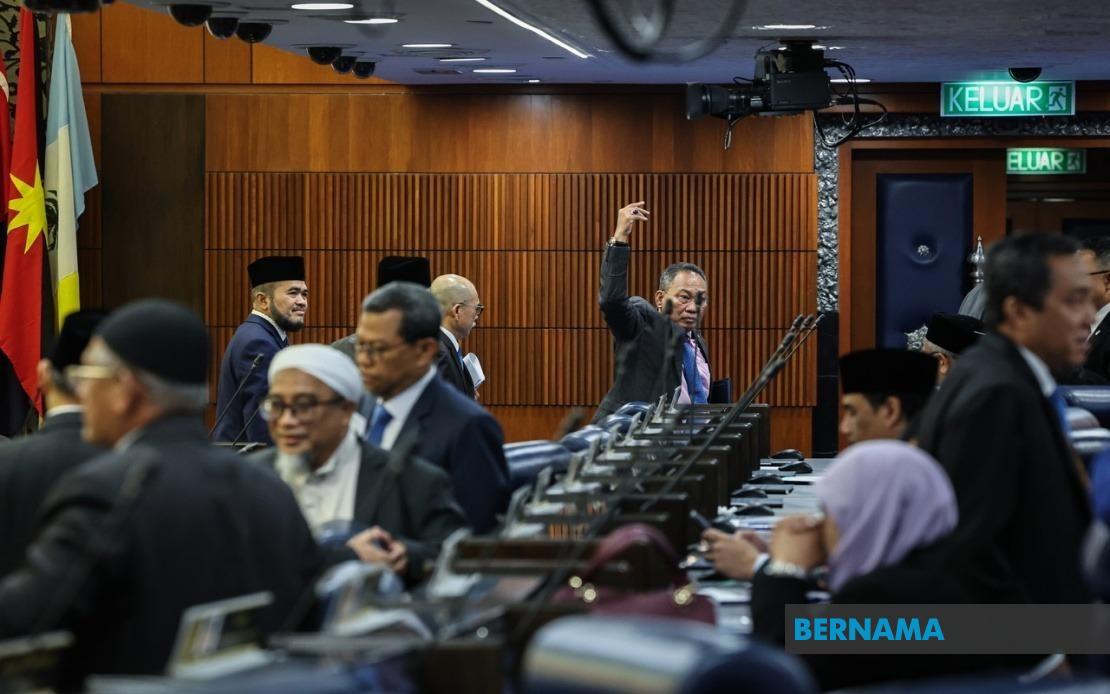
The opposition's absence from yesterday's parliamentary debate on the Tabung Haji Royal Commission of Inquiry report represents a significant lapse in the Dewan Rakyat's capacity to function as a meaningful check on executive power, according to academics examining Malaysia's political system. When Perikatan Nasional lawmakers, led by Opposition Leader Datuk Seri Hamzah Zainuddin, absented themselves from proceedings and declined to participate in discussions concerning the institution's management failures, they forfeited a crucial opportunity to hold government officials accountable on behalf of the public they represent.
The special parliamentary sitting convened specifically to allow Minister in the Prime Minister's Department (Religious Affairs) Dr Zulkifli Hasan to brief the legislature on findings from the RCI investigation into Tabung Haji's governance and operational weaknesses spanning 2014 to 2020. The RCI report identified systemic deficiencies in how the institution manages the savings of approximately 10 million Muslim pilgrims and depositors across the country. Rather than engage substantively with these findings, opposition MPs abandoned their seats in protest over the absence of Prime Minister Datuk Seri Anwar Ibrahim and Deputy Prime Minister Datuk Seri Fadillah Yusof, both of whom were receiving medical treatment.
Associate Professor Dr Mazlan Ali from Universiti Teknologi Malaysia emphasized that the opposition's decision represents a disappointment to depositors who placed their faith in elected representatives to serve as their guardians in Parliament. The academic noted that lawmakers possessed an effective instrument to scrutinize the report, pose direct questions to the minister, and demand clarifications on matters affecting depositors' savings and institutional governance. By choosing boycott over engagement, opposition members surrendered their platform and their ability to create an official parliamentary record documenting their concerns and the government's responses.
Dr Mazlan further observed that the opposition leadership's insistence on the Prime Minister's personal attendance misunderstood the constitutional distribution of ministerial responsibility. Dr Zulkifli Hasan, as the minister overseeing religious affairs matters, possessed sufficient authority and competence to provide comprehensive answers within his portfolio scope regarding Tabung Haji's affairs. The absence of the Prime Minister, while perhaps politically significant, did not undermine the substantive value of ministerial testimony before Parliament. The academic also acknowledged that the Prime Minister deserved time to recuperate from his medical condition without bearing the burden of attending parliamentary sessions while still hospitalized.
Beyond the immediate parliamentary mechanics, analysts warn that the boycott carries reputational consequences for the opposition's political standing. By declining to participate visibly in defending the interests of Tabung Haji depositors, opposition parties risk appearing indifferent to the financial wellbeing of millions of Muslim Malaysians whose savings had been compromised by institutional mismanagement. The episode potentially undermines opposition credibility on matters affecting vulnerable constituencies who depend on government institutions for their retirement security and religious obligations.
Dr Nazreena Mohammed Yasin, a senior lecturer in the Department of Social Sciences at Universiti Tun Hussein Onn, stressed that substantive parliamentary participation represents the most effective mechanism through which Malaysia's bicameral legislature can discharge its constitutional oversight function. The Dewan Rakyat debate on the Tabung Haji RCI report provided an institutional forum where elected representatives could examine findings rigorously, interrogate government officials, and ensure that proposed remedial measures received public scrutiny. Such parliamentary processes strengthen the principle of democratic accountability by obligating the government to justify its actions and decisions directly to the legislature and the people it represents.
Dr Nazreena underscored that governmental accountability to Parliament does not depend exclusively on the Prime Minister's physical presence in the chamber. Any minister speaking with appropriate authority can answer questions, defend policy positions, and commit the government to future action. The responsibility for oversight extends beyond any single individual to the entire parliamentary institution. MPs who boycott proceedings therefore forfeit their capacity to ensure that follow-up measures arising from the RCI's recommendations receive proper scrutiny and implementation.
The analyst further emphasized that when matters carry direct implications for public welfare and institutional integrity, elected representatives bear a special obligation not merely to voice criticism but to ensure that their questions elicit substantive responses and that government commitments are monitored through established parliamentary mechanisms. The Tabung Haji situation exemplifies this principle, as the institution serves a specific religious and social purpose while managing assets belonging to millions of individual Malaysians. Effective legislative oversight becomes essential when systemic weaknesses have been documented and corrective measures proposed.
The broader implications for Malaysia's parliamentary system extend beyond this single debate. If opposition parties routinely abandon their seats in response to disputes over attendance by senior leaders, the legislature loses its capacity to function as an independent branch of government capable of restraining executive overreach. Parliaments derive their legitimacy and effectiveness from their ability to compel the executive to account for its actions, but this power depends on opposition members present and engaged in genuine questioning and debate. Walkouts may generate short-term political drama but ultimately diminish the institution itself.
Penikatan Nasional Chief Whip Datuk Seri Takiyuddin Hassan initiated the opposition's response by proposing postponement of the special sitting, citing the medical absences of the Prime Minister and Deputy Prime Minister. This procedural maneuver reflected the opposition's preference for demonstrative protest over substantive engagement. When the sitting proceeded regardless, the opposition chose collective withdrawal rather than participation despite disagreement with the timing or format.
The incident also raises questions about how Malaysia's opposition navigates the tension between theatrical political opposition and genuine legislative responsibility. Malaysian voters expect opposition MPs to function as their representatives in Parliament, scrutinizing government proposals and protecting their interests through robust debate. When opposition lawmakers use boycotts primarily as political theater rather than as last resorts when genuine engagement becomes impossible, they undermine the institution that grants them their legitimacy and effectiveness.
For depositors in Tabung Haji and the broader Malaysian public, the episode illustrates a fundamental constitutional principle: elected representatives discharge their duties most effectively when they engage with government, ask difficult questions, and create documented records of official responses. Boycotts may satisfy immediate political impulses but leave the public's interests undefended in the very forum established to protect them.

