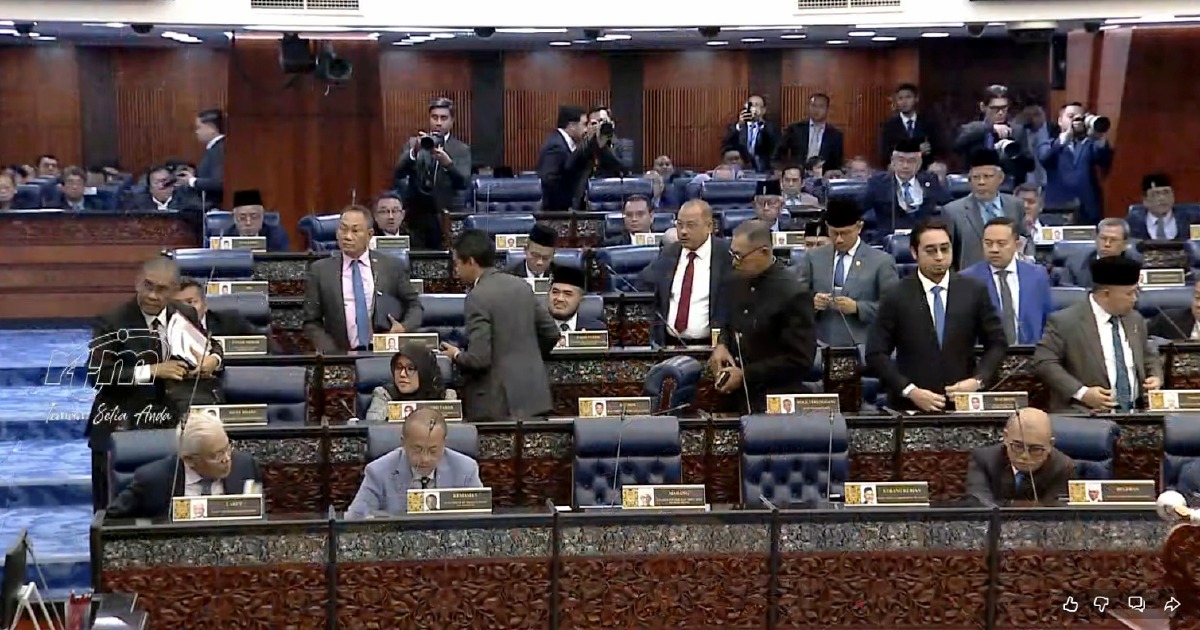
The opposition benches erupted into coordinated protest today when the Speaker of the Dewan Rakyat declined to defer a special parliamentary sitting examining the Royal Commission of Inquiry's report into Tabung Haji, the hajj pilgrimage savings scheme that has faced mounting scrutiny. The walkout underscores deepening tensions within Malaysia's legislative chamber as rival political camps clash over procedural matters and the sequencing of significant parliamentary business.
Opposition lawmakers had requested that the House delay the session to allow Prime Minister Datuk Seri Anwar Ibrahim to participate in the debate. Their argument centred on the significance of the RCI findings and the importance of having the country's chief executive present during such a consequential discussion. However, the Speaker's refusal to grant this postponement prompted the opposition bloc to abandon the chamber in protest, a tactic that signals their frustration with what they view as an unfair handling of parliamentary procedure.
The Tabung Haji inquiry has become increasingly contentious in recent months as questions mount regarding the management of the Islamic financial institution and its investment strategies. The Royal Commission's investigation was initiated to examine governance issues and financial irregularities that stakeholders had raised. With millions of Malaysian Muslims relying on Tabung Haji as their primary vehicle for accumulating funds for the hajj pilgrimage, concerns about the fund's stewardship carry both practical and symbolic weight in the national discourse.
The decision to proceed with the special sitting despite the opposition's objections reflects the ruling coalition's determination to move forward with parliamentary business. Supporters of the government's approach argue that delaying important inquiries indefinitely can hinder accountability and transparency. They contend that parliamentary sessions must sometimes advance even when not all key figures are physically present, particularly when substitute speakers can articulate government positions effectively.
For Malaysian observers, this confrontation illuminates the fragile equilibrium that characterizes contemporary parliamentary relations. The opposition's walkout represents one of the more emphatic forms of protest available to lawmakers who find themselves in the minority, yet such dramatic exits carry risks of diminishing opposition voices precisely when they might most effectively challenge government narratives. By evacuating the chamber, opposition MPs sacrifice their opportunity to cross-examine officials and present counter-arguments directly.
The Prime Minister's absence from Parliament at this particular moment compounds the political sensitivity. Whether Anwar's unavailability stems from official duties, health considerations, or other commitments remains pertinent context for understanding the opposition's stance. The insistence that the nation's leader should oversee such proceedings reflects a principle that major inquiries warrant executive-level engagement and accountability.
Tabung Haji itself merits attention as a crucial institution within Malaysia's Islamic financial ecosystem. Established to facilitate Malaysians' ability to save systematically for the hajj pilgrimage, the organization manages billions of ringgit and represents both a financial and spiritual commitment for Muslim Malaysians. Any governance failures or mismanagement can affect millions of beneficiaries whose life savings are entrusted to its stewardship. The RCI's investigation therefore addresses matters far beyond routine administrative oversight.
The parliamentary standoff also reflects broader concerns about institutional checks and balances in Malaysia. Opposition parties argue that robust parliamentary scrutiny of executive-level issues requires proper procedure and appropriate attendance. The ruling coalition, conversely, emphasizes operational continuity and forward momentum. This tension between procedural rigour and administrative efficiency recurs regularly in legislatures worldwide, yet it carries particular weight in Malaysia's evolving democratic landscape.
Regionally, Malaysia's parliamentary dynamics attract scrutiny from other Southeast Asian democracies navigating similar questions about opposition rights, government prerogatives, and the balance between meaningful debate and efficient governance. How the Dewan Rakyat manages such contentions influences perceptions of Malaysian parliamentary health and institutional independence.
The opposition's departure signals they view the RCI debate as sufficiently important to merit principled resistance, even at the cost of forfeiting direct participation. Their strategy gambles that public attention to procedural irregularities will resonate with constituents who value democratic propriety. Whether this tactic achieves its intended effect—either prompting procedural reconsideration or mobilizing public pressure—remains to be observed in coming parliamentary sessions.
Moving forward, the Tabung Haji inquiry's findings will likely generate sustained parliamentary and public attention regardless of today's procedural controversy. The substance of the RCI report, whatever it contains, will eventually receive scrutiny. Yet the manner in which Parliament examines such weighty matters—including questions of attendance, procedure, and participation—shapes public confidence in institutional integrity. Both the government and opposition face pressure to demonstrate that Malaysia's parliament functions as a genuine forum for accountability rather than merely a venue where majorities dictate terms to minorities.

