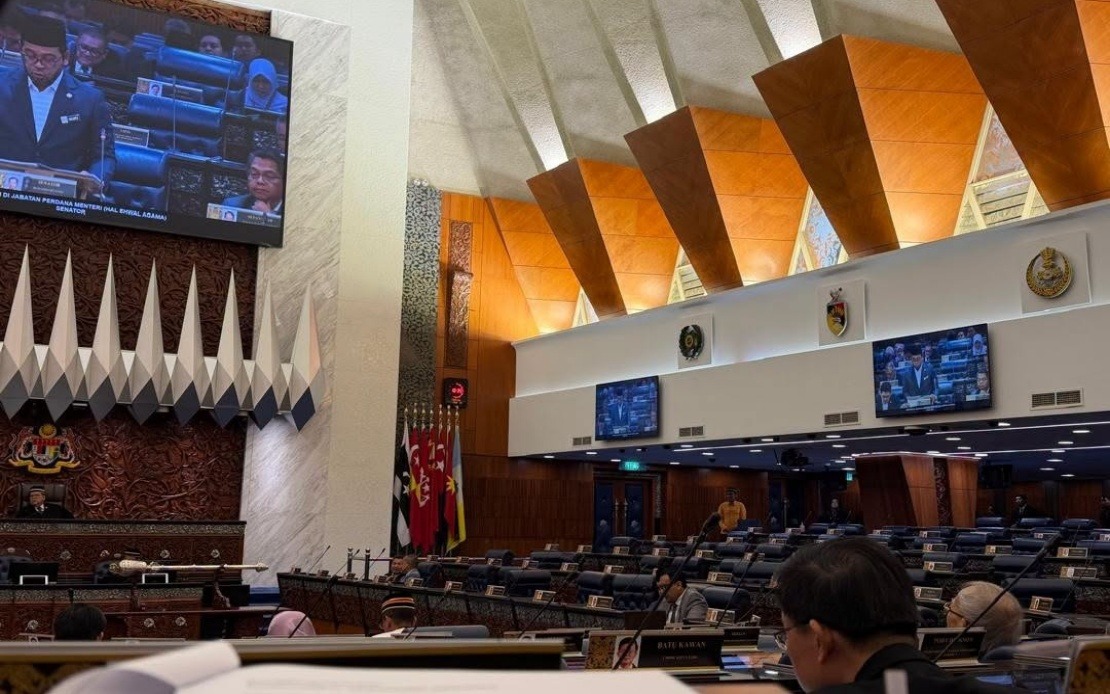
The opposition's decision to stage a walkout from a special parliamentary session examining the Royal Commission of Inquiry findings on Lembaga Tabung Haji has drawn sharp criticism from government ranks, with MADANI Government Backbenchers Club chairman Datuk Seri Dr Zaliha Mustafa arguing the move contradicts the opposition's stated commitment to Islamic values and institutional accountability. The boycott occurred before Minister in the Prime Minister's Department for Religious Affairs Dr Zulkifli Hasan could deliver his briefing to MPs on the highly anticipated RCI report, which examines the management of Malaysia's pilgrimage savings scheme for Muslim citizens.
The timing of the opposition's protest was particularly significant given that Parliament represented a formal, structured setting where opposition lawmakers could have rigorously interrogated the RCI's conclusions, challenged government positions backed by documentary evidence, and articulated alternative perspectives on governance failures or recovery mechanisms. Dr Zaliha's critique centred on what she characterised as a disconnect between the opposition's public rhetoric on Islam, financial transparency, and Muslim interests and its parliamentary conduct. She questioned whether opposition figures genuinely prioritise protecting the interests of Tabung Haji depositors—many of whom are working-class Muslims saving for the Hajj pilgrimage—when they abandon the legislative chamber rather than engage substantively with the findings.
The underlying tension reflects broader parliamentary dynamics in Malaysia's complex political landscape. Opposition MPs cited Speaker Tan Sri Johari Abdul's decision to proceed with the session despite the absence of Prime Minister Datuk Seri Anwar Ibrahim and Deputy Prime Minister Datuk Seri Fadillah Yusof as grounds for their protest. Perikatan Nasional chief whip Datuk Seri Takiyuddin Hassan had initially proposed postponing the sitting given that both leaders were undergoing medical treatment. This procedural objection, however, effectively obscured the substantive parliamentary opportunity before them. For Malaysian voters and particularly the Muslim community invested in Tabung Haji's future, the question of whether institutional scrutiny proceeds with prime ministerial presence is secondary to whether the legislative process examines management lapses, recovers misallocated funds, and strengthens safeguards.
The Tabung Haji matter carries profound significance for Malaysia's Islamic governance architecture and for millions of ordinary Muslims whose retirement and religious aspirations depend on the fund's stability. The Royal Commission investigation emerged from public concern about the institution's financial health and administrative practices. A parliamentary debate—the formal mechanism through which such inquiries typically receive legislative oversight—would have provided opposition MPs a platform to propose amendments to regulatory frameworks, demand accountability from officials, and signal to their constituents their engagement with issues directly affecting household finances. The walkout effectively ceded this space.
Dr Zaliha's argument carries particular weight because it highlights a strategic miscalculation on the opposition's part. Rather than allowing the government to monopolise the narrative around Tabung Haji governance, opposition members could have used parliamentary scrutiny to position themselves as fierce defenders of Muslim financial interests. They could have tabled specific critiques of the RCI's recommendations, proposed more stringent accountability measures, or highlighted governance gaps the commission may have overlooked. Such engagement would have provided substantive material for their political messaging and demonstrated active parliamentary participation to voters concerned about the fund's future.
The absence of the Prime Minister and Deputy Prime Minister, while unusual, does not render a parliamentary session illegitimate or compromise its deliberative function. Parliamentary conventions in Westminster-derived systems like Malaysia's allow business to proceed with ministerial representation and backbench participation. A government minister briefing MPs on an RCI report represents standard legislative procedure. Opposition lawmakers could have used questioning time to press for clarifications, raise concerns about implementation timelines, or seek guarantees regarding transparency in recovery efforts. These exchanges would have been recorded in Hansard, Malaysia's parliamentary record, providing permanent documentation of their positions.
The Tabung Haji crisis touches on Muslim financial security in a way that transcends partisan politics. Hundreds of thousands of Malaysian Muslims—teachers, civil servants, labourers, and retirees—have entrusted their savings to the fund specifically for performing the Hajj. Any governance failures represent a betrayal of that trust and a direct threat to their spiritual and financial aspirations. For the opposition to absent itself from the formal parliamentary discussion of how the government intends to address these failures suggests that tactical advantage in the moment outweighed substantive commitment to protecting constituent interests.
Furthermore, the opposition's position becomes politically vulnerable when examined closely. Should controversy emerge around Tabung Haji's recovery trajectory or if depositors face further financial losses, the opposition will struggle to credibly claim it prioritised Muslim interests. They will have forfeited the opportunity to establish themselves as vigilant parliamentary guardians of the fund's reform process. Voters evaluating opposition credibility on Islamic governance issues will likely remember that the opposition chose symbolic protest over substantive engagement when the parliamentary forum was available.
The broader Malaysian political context reinforces the significance of this episode. As voters assess which coalition best represents their interests—whether on economic management, religious affairs, or institutional accountability—parliamentary conduct becomes a crucial indicator. The opposition's walkout, regardless of its stated justification regarding ministerial absences, communicates to voters that the opposition prioritises confrontational positioning over constructive legislative participation. This perception could have lasting consequences for opposition efforts to rebuild public trust, particularly among Muslim constituencies for whom Tabung Haji represents a fundamental expression of Islamic financial practice.
Moving forward, the question for Malaysian voters and civil society observers centres on whether the RCI report's recommendations will receive adequate legislative scrutiny. The opposition's absence means the government will effectively monopolise parliamentary discussion on one of the year's most consequential inquiries into Islamic institutional management. Subsequent debates on Tabung Haji reform, recovery mechanisms, and regulatory improvements may occur without the robust countervailing voices that a functioning opposition provides. This deficit in parliamentary scrutiny serves neither democratic accountability nor the interests of depositors whose financial security depends on rigorous institutional reform.
The episode ultimately underscores how parliamentary democracy functions most effectively when all stakeholders—government and opposition alike—commit to substantive engagement with matters of genuine public importance. When opposition parties substitute walkouts for argument, tactical protests for testimony, and absence for accountability, they diminish not merely their own credibility but the legitimacy of the legislative process itself. For Malaysian voters, particularly those invested in Tabung Haji's recovery, the opposition's decision to absent itself from parliamentary scrutiny represents a missed opportunity to demonstrate vigilant representation on an issue affecting millions of households.

