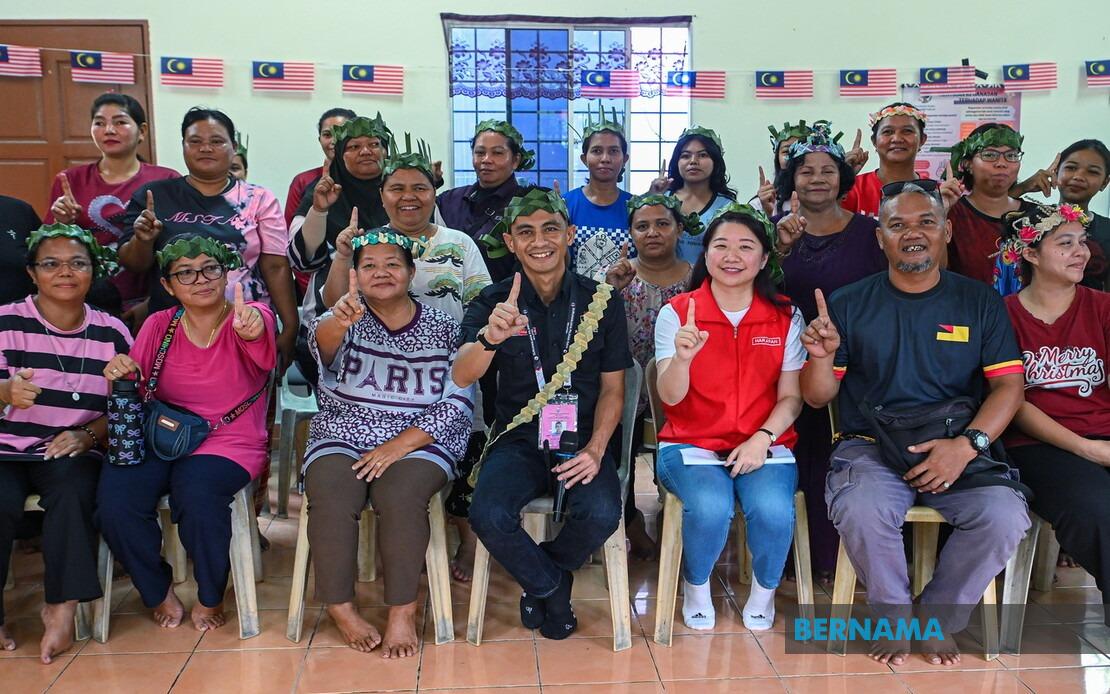
Datuk Ahmad Faez Abdul Razak, contesting as the Pakatan Harapan nominee for the Labu state seat, has placed the advancement of the Orang Asli community at the heart of his electoral platform for the upcoming Negeri Sembilan state election. Speaking at the Orang Asli Women Empowerment programme held at Kampung Orang Asli Tekir, the first-time candidate outlined a comprehensive strategy aimed at transforming living standards and fostering sustainable economic growth within the indigenous settlement.
The centrepiece of Ahmad Faez's manifesto centres on addressing a longstanding grievance: the customary land issue affecting residents of Kampung Orang Asli Tekir. Should voters grant PH the mandate in the Negeri Sembilan polls, he has committed to escalating this matter to the State Legislative Assembly, signalling his intention to tackle the problem through formal parliamentary channels rather than administrative workarounds. This approach recognises that land rights remain fundamental to the Orang Asli community's long-term security and development prospects, particularly in Peninsular Malaysia where competing claims and bureaucratic complications have historically marginalised indigenous tenure.
Beyond land rights, Ahmad Faez's proposal embraces tangible infrastructure improvements that would directly enhance daily life in the village. His agenda encompasses upgrading road networks and expanding internet connectivity—amenities that have become essential rather than luxurious in contemporary Malaysia. The absence of robust digital infrastructure particularly hampers economic activity and educational access in rural indigenous settlements, perpetuating cycles of disadvantage. By prioritising connectivity alongside physical roads, the candidate acknowledges modern development requirements while demonstrating awareness of how digital exclusion compounds rural marginalisation.
Education and youth development form another pillar of his campaign message. Ahmad Faez has signalled that younger residents, whom he characterises as possessing substantial potential, require targeted support to acquire marketable skills and generate sustainable income. This reflects broader regional challenges facing rural and indigenous youth, who frequently face limited vocational pathways and insufficient mentorship to transition into formal employment. By emphasising skills enhancement and income generation, the candidate addresses what development practitioners identify as critical gaps in youth opportunity structures across Southeast Asia.
A particularly noteworthy element of his platform involves leveraging traditional Orang Asli strengths in handicraft production. Rather than proposing replacement economic activities, Ahmad Faez advocates expanding existing artisanal capacity through enhanced marketing channels and market access. This approach respects indigenous cultural practices while positioning traditional crafts within modern commercial networks. The strategy acknowledges that Orang Asli communities possess existing productive capabilities that require better integration into broader Malaysian supply chains rather than wholesale economic restructuring.
Complementing handicraft promotion, Ahmad Faez has proposed introducing contemporary agricultural techniques, specifically fertigation systems, to enhance farming yields and sustainability. This represents a pragmatic blend of indigenous agricultural knowledge with modern horticultural technology. Fertigation—the simultaneous application of fertiliser and irrigation through drip systems—can substantially improve agricultural productivity while reducing water consumption, a particularly relevant consideration in Malaysia's tropical climate. By framing agricultural modernisation as a productivity tool rather than cultural displacement, the candidate attempts to demonstrate how tradition and innovation can coexist within development frameworks.
The Labu candidate has also sought to establish credibility through demonstrable commitment, claiming two years of consistent engagement with constituents beyond the electoral cycle. He explicitly rejected the pattern of politicians appearing solely during campaign seasons, a common grievance that erodes voter trust across Malaysia. His assertion that he has maintained ongoing community presence and assistance attempts to differentiate his candidacy from transactional political engagement typical of electoral contests. This positioning matters particularly in rural constituencies where relationships between representatives and communities often determine outcomes.
Village chief Nasir Musil, representing Kampung Orang Asli Tekir's 796 residents, has articulated priorities that substantially align with Ahmad Faez's proposals. Beyond infrastructure and economic development, Nasir raised the persistent problem of stray cattle posing hazards to road users—a seemingly local issue that nonetheless reflects how rural indigenous communities face infrastructure and animal husbandry challenges requiring governmental coordination. The chief's public endorsement of Ahmad Faez's engagement pattern suggests the candidate has achieved credibility within the settlement, though formal endorsements in state elections remain officially cautious.
The Labu contest has evolved into a three-cornered competition featuring Ahmad Faez against incumbent Mohamad Hanifah Abu Baker representing Parti Pribumi Bersatu Malaysia and Siti Nur Umaira Hasim contesting for Barisan Nasional. This triangular contest introduces complexity absent from two-candidate races, as vote fragmentation becomes a crucial variable. The incumbent's performance across two consecutive electoral cycles provides a comparative benchmark against which Ahmad Faez's promises will be measured. For voters evaluating candidates, the distinction between incumbent experience and newcomer idealism becomes a central consideration.
The Negeri Sembilan state election scheduling—with early voting on July 28 and general polling on August 1—provides a compressed campaign window during which candidates must consolidate support. For a first-time candidate like Ahmad Faez, establishing visibility and credibility within such timeframes demands intensive ground engagement and efficient communication of policy proposals. The concentration of campaign activity into brief periods means that pre-election groundwork and established community relationships, which Ahmad Faez claims to possess, may prove decisive relative to candidates lacking such foundations.
The campaign's focus on Orang Asli development reflects broader recognition across Malaysian political parties that indigenous communities represent an electoral constituency with distinct development needs and long-standing grievances requiring substantive attention rather than perfunctory gestures. As Peninsular Malaysia's only indigenous population, the Orang Asli have historically experienced marginalisation despite constitutional protections and government development programmes. How electoral candidates from major coalitions address their concerns—and whether such commitments translate into meaningful policy implementation—will continue shaping indigenous communities' electoral participation and broader social integration within Malaysia's plural democracy.

