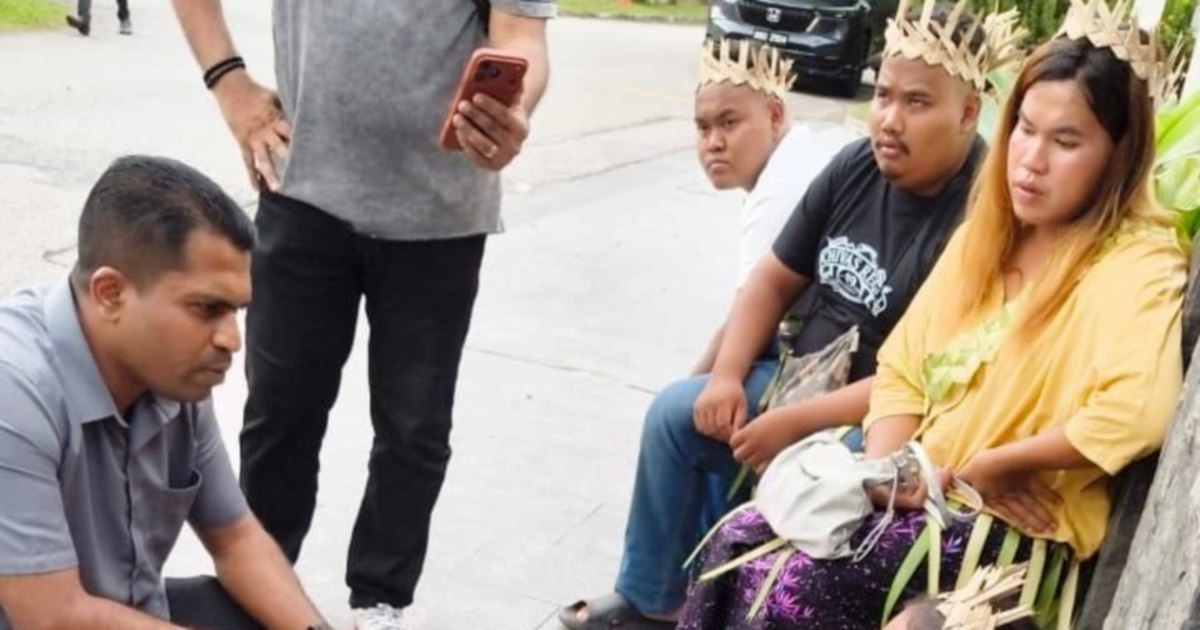
A determined group of Orang Asli residents from Kampung Sungai Cot in Maran, Pahang arrived at Prime Minister Datuk Seri Anwar Ibrahim's residence in Bandar Sungai Long today after undertaking an exhausting two-day journey, seeking direct federal assistance to address what they characterize as systematic destruction of their ancestral properties and traditional territories.
The journey itself underscores the gravity of the situation facing the indigenous community, who felt compelled to travel such a distance to draw attention to land rights issues that local avenues appear unable to resolve. This form of community protest—bringing grievances directly to the nation's highest elected office—represents a significant escalation in their campaign to secure recognition and protection of their traditional lands.
The Orang Asli delegation's arrival at the Prime Minister's home represents a watershed moment in their struggle, highlighting the deepening frustration among Malaysia's indigenous populations regarding their historical exclusion from formal land ownership and tenure security. These communities have long faced challenges in asserting claims to territories their ancestors have inhabited for generations, particularly in regions undergoing rapid development or experiencing competing claims from commercial interests.
Maran, the district from which the villagers originated, lies within Pahang's interior regions where Orang Asli settlements remain scattered across rural landscapes. The fact that residents undertook such an arduous expedition indicates they believe conventional complaint mechanisms and local administrative processes have proven ineffective or unresponsive to their needs. This pattern of indigenous communities bypassing intermediate authorities reflects broader systemic gaps in how land disputes affecting vulnerable populations are addressed.
The alleged destruction of homes carries particular significance within Orang Asli cultural and social contexts, where dwellings remain intimately connected to communal identity, resource management practices, and spiritual traditions. Unlike disputes over agricultural land alone, the demolition of residential structures represents an assault on community stability and continuity, threatening not only economic livelihoods but also the social fabric binding kinship groups together.
Federal intervention has become the last resort for numerous indigenous communities facing similar pressures across Malaysia. While state governments nominally oversee land administration, constitutional frameworks vest ultimate authority over Orang Asli affairs with federal authorities through the Department of Orang Asli Development and associated agencies. The delegation's directness in seeking the Prime Minister's personal involvement suggests their assessment that state-level responses have been inadequate or biased toward development interests superseding indigenous rights.
The timing of this intervention carries broader implications for Malaysia's commitment to indigenous peoples' rights at a moment when international scrutiny of land governance has intensified. The United Nations Declaration on the Rights of Indigenous Peoples, which Malaysia has endorsed, establishes principles that governments should obtain free, prior, and informed consent before undertaking development projects affecting indigenous territories. Incidents such as the alleged destruction in Kampung Sungai Cot raise questions about whether Malaysia's implementation of these commitments matches its international pledges.
Historically, Orang Asli communities have experienced systematic marginalization in land policy, with development agendas frequently prioritizing commercial forestry, plantation agriculture, and infrastructure projects over indigenous tenure rights. The absence of a comprehensive national framework protecting Orang Asli land claims means these populations remain vulnerable to encroachment, displacement, and environmental degradation. Each incident of alleged land destruction therefore represents not merely a local grievance but a symptom of systemic governance failures affecting hundreds of villages across the peninsula.
The federal government's response to this delegation will carry significant weight for future Orang Asli advocacy efforts. Whether Prime Minister Anwar Ibrahim commits to substantive investigation, remedial action, and systemic reform will influence whether other affected communities believe federal channels offer genuine pathways to justice. Conversely, if this visit yields only bureaucratic promises without concrete outcomes, it may further erode already-fragile confidence in state institutions among indigenous populations.
The Kampung Sungai Cot case also intersects with broader Southeast Asian patterns, where indigenous peoples across Thailand, Laos, Cambodia, and Indonesia face comparable pressures from state-sanctioned development projects and unclear property frameworks. Malaysia's handling of this situation may influence how regional governments approach analogous disputes, either demonstrating a commitment to indigenous rights protection or perpetuating patterns of prioritizing economic development over vulnerable populations' welfare.
For Malaysian civil society and human rights organizations, this incident provides an opportunity to examine whether existing grievance mechanisms serve indigenous populations adequately or whether institutional reforms are required. The physical act of trekking two days to reach the Prime Minister's home encapsulates the desperation felt by communities perceiving their concerns as systematically overlooked through normal channels.
Going forward, the authenticity of the federal response will be tested through measurable commitments: independent investigation into the destruction allegations, compensation for affected residents, legal protections against future encroachment, and meaningful consultation mechanisms that respect Orang Asli voice in decisions affecting their territories. Without such concrete actions, the delegation's courageous journey risks becoming another documented instance of indigenous grievances reaching high-level audiences without generating substantive systemic change.

