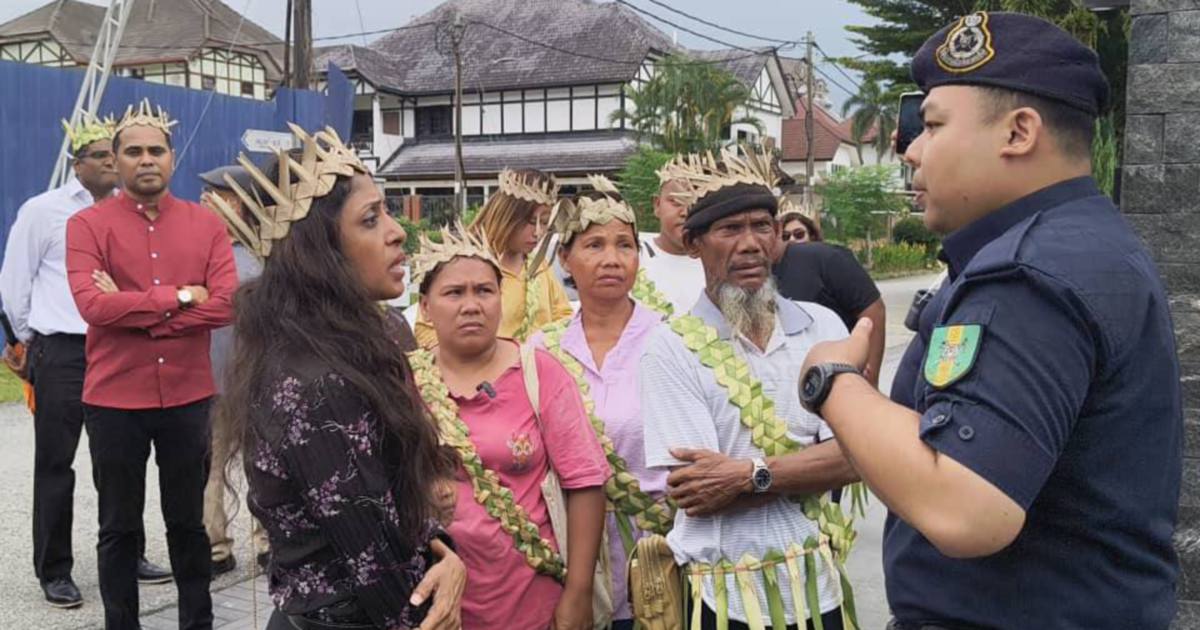
The Orang Asli community of Kampung Sungai Cot in Maran, Pahang, is cautiously optimistic following a direct intervention pledge from Prime Minister Datuk Seri Anwar Ibrahim. During an encounter at Kajang, residents presented their grievances to the premier, who committed to bringing the matter to the attention of state authorities in Pahang—a potentially significant development for a dispute that has consumed years of fruitless negotiations and bureaucratic obstacles.
The land issue affecting Kampung Sungai Cot represents a microcosm of broader challenges facing indigenous communities across Malaysia. The Orang Asli, who have inhabited their ancestral territories for centuries, frequently encounter modern legal and administrative systems that fail to recognise or protect their customary ownership rights. When such disputes remain unresolved at the state level, they can languish for decades, leaving families in a state of uncertainty about their future, their livelihoods, and their ability to pass land to successive generations.
What distinguishes this situation is the direct involvement of federal-level authority. By personally engaging with the community's representatives and explicitly committing to escalate the matter, Anwar has signalled that the issue has reached a threshold where it demands intervention beyond routine administrative channels. This approach differs markedly from previous years when such disputes might have been relegated to lower-tier committees or state offices with limited resources and political will.
For the residents of Kampung Sungai Cot, the ancestral land represents far more than a property designation. It is the foundation of their cultural identity, their economic security, and their connection to the landscape that has sustained their families through generations. The prolonged uncertainty surrounding land tenure undermines their ability to invest in housing improvements, agricultural development, or other long-term initiatives that require secure ownership guarantees.
The Pahang government's involvement remains crucial to any resolution. As the state authority with jurisdiction over land matters, Pahang officials must be willing to work cooperatively with federal counterparts to reassess existing claims, review historical documentation, and consider administrative pathways toward formal recognition. State governments in Malaysia retain considerable autonomy over land administration, which means that even federal encouragement requires genuine buy-in from Kuala Lumpur's decision-makers.
Previous attempts to resolve Orang Asli land disputes have encountered various obstacles, including competing claims from private developers, difficulties in establishing documentary proof of ancestral occupation, and bureaucratic inertia. The system frequently requires indigenous communities to navigate complex legal procedures designed during a colonial era that did not recognise their rights. Many Orang Asli lack formal education or financial resources to engage lawyers or consultants, placing them at a significant disadvantage when confronting government apparatus or corporate interests.
The Kampung Sungai Cot case also reflects broader national conversations about constitutional protections for indigenous peoples. Article 153 of the Federal Constitution does afford specific recognition to Malays and indigenous peoples, yet implementation of these protections remains inconsistent. Land disputes involving Orang Asli communities often highlight gaps between constitutional provisions and on-the-ground reality, where administrative practice may not fully honour statutory safeguards.
Southeast Asia more broadly has struggled with indigenous land recognition. Countries including Thailand, Indonesia, and the Philippines have grappled with similar tensions between customary land rights and state systems. Malaysia's position as a relatively developed nation with formal legal institutions offers potential advantages, yet the machinery of government does not automatically operate in favour of indigenous claimants unless subjected to political pressure and sustained advocacy.
The prime minister's intervention introduces an element of political leverage that previously absent from the Kampung Sungai Cot dispute. Senior federal officials carry weight that state administrators cannot easily dismiss, and public commitment to raise the matter creates accountability that may motivate action. However, transformation of such pledges into concrete outcomes depends on follow-through—sustained engagement, dedicated personnel assigned to facilitate negotiations, and willingness to allocate resources toward investigation and eventual implementation of agreed solutions.
Community leaders and residents will likely monitor subsequent developments closely. The true measure of this intervention will emerge through tangible progress: whether Pahang authorities genuinely reconsider the dispute, whether meaningful dialogue occurs between state officials and community representatives, and ultimately whether substantive steps toward resolution materialise. Indigenous communities across Malaysia will watch this case, as outcomes could set precedent for how federal government engages with similar disputes affecting Orang Asli groups elsewhere.
The coming months will be critical. Anwar's commitment must translate into concrete bureaucratic action, including assignment of responsible officials, establishment of timelines, and clear communication to all stakeholders. For Kampung Sungai Cot families who have invested decades in this struggle, this moment represents both genuine hope and the sobering reality that good intentions alone rarely overcome systemic obstacles without sustained determination and transparent institutional mechanisms to ensure accountability.

