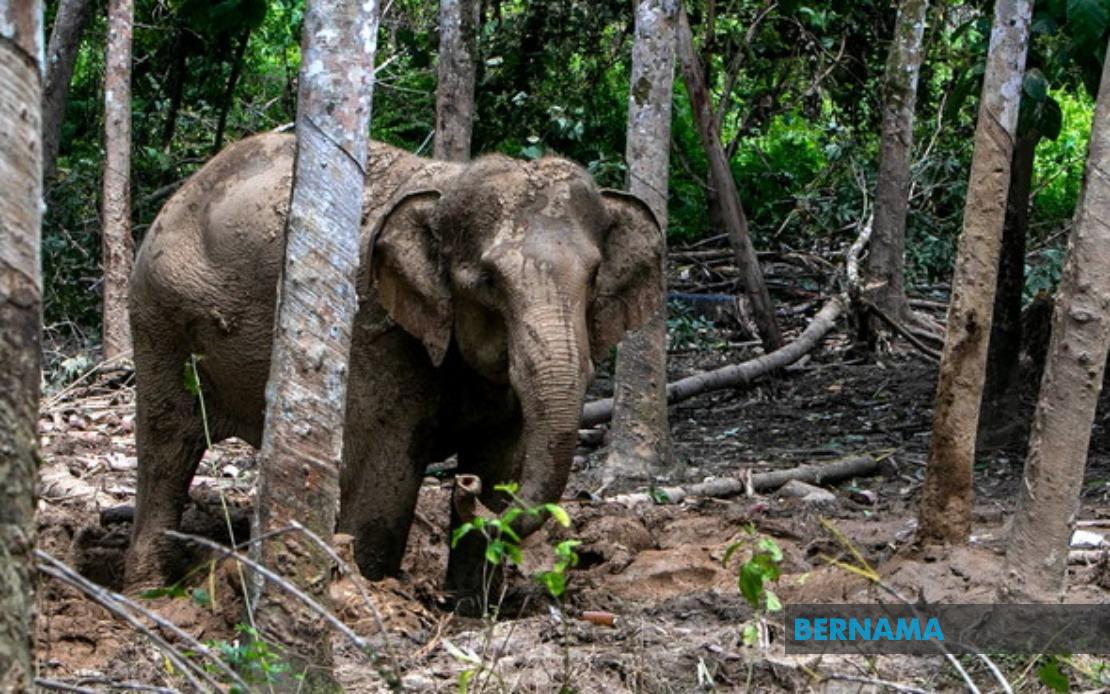
A villager from Kampung Orang Asli Perjek in the Legap Resettlement Scheme near Sungai Siput, Perak sustained serious injuries on Friday evening after being attacked by an elephant whilst attempting to protect his community's crops. The incident highlights the escalating tensions between wildlife and human settlements in peninsular Malaysia's forest fringe areas, where encroachment and habitat loss continue to force elephants into populated zones in search of food and water.
According to the Department of Wildlife and National Parks (PERHILITAN), authorities arrived at the scene around 10 pm following a report from residents. The investigation revealed that a herd of four elephants had ventured into the area directly behind the villagers' homes, where they began consuming cassava and banana crops that represent a vital source of sustenance and income for the community. The elephants' presence posed an immediate threat to both agricultural livelihoods and resident safety, prompting swift action from concerned villagers.
The victim, whose name has not been disclosed, joined several other residents in attempting to drive the herd away from the settlement. However, the situation rapidly escalated when he ventured too close to one of the animals, which responded aggressively and attacked him. The assault left him with substantial injuries and caused him to lose consciousness at the scene. Swift action by fellow villagers, who rescued him immediately, likely prevented the situation from becoming more dire, and he was transported to Raja Permaisuri Bainun Hospital where medical staff have stabilised his condition.
PERHILITAN confirmed through drone surveillance that the four elephants subsequently departed the village area, reducing the immediate risk to residents. The department has since implemented what it described as appropriate management measures aimed at reducing the likelihood of future human-wildlife conflicts in the region. These interventions are understood to include enhanced monitoring protocols and community engagement initiatives, though specific details remain undisclosed.
The incident has renewed focus on the plight of Orang Asli communities, who frequently find themselves caught at the intersection of wildlife conservation and economic survival. The Legap Resettlement Scheme, established to relocate indigenous populations, has paradoxically placed residents in an area with significant elephant activity, creating ongoing tension between subsistence farming and wildlife protection. Such settlements often lack adequate infrastructure and resources to adequately protect crops or residents from wildlife incursions, leaving communities vulnerable to both economic losses and physical harm.
Recognising the victim's situation, PERHILITAN indicated it would facilitate the family's application for compensation under the Wildlife Attack Victim Assistance initiative, a programme administered through the Ministry of Natural Resources and Environmental Sustainability. This support mechanism acknowledges that incidents of human-wildlife conflict, whilst sometimes unavoidable in Malaysia's complex landscape, place significant burden on affected individuals and families. The initiative represents an attempt to balance wildlife conservation objectives with recognition of the real costs borne by local communities.
The department has used the incident as an opportunity to reinforce critical public safety guidance regarding encounters with wild elephants and other dangerous animals. Officials have cautioned against villagers attempting to independently manage wildlife situations, emphasising that such actions, whilst understandable given the immediate threat to livelihoods and safety, significantly increase the risk of injury or death. Elephants, particularly when protecting food sources or responding to perceived threats, are unpredictable and capable of inflicting fatal injuries, making professional wildlife management intervention essential.
PERHILITAN has publicised contact information for residents to report wildlife-related incidents, directing the public to call the departmental hotline at 1-800-88-5151 or submit complaints through the Public Complaints Management System (SISPAA) on the department's official website. These channels aim to ensure rapid professional response to human-wildlife encounters, potentially preventing escalation to the level of physical confrontation witnessed in this case. The availability of dedicated reporting mechanisms reflects growing recognition of the frequency and seriousness of such incidents across the peninsula.
For the broader Southeast Asian region, the incident underscores persistent challenges in balancing economic development and conservation goals in areas inhabited by increasingly pressured elephant populations. Malaysian authorities, along with counterparts across Thailand, Cambodia, and other range states, continue grappling with how to accommodate expanding human settlements whilst maintaining viable populations of megafauna. The situation in Sungai Siput exemplifies how resettlement schemes and agricultural expansion, even when intended to support indigenous communities, can inadvertently intensify human-wildlife conflict zones.
The case also reflects broader systemic issues regarding land use planning and environmental impact assessment in Malaysia. Communities resettled to areas with existing wildlife populations face heightened vulnerability without concurrent investments in protective infrastructure, early warning systems, or livelihood diversification programmes. Addressing such conflicts comprehensively requires coordination across multiple government departments, indigenous rights advocates, and conservation organisations—a coordination that remains inconsistently implemented across the peninsula.
Moving forward, this incident may catalyse more robust discussions regarding wildlife corridors, habitat restoration initiatives, and community-based wildlife management approaches that could reduce future encounters. The intersection of Orang Asli welfare, agricultural productivity, and elephant conservation remains one of Malaysia's most complex environmental justice challenges, requiring nuanced policy responses that protect vulnerable populations without compromising conservation objectives.

