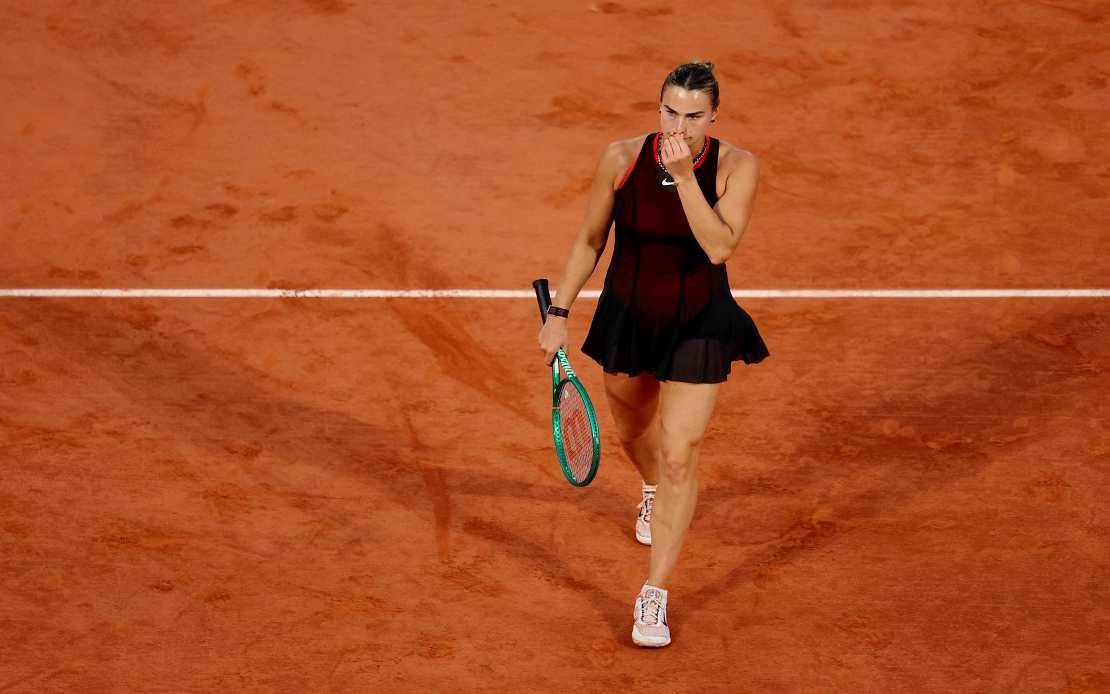
Japan's Naomi Osaka produced one of Wimbledon's standout upsets on Sunday, dismantling top-seeded Aryna Sabalenka of Belarus 6-2, 7-6(2) to secure her maiden quarterfinal berth at the All England Club. The 14th-seeded Osaka's commanding performance represented a watershed moment in her career trajectory, particularly at grass courts where she had previously struggled to make a deep impression despite her dominance on hard surfaces.
Oska's quarterfinal appearance marks a historic milestone for Japanese women's tennis, as she becomes the first from her nation to reach the last eight at Wimbledon since Ai Sugiyama accomplished the feat in 2004. The achievement underscores the rarity of Japanese female players reaching the latter stages of the tournament's grass-court competition, highlighting how demanding the surface remains for players outside the traditional Wimbledon powerbase.
The significance of Osaka's victory extends beyond mere statistics. This was a psychological turning point in her head-to-head rivalry with Sabalenka, who had dominated their matchups earlier this year. The world No. 1 had won three consecutive encounters, including a fourth-round meeting at the French Open mere weeks before Wimbledon. Osaka herself acknowledged the mental hurdle this streak had represented, noting that entering Sunday's match with such a poor record against Sabalenka had weighed on her confidence.
During her on-court interview, Osaka articulated the emotional significance of her breakthrough, expressing genuine joy at returning to peak form on the grass. She reflected that this victory represented a rare moment of pure enjoyment at a major championship, emphasizing how her rediscovery of court happiness had coincided with improved tactical execution and mental clarity. The four-time Grand Slam champion's comments suggested that her path back from previous setbacks and health challenges had finally yielded tangible results at the highest level.
Oska's tactical approach against Sabalenka proved decisive in several respects. The Japanese player's aggressive baseline play and willingness to dictate points appeared to neutralise the Belarusian's typically overwhelming power game. Osaka's second-set tiebreak victory particularly demonstrated her improved composure under pressure, a quality that had eluded her during some of her recent competitive phases.
The quarterfinal draw has positioned Osaka against 10th-seeded Karolina Muchova of the Czech Republic, a matchup offering no guarantees despite Osaka's recent confidence surge. Muchova's grasscourt pedigree and intelligent shot-making present a different challenge from Sabalenka's aggressive baseline assault, requiring Osaka to maintain her elevated level while adapting her game plan.
For regional tennis observers and Malaysian fans who follow international competition, Osaka's resurgence carries broader implications about the cyclical nature of professional sports. Her ability to overcome consecutive losses and emerge triumphant against the world's top-ranked player demonstrates that recent form does not invariably determine future outcomes, particularly at major championships where momentum shifts rapidly across short timeframes.
Meanwhile, Japanese men's tennis experienced less fortune during the same round. Qualifier Shintaro Mochizuki, ranked 151st globally and competing through qualifying rounds, saw his remarkable Wimbledon campaign terminated by defending champion Jannik Sinner. The Italian top seed, favouring none in his pursuit of back-to-back titles, dispatched Mochizuki 6-3, 7-6(0), 6-3 with clinical efficiency. Despite the defeat, Mochizuki's progression through the early rounds represented a creditable achievement for a qualifier against elite opposition.
Sinner's dominant performance highlighted the formidable challenge facing unseeded or lower-ranked challengers against established champions. The Italian's comfortable straight-sets victory demonstrated why recent winners maintain such commanding positions in major tournaments, particularly when defending their crown at venues where their game style flourishes. Sinner's service dominance, reflected in the second set's tiebreak score, showcased the gap separating occasional qualifiers from established circuit regulars.
Oska's quarterfinal entry contrasts sharply with the broader pattern of established players maintaining their positions through the rounds. Her upset victory validates the premise that sustained hard work and mental resilience can overcome statistical disadvantages and poor recent form. For Japanese tennis and the broader Asian tennis landscape, her advancement offers inspiration and suggests that players willing to persist through challenging periods retain legitimate opportunities to compete at the game's highest levels.

