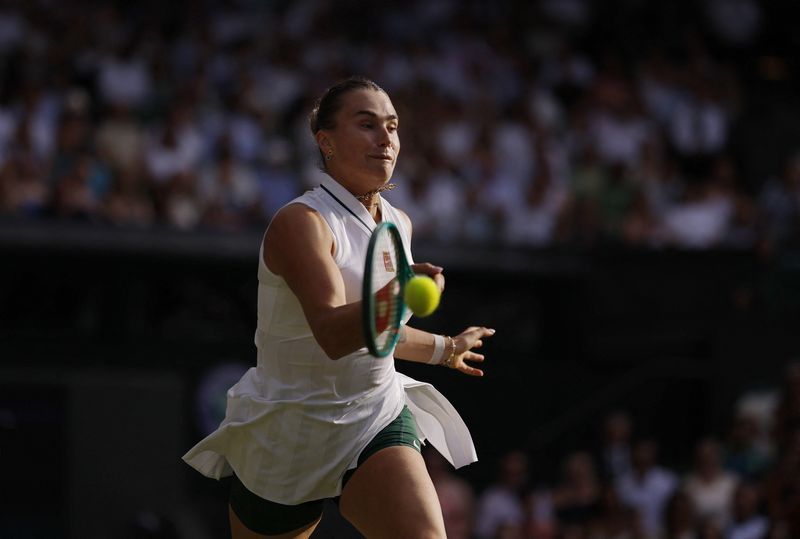
The path to the Wimbledon trophy for the world's elite female players has suddenly become considerably less predictable after Naomi Osaka produced a commanding display to dispatch top seed Aryna Sabalenka from the fourth round on Centre Court. The Japanese 14th seed won decisively 6-2 7-6(2) in a match that promised drama but ultimately showcased Osaka's clinical superiority, sending shockwaves through a tournament already destabilised by unexpected early exits.
The significance of this victory extends beyond the immediate result. With defending champion Iga Swiatek and second seed Elena Rybakina both eliminated in the preceding round, the removal of Sabalenka—the overwhelming favourite after three consecutive semi-final appearances—has fundamentally altered the tournament's landscape. The top three seeds have now departed, creating genuine uncertainty about who will claim the title in a draw that just days ago appeared heavily weighted towards the established hierarchy. For Malaysian fans and Southeast Asian observers, this unpredictability injects fresh excitement into the competition's final stages.
Sabalenka's capitulation in the opening set proved particularly telling. The world number one, renowned for her aggressive baseline game and raw power, found herself completely overwhelmed in just 32 minutes as Osaka broke serve twice to secure a 6-2 scoreline. The Belarusian star's frustration was visible and visceral, her power game misfiring repeatedly against Osaka's precise returning and controlled aggression. What should have been a display of dominant tennis instead revealed an athlete struggling to impose her usual authority on court.
The second set developed into a more conventional contest, with both players trading points and maintaining competitive intensity. However, Osaka's composure remained unshakeable throughout, particularly when the match reached its crucial tiebreak. In a moment laden with significance, the Japanese player snapped Sabalenka's remarkable streak of 21 consecutive tiebreak victories across Grand Slam tournaments. This statistic underscores just how comprehensively Osaka disrupted her opponent's rhythm and confidence in the deciding moments.
Sabalenka's emotional response to losing the match point illustrated the magnitude of her disappointment. The 28-year-old unleashed her frustration by striking a ball with such force that it sailed completely out of the stadium—a telling physical manifestation of the internal turmoil she experienced. When she later addressed the press mere minutes after departing the court, her candid remark about wanting to drink and forget tennis reflected the emotional toll of such an unexpected and decisive defeat on tennis's most hallowed grass court.
Osaka's triumph holds particular resonance given the trajectory of her career in recent years. Returning to professional competition in 2024 following the birth of her daughter Shai, the former four-time Grand Slam champion has been steadily rebuilding her game and confidence. This victory against the world's top-ranked player represents her most impressive win since returning to the Tour, signalling that her competitive instincts and technical prowess remain intact despite the career interruption. For athletes balancing motherhood with elite-level sport, particularly in a male-dominated media landscape, Osaka's resurgence carries symbolic weight beyond tennis.
Historically, both Osaka and Sabalenka have built their legacies predominantly on hardcourts, where their aggressive styles and powerful groundstrokes prove most devastating. Each has captured four Grand Slam titles on that surface, establishing themselves as hardcourt specialists. Yet grass court tennis, with its lower bounce and faster court conditions, demands different tactical approaches and finesse. Osaka's superior movement and returning prowess proved particularly effective on the faster surface, exposing limitations in Sabalenka's game that her hardcourt dominance had temporarily obscured.
The narrative arc between these two players adds another dimension to Sunday's encounter. Born just seven months apart, they have experienced remarkably different career progressions. Osaka captured her first Grand Slam title at the 2018 U.S. Open—notably defeating Sabalenka en route—before collecting three more majors whilst still in her early twenties. Sabalenka, conversely, did not secure her maiden Slam until much later, though she has since claimed three titles and ascended to world number one. Their first meeting on a Grand Slam stage in eight years carried the weight of these contrasting trajectories and the mutual respect between competitors operating at sport's highest echelon.
Osaka's performance drew particular attention for its stylistic elements beyond pure tennis mechanics. She has cultivated an international presence through her distinctive walk-on attire, featuring Japanese-inspired designs that reflect her cultural identity whilst creating visual spectacle for television audiences worldwide. However, as observers have increasingly noted, it is her actual tennis performance that now commands genuine respect and attention. The flashy presentation complements rather than substitutes for genuine competitive excellence.
From the match's opening moments, Osaka seized the initiative through exceptional service return games that consistently unbalanced Sabalenka during her service games. Rather than engaging in the baseline slugfest that Sabalenka typically dominates, Osaka took control of rallies early, preventing her opponent from establishing the rhythm essential to her game plan. Sabalenka's attempts at self-motivation—including striking her racket against her head during the second set—proved inadequate against such composed opposition.
The tiebreak encapsulated the match's essential dynamic. Rather than allowing tension to mount, Osaka accelerated through the crucial moments with the serenity of an accomplished champion, racing to victory and never permitting Sabalenka genuine opportunities to seize momentum. This composed performance under pressure distinguished Osaka's clay-court and grass-court capabilities, challenging the perception that she functions primarily as a hardcourt specialist.
Osaka's quarter-final opponent will be Czech 10th seed Karolina Muchova, representing another intriguing matchup as the tournament navigates its final stages. Her progression eliminates one of the drawn tournament's most formidable obstacles whilst simultaneously opening possibilities for less-favoured competitors and unseeded challengers. The implications ripple throughout the remaining bracket, promising an unpredictable fortnight ahead for Malaysian viewers and fans throughout Southeast Asia following this major upset.

