Malaysia has taken a significant step toward improving welfare support for student volunteers in civil defence by approving a new allowance scheme affecting over 1,100 cadets across the nation's higher learning institutions. The initiative, announced by Deputy Minister of Rural and Regional Development Datuk Rubiah Wang, represents the first tangible disbursement under the government's commitment to enhance conditions for members of Kor SISPA, the Civil Defence Student Corps. Beginning this month, approximately 1,107 cadets stationed at 36 tertiary education institutions will commence receiving payments, marking the culmination of what has long been a policy discussion into concrete implementation.
The financial architecture of the programme reflects a graduated compensation structure based on academic qualifications and service hours. Cadets holding bachelor's degrees will receive RM9.80 per hour of duty, while those with diploma qualifications will earn RM8 per hour. This tiered approach acknowledges different educational levels within the student corps while maintaining a reasonable hourly rate for voluntary civil defence work. The initial phase of the rollout carries a fiscal commitment of approximately RM500,000, establishing a baseline from which future expansions can be measured and budgeted.
Rubiah, who serves concurrently as the Civil Defence honorary commissioner, emphasised that the government views this allowance as a foundational step rather than a final endpoint. Her remarks suggest that the administration intends to explore additional fiscal mechanisms to progressively extend the benefit to broader segments of the Kor SISPA membership. This incremental approach allows for careful financial planning while demonstrating political will to support student volunteers who contribute to national civil defence infrastructure. The phased implementation strategy reflects both budgetary pragmatism and recognition that sustainable expansion requires deliberate resource allocation.
The Civil Defence Student Corps, which has operated since 2010 across universities, polytechnics, and teacher training colleges, has cultivated a substantial alumni base of 11,802 graduates who have transitioned into various professional sectors. The allowance scheme effectively acknowledges the substantial contributions these students make during their tenure in the organisation. By providing monetary recognition for service hours, the programme aims to incentivise greater participation among tertiary students who might otherwise view civil defence duties as unrewarded voluntary labour.
Rubiah's articulation of Kor SISPA's operational scope underscores an often-underappreciated dimension of civil defence work. Beyond high-profile disaster response operations, the corps engages in routine safety and assistance activities throughout the academic year, supporting university events, campus security initiatives, and community engagement programmes. This comprehensive portfolio of responsibilities justifies compensation mechanisms that recognise the breadth of contribution these student volunteers provide to institutional and societal safety frameworks.
The allowance scheme carries particular significance for Malaysian higher education contexts where student finances often remain constrained. For many tertiary students, additional income opportunities are scarce, and institutional support mechanisms vary considerably across different IPTs. By introducing this allowance, the government creates a structured pathway for students to earn supplementary income while simultaneously building practical experience in civil defence operations. This dual benefit—financial and experiential—may enhance recruitment and retention within Kor SISPA's ranks.
From a policy perspective, the initiative reflects broader governmental interest in professionalising and incentivising civil defence participation among younger demographics. As Malaysia faces evolving security and disaster management challenges, cultivating engaged student volunteers who understand civil defence protocols and maintain sustained commitment to the sector becomes strategically valuable. The allowance mechanism serves as both immediate reward and long-term investment in building human capital for national resilience.
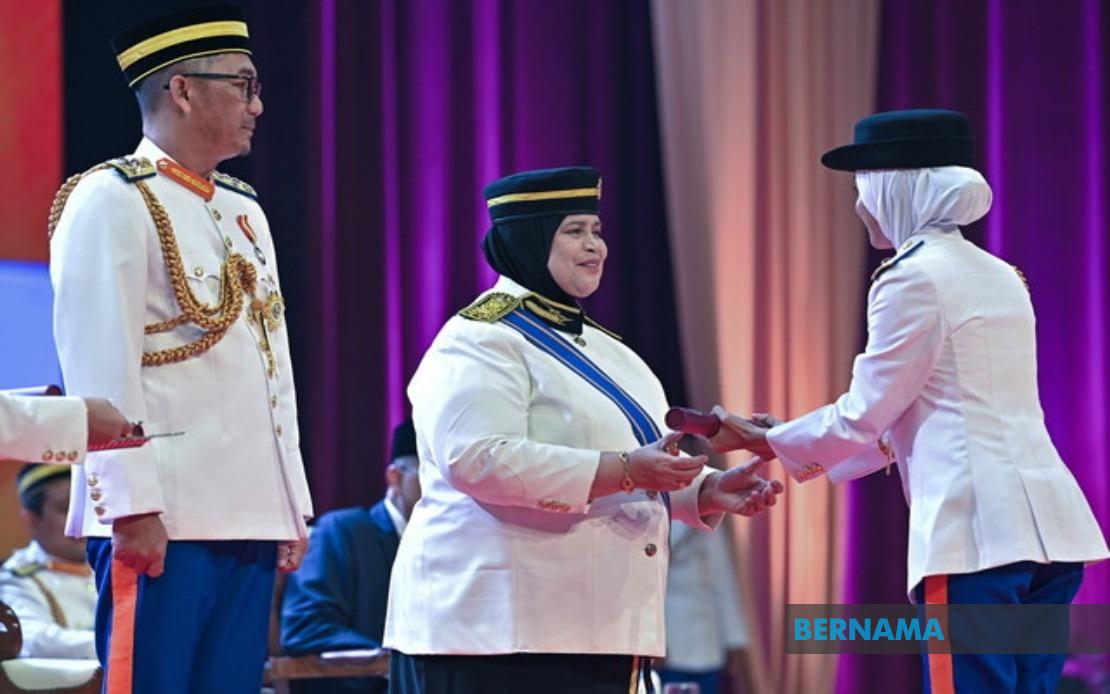
The announcement was made during the 17th National Kor SISPA Commissioning Ceremony at Universiti Pendidikan Sultan Idris in Tanjong Malim, with Datuk Rubiah representing Deputy Prime Minister Datuk Seri Dr Ahmad Zahid Hamidi. The ceremonial context emphasises the formal governmental acknowledgement of this initiative's importance within the broader civil defence framework. Such high-level representation signals that the allowance scheme represents not merely a bureaucratic adjustment but rather a deliberate policy decision with cabinet-level endorsement.
Looking forward, the government has scheduled the next commissioning ceremony for Universiti Sultan Zainal Abidin (UniSZA) in the following year, indicating sustained institutional expansion and regularised recognition protocols for graduating cohorts. This schedule suggests that Kor SISPA's operational footprint continues expanding, with additional IPTs potentially joining the scheme as institutional capacity and government resources permit. The sequential commissioning ceremonies serve as symbolic reaffirmations of the programme's institutional importance and government commitment.
For Malaysian readers, particularly students and families in higher education contexts, this allowance scheme represents tangible progress in recognising and supporting voluntary civil defence participation. The structure—with specific hourly rates and qualifications-based differentiation—provides transparency regarding compensation mechanisms that extend beyond the previous discussion-phase status. As the scheme matures and expands, it may establish precedent for similar recognition of other student volunteer sectors, potentially influencing broader policies affecting student welfare and institutional support across Malaysia's tertiary education landscape.

