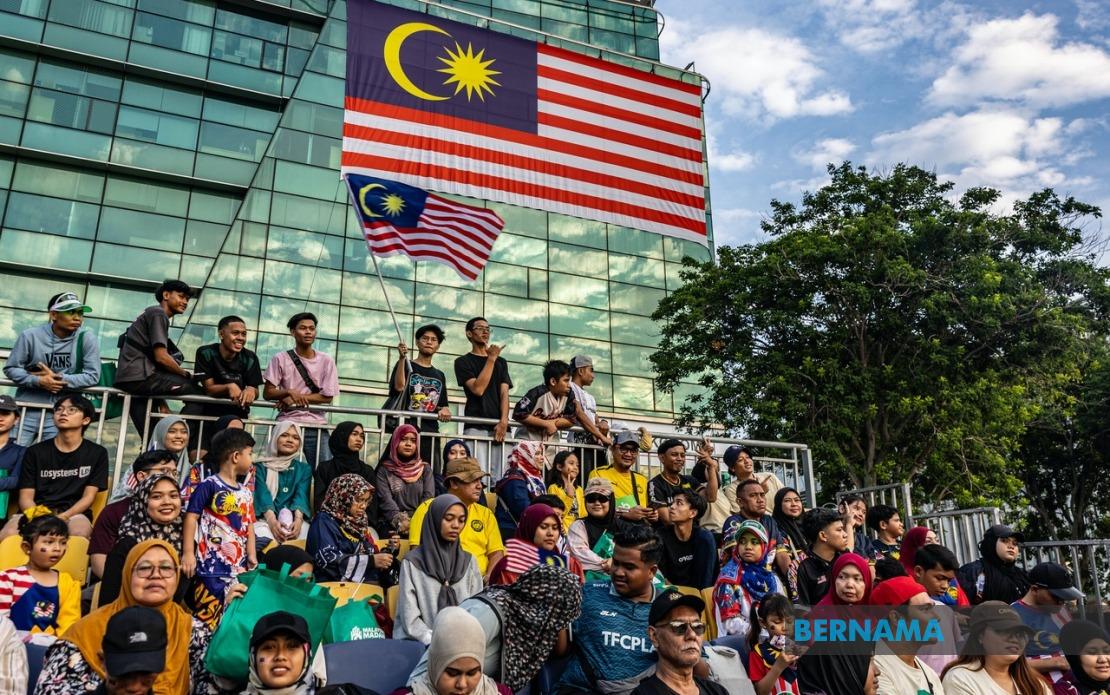
The 2026 National Day celebration in Putrajaya drew an unexpectedly large crowd of more than 100,000 people, comfortably exceeding organisers' original projection of 80,000 attendees. Communications Minister Datuk Seri Fahmi Fadzil, who chairs the National Day and Malaysia Day Main Committee, announced the impressive turnout following the conclusion of festivities on August 31st, underscoring the occasion's resonance across Malaysia's diverse population.
The scale of participation reflected genuine nationwide interest in commemorating the country's milestone. Attendees travelled from multiple states to participate in what proved to be a well-orchestrated national gathering, with Fahmi specifically acknowledging visitors from Sandakan, Johor Bahru, Jeli and numerous other locations. This geographic diversity highlighted how the event succeeded in drawing Malaysians from both peninsular and East Malaysian regions, suggesting strong engagement with the celebration's underlying message of national unity and shared purpose.
Fahmi credited meticulous planning and seamless coordination among diverse government agencies for the celebration's smooth execution. The Department of Environment, Malaysian Meteorological Department, and National Disaster Management Agency worked in concert to manage operational challenges, with particular attention paid to weather management. Notably, these agencies were positioned to conduct cloud seeding if adverse weather threatened the outdoor proceedings, though favourable conditions ultimately prevailed throughout the day, eliminating the need for such intervention.
The structural design of the celebration extended well beyond the central parade, creating multiple layers of engaging activities that justified the large attendance. Beyond the main procession and marching formations, attendees accessed cultural and recreational opportunities including viewing of national defence assets at Anjung Floria and participation in Riuh Merdeka at Monumen Alaf Baru. The integration of food vendors and family-oriented activities transformed the event from a purely ceremonial occasion into an experiential gathering that encouraged extended public participation and social engagement.
The parade itself demonstrated substantial logistical complexity, involving 76 contingents, 22 marching bands and 11 decorated vehicles drawing from an expansive cross-section of Malaysian society. Over 10,800 individual participants contributed to the procession, drawn from government ministries, armed forces, uniformed services, government-linked companies, educational institutions at secondary and tertiary levels, and civil society organisations. This inclusive composition reinforced the national narrative of collective participation transcending institutional boundaries and sectoral divisions.
The 2026 celebration incorporated several inaugural elements that signalled evolving approaches to national commemoration. The Royal Johor Military Force made its first appearance at the National Day parade, while organisers specifically included dedicated contingents representing the upcoming SEA Games 2027 and initiatives under the Orange Economy Sustainability framework. These additions positioned the national celebration as a vehicle for showcasing contemporary Malaysian priorities and forward-looking commitments alongside traditional patriotic observance.
Cultural performance formed a centrepiece of the celebration's artistic dimension, with the "Gema Inovasi MADANI" percussion showcase combining traditional instruments—Rebana Inovasi and Kompang Inovasi among others—with contemporary interpretations. The performance mobilised 150 percussionists and an additional 1,500 human graphic performers, creating a visually and acoustically expansive demonstration of Malaysia's artistic diversity and cultural pluralism. This emphasis on traditional art forms reinterpreted through modern frameworks aligned with broader government messaging around cultural continuity within progressive national development.
The closing segment, titled "Rentak MADANI, Paluan Tradisi", brought together 2,350 participants in a final choreographed performance that symbolically bridged tradition and contemporary national identity. The Royal Malaysian Air Force simultaneously executed aerial demonstrations involving fighter, transport and helicopter squadrons, underscoring the defence establishment's integral role within national celebrations and projecting military capability and readiness to the assembled population.
The celebration operated explicitly under the thematic framework "Malaysia MADANI: Kesejahteraan Dinikmati", which the government has established as the conceptual anchor for its development agenda. This thematic choice positioned the national day as an affirmation of the administration's stated priorities around inclusive prosperity and harmonious nation-building. Fahmi emphasised that the celebration transcended ceremonial function, serving instead as a moment for reinforcing collective national attachment and commitment to unity across Malaysia's multiethnic and multireligious society.
Fahmi's post-celebration remarks stressed that the successful execution merited public gratitude and reflection on national cohesion. His explicit reference to strengthening Malaysians' attachment to country and homeland, combined with his appeal to preserve unity and safeguard the nation, framed the celebration's significance beyond mere commemorative ritual. This rhetorical positioning suggested that national day celebrations serve increasingly important social functions in reinforcing shared identity and collective purpose during periods of political and social complexity.
The absence of reported security incidents or public disorder despite accommodating more than 100,000 people in a concentrated public space underscored effective crowd management and coordination among relevant authorities. This operational success carries particular significance for Malaysia, where large public gatherings occasionally attract scrutiny regarding security and social cohesion. The incident-free celebration provided implicit reassurance regarding the authorities' capacity to manage large-scale national events and coordinate across multiple agencies and jurisdictions.
From a regional perspective, the successful execution of Malaysia's 69th National Day celebration demonstrated institutional capacity for large-scale public event coordination and cultural expression. Within Southeast Asia's contemporary political landscape, where questions persist regarding state capacity and national cohesion in diverse societies, Malaysia's ability to orchestrate inclusive, orderly celebrations involving representatives from multiple ethnic communities and regions carries broader significance for regional perceptions of governance quality and social stability.

