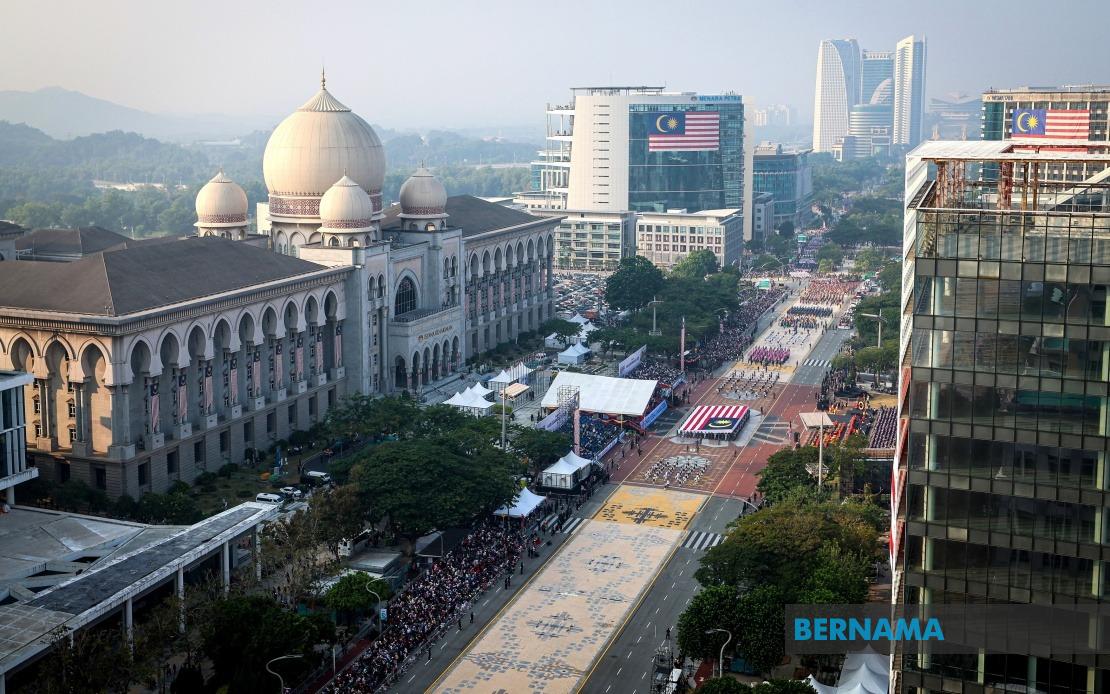
Malaysia's security apparatus is gearing up for a substantial deployment as the nation prepares to mark its 69th National Day on August 31, 2026, with the Royal Malaysia Police committing over 2,300 officers to oversee proceedings at Dataran Putrajaya. The comprehensive security operation, unveiled following a full dress rehearsal of the event attended by Communications Minister Datuk Seri Fahmi Fadzil, reflects official confidence in managing what is anticipated to draw an audience exceeding 80,000 members of the public. Putrajaya district police chief ACP Aidi Sham Mohamed detailed the scope of the operation, which extends beyond mere presence to encompass both static and mobile security checkpoints positioned throughout strategically significant locations surrounding the venue.
The deployment strategy emphasises layered security management, with traffic control operations forming a critical component alongside conventional perimeter protection. ACP Aidi Sham explained that the 2,354 personnel will be distributed across multiple functions, creating a comprehensive network designed to prevent disruptions whilst facilitating the smooth flow of visitors. This scale of deployment underscores the heightened security considerations that accompany mass gatherings in Malaysia, particularly those of national symbolic importance. The decision to allocate such substantial police resources reflects lessons learned from previous celebrations and the operational complexities inherent in managing large crowds within a confined urban space.
In remarks to the gathered press, ACP Aidi Sham transmitted clear guidance for public attendees, emphasising the importance of advance arrival to avoid congestion and ensure compliance with established safety protocols. The police chief urged visitors to demonstrate responsible behaviour by adhering to parking regulations, respecting traffic management directions, and maintaining vigilance regarding personal safety and the security of family members and valuables. These instructions represent standard but essential reminders that attempt to establish a culture of civic cooperation during national events. The emphasis on early arrival reflects practical experience with crowd management, as staggered entry times reduce pressure on security screening processes and minimise bottlenecks that could compromise emergency response capabilities.
A particularly strict dimension of the security framework concerns the prohibition on bringing dangerous weapons to the venue. ACP Aidi Sham reiterated this requirement with specific language, framing the restriction not as bureaucratic inconvenience but as a collective responsibility to safeguard the celebration itself. This messaging appears calibrated to position security measures as measures that enhance rather than diminish the national experience. The reminder carries particular weight given Malaysia's history with maintaining order at public gatherings and reflects international best practices regarding venue security for large-scale civic events.
The 2026 National Day celebration carries the thematic designation "Malaysia MADANI: Kesejahteraan Dinikmati", positioning the event within the government's broader policy narrative around inclusive wellbeing and shared prosperity. This thematic framing suggests that organisers intend the celebration to communicate specific messages about national direction and values beyond the ceremonial dimensions typically associated with such occasions. The choice of theme may also influence aspects of the security posture, as messaging frameworks sometimes shape how authorities calibrate their approach to public engagement during major events.
Communications Minister Fahmi Fadzil's confirmation that proceedings will proceed as scheduled, despite the extensive security infrastructure required, signals governmental commitment to maintaining continuity in national commemorative practices. His statement carries implicit reassurance for the public that heightened security arrangements reflect operational prudence rather than response to specific threats. The minister's presence at the rehearsal itself demonstrates high-level political engagement with event preparation, a pattern common when government aims to project competence and control.
The Dataran Putrajaya venue, as Malaysia's designated ceremonial heart, carries symbolic weight that extends beyond its physical characteristics. The site's role as the primary location for National Day observances ties the security operation into broader questions about how the state manages its most important civic rituals. The police deployment at this location thus represents not merely crowd control but a statement about state capacity and commitment to maintaining institutional continuity. The venue's prominence ensures that successful execution of security protocols receives public attention and shapes perceptions of police effectiveness.
For Malaysian residents and international observers alike, the scale of this deployment reflects the operational complexity inherent in organising mass gatherings within densely developed urban environments. The coordination required to position 2,354 personnel across multiple security functions, whilst maintaining traffic flow and responding to emergencies, represents a significant logistical undertaking. The police force's confidence in disclosing these figures suggests institutional confidence in operational readiness and an appreciation that transparency regarding security measures can enhance public confidence.
The public guidance emanating from police communications emphasises partnership between authorities and citizens, framing security measures as collaborative rather than coercive. This messaging approach appears designed to encourage voluntary compliance and situational awareness amongst attendees, reducing the friction that can arise when security feels imposed rather than invited. The specific injunctions regarding parking, traffic, and personal safety create clear parameters for acceptable behaviour whilst avoiding language that might suggest heavy-handed enforcement. This softer rhetorical approach may reflect evolving police communication strategies that seek to balance public confidence with operational effectiveness.
Looking forward to August 31, the extensive police deployment signals that Malaysia's security establishment views National Day as deserving of substantial institutional investment. The 80,000-person projection suggests organisers are planning for a celebration that ranks amongst the nation's largest annual public gatherings, justifying the commitment of over 2,300 officers from the Royal Malaysia Police alone. Whether additional military or civilian security personnel will supplement this police force remains unclear, though such coordination is standard practice for events of this magnitude. The operation will ultimately test the Malaysian security apparatus's capacity to manage mass celebrations whilst maintaining the festive atmosphere essential to these occasions.

