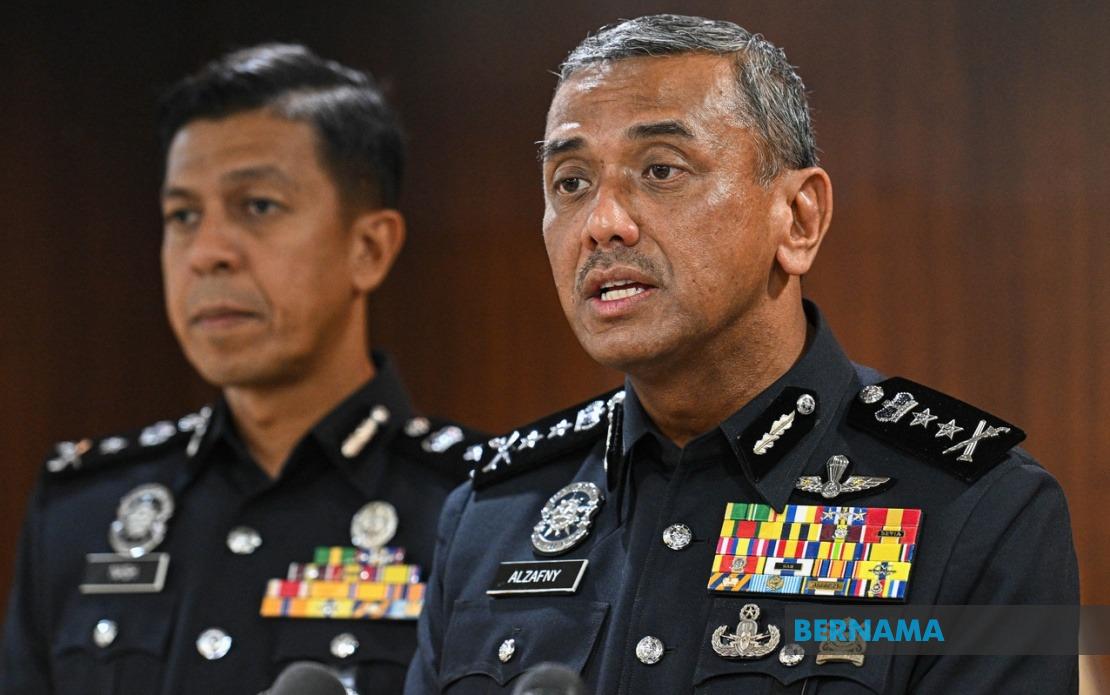
Seremban will see an unprecedented mobilisation of security personnel during the 16th Negeri Sembilan state election, with authorities confirming that more than 22,000 officers and military staff are eligible to vote ahead of the official polling date. The early voting exercise, scheduled for July 28, represents a significant logistical undertaking for law enforcement and defence agencies in the state, underscoring the operational demands of managing concurrent security duties and electoral participation.
Negeri Sembilan police chief Datuk Alzafny Ahmad provided detailed breakdowns of the voter demographic, revealing that 5,455 Royal Malaysia Police officers and personnel comprise the PDRM contingent. The remainder of the 22,339-strong group consists of 16,884 Malaysian Armed Forces personnel and their spouses who have registered for early voting privileges. This distinction reflects the military and police exemptions from standard election day participation requirements, given their potential deployment during polling operations.
The scale of early voting participation necessitates substantial resource allocation throughout the election cycle. Alzafny disclosed that 1,796 officers and personnel will be stationed across all operational zones specifically to facilitate the early voting process on July 28. This dedicated deployment underscores the complexity of administering electoral procedures for personnel who may face duty conflicts with standard voting schedules, a consideration that applies to organisations with round-the-clock operational mandates.
Beyond early voting arrangements, the police chief outlined a comprehensive security deployment schedule spanning the entire electoral calendar. Nomination day this Saturday will require 2,393 personnel to maintain order and prevent electoral violations, while the campaign period extending to polling day will maintain a continuous presence of 1,685 officers monitoring compliance with electoral regulations. The final polling day on August 1 will see the largest single-day deployment, with 4,788 personnel assigned to securing polling stations and preventing unauthorised activities.
The emphasis on personnel deployment reflects broader security concerns around state elections in Malaysia, where police and military involvement extends beyond traditional public order maintenance. Alzafny issued an unambiguous warning to all political candidates and their supporters regarding conduct expectations throughout the campaign period. His statement underscores law enforcement's intention to enforce electoral regulations with consistency, preventing the informal party campaigns that sometimes characterise Malaysian state elections from escalating into security incidents.
Particular attention was directed toward preventing provocative conduct, unauthorised public processions, and the dissemination of misleading information during the campaign. Candidates were explicitly cautioned against organising activities that could inflame sensitivities or generate community tensions. The emphasis on maintaining orderly proceedings reflects lessons learned from previous electoral cycles where campaign activities occasionally tested the boundaries of acceptable political speech and conduct.
A distinctive element of the police statement involved what Alzafny termed "3R" considerations—religion, race, and the Royal Institution. This framework has become increasingly prominent in Malaysian electoral administration, with law enforcement identifying content touching these domains as requiring heightened scrutiny. The prohibition applies comprehensively across political speeches, physical campaign materials, media statements, and social media content, effectively extending regulatory oversight into digital spaces where campaign communication increasingly occurs. For Malaysian observers, this represents the ongoing tension between electoral freedom and regulations protecting constitutional sensitivities.
Alzafny's reminder regarding post-election conduct reflects institutional preferences for electoral acceptance without protracted contestation. Candidates and supporters were urged to treat official results as conclusive once declared, with grievances directed exclusively through established legal channels rather than public demonstrations or confrontational activities. This framing indicates law enforcement's apprehension regarding potential disorder should electoral outcomes disappoint significant voter blocs, a consideration reflecting Negeri Sembilan's competitive political landscape.
The Negeri Sembilan election timeline has been formally established by the Election Commission, with nomination day opening the formal campaign period this Saturday, followed by the early voting window on July 28 and standard polling on August 1. This compressed schedule concentrates electoral activity into a brief period, intensifying the police deployment requirements and creating sustained pressure on security resources. For regional observers, the election represents a significant mid-term test of political sentiment in one of Malaysia's smaller states, potentially signalling broader electoral trends ahead of future national-level contests.
The magnitude of security force participation in voting procedures—with over 22,000 personnel eligible for early ballots—illustrates how substantially military and police institutions feature in Malaysia's electoral ecosystem. These personnel represent not merely individual voters exercising franchise rights, but constituents whose electoral participation intersects with their institutional roles in maintaining state security. The systematic arrangements enabling their participation while preserving operational readiness demonstrates the administrative complexity underlying seemingly routine electoral processes in a country where security organisations maintain continuous national responsibilities.

