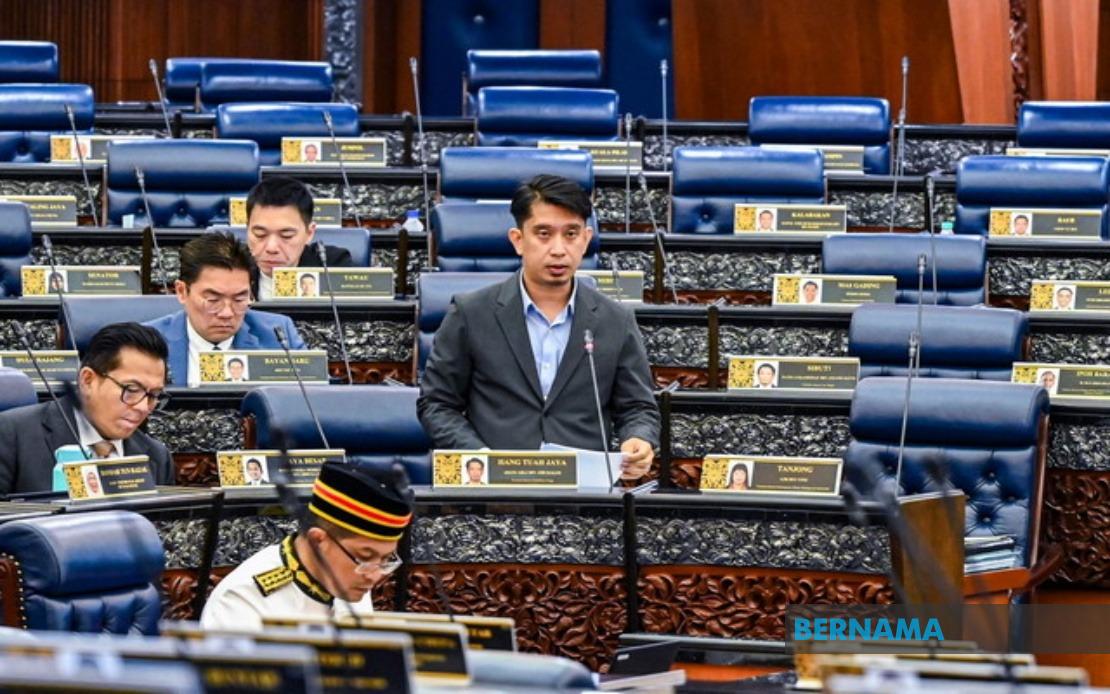
Malaysia's commitment to developing a science and technology-focused workforce is gaining momentum, with public universities enrolling more than 326,000 students in Science, Technology, Engineering and Mathematics programmes over the past three years. In a parliamentary session on July 1, Deputy Minister of Higher Education Adam Adli Abd Halim disclosed that these figures, drawn from the ministry's MyMOHES system, demonstrate a sustained institutional focus on disciplines critical to the nation's economic transformation and competitive positioning in emerging industries.
Out of 556,556 diploma and first-degree students admitted to public institutions of higher learning (IPTA) between 2023 and March 2026, the 326,419 pursuing STEM subjects comprised approximately 59 per cent of the total intake. The remaining 230,137 students selected non-STEM fields, reflecting a deliberate policy tilt toward the sciences and engineering. This distribution underscores how Malaysia's higher education sector has repositioned itself in response to changing labour market signals and strategic national objectives that prioritise technological advancement over traditional academic disciplines.
The emphasis on STEM enrollment is not accidental but rather reflects alignment with broader government strategy. Adam Adli stressed that the high proportion of STEM students entering IPTA reflects institutional commitment to nurturing talent pools in sectors deemed vital for future prosperity. These include artificial intelligence, semiconductor manufacturing, automation, digitalisation and green technology—all industries in which Malaysia aspires to develop competitive advantages or deepen existing expertise. The semiconductor sector in particular has become a focal point for Malaysian economic diversification, given the nation's historical role in electronics manufacturing and its geographic proximity to global supply chains.
When questioned by Datuk Dr Ku Abd Rahman Ku Ismail, the Deputy Minister was pressed to clarify the ratio of STEM versus non-STEM students across both public institutions (IPTA) and private higher education providers (IPTS), as well as to address projected engineering shortfalls under the National Science, Technology and Innovation Policy framework. His response revealed a nuanced policy architecture that extends beyond simple headcount targets. Rather than setting rigid quotas for engineers by discipline, the National Science, Technology and Innovation Policy (DSTIN) 2021–2030, which operates under the Ministry of Science, Technology and Innovation, adopts a holistic human capital strategy centred on building an integrated ecosystem.
That ecosystem concept crystallises around the Researchers, Scientists, Engineers and Technologists (RSET) framework, which establishes a specific ratio-based target rather than absolute numbers. The government aims to achieve 200 RSET professionals for every 10,000 workers by 2030, a metric that acknowledges the interconnectedness of research, innovation and technical expertise across multiple sectors. Using Malaysia's projected national workforce of approximately 17.06 million people as the baseline, the Deputy Minister calculated that the country will need roughly 341,200 RSET professionals by the end of this decade. This figure becomes the policy goalpost against which current university output and talent pipeline development are measured.
The transition from traditional engineering-centric planning to the broader RSET framework represents a recognition that technological advancement depends not solely on engineers but on a diversified talent ecosystem encompassing researchers, scientists and skilled technologists. This approach acknowledges that innovation systems require complementary competencies and that the most pressing challenges—whether in semiconductor design, artificial intelligence or sustainable energy—demand multidisciplinary teams where engineers collaborate with physicists, computer scientists, materials experts and domain specialists.
When parliamentarian Onn Abu Bakar pressed the Deputy Minister on concrete measures to expand expert faculty, research laboratories and high-technology facilities to support burgeoning demand in AI, semiconductor and digital engineering programmes, the response focused on institutional concentration rather than system-wide expansion. Adam Adli indicated that the ministry's immediate strategy centres on four universities operating within the Malaysian Technical University Network (MTUN). This targeted approach reflects budgetary constraints and a deliberate choice to consolidate resources and expertise in designated institutions rather than dispersing investments across the broader university system.
The MTUN initiative reflects a pattern increasingly common in Asian higher education systems: the creation of flagship institutions or networks tasked with excellence in specific domains. By concentrating funding, faculty recruitment and infrastructure investment in designated universities, policymakers aim to achieve critical mass and international competitiveness in targeted disciplines. However, this strategy raises questions about equity and capacity distribution across Malaysia's broader public university system, particularly as regional institutions compete for students and resources while potentially lacking the specialised facilities demanded by advanced STEM programmes.
For Malaysia, the challenge ahead is multifaceted. The nation must not only sustain high STEM enrollment rates but ensure that graduates possess skills aligned with employer expectations and emerging technological realities. Graduate unemployment and skill mismatches remain persistent concerns in Malaysia's labour market, suggesting that simply increasing STEM student numbers without corresponding attention to curriculum relevance and industry engagement risks producing underemployed graduates. The gap between university training and workplace requirements has widened in fields such as artificial intelligence and semiconductor engineering, where rapid technological evolution outpaces curriculum revision cycles.
The 326,000-student figure also invites comparison with private higher education sector patterns. While the Deputy Minister addressed the parliamentary question regarding both IPTA and IPTS enrolment ratios, detailed disaggregation was not provided in the parliamentary exchange. Understanding how private institutions balance STEM and non-STEM offerings, and whether they complement or compete with public sector capacity, is essential for assessing whether Malaysia can meet its RSET targets by 2030. The private sector serves approximately 40 per cent of Malaysian higher education students, making it a significant contributor to the talent pipeline.
Looking forward, Malaysia's trajectory depends on translating enrollment momentum into genuine economic impact. The 341,200 RSET target by 2030 is ambitious and achievable only if current cohort flow rates persist and graduate employment outcomes improve. Infrastructure investment in laboratories and research facilities must accelerate, particularly as AI and semiconductor fields demand expensive, state-of-the-art equipment. Furthermore, retention of talent—whether through competitive salaries, research funding opportunities or career progression pathways—remains critical, as brain drain to higher-income economies has historically depleted Malaysia's technical expertise pools.
The parliamentary disclosure also highlights the government's active monitoring of higher education outcomes through systems like MyMOHES, indicating institutional capacity for evidence-based policy adjustment. As Malaysia competes for regional leadership in technology-intensive sectors, the sustained commitment to STEM education enrollment suggests policymakers recognise that human capital development is foundational to industrial transformation and long-term competitiveness in an increasingly knowledge-driven global economy.

