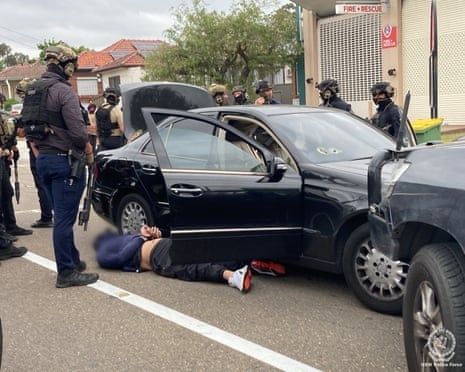
New South Wales police have concluded a concentrated three-day enforcement operation that resulted in the arrest and charging of 356 individuals suspected of committing crimes on the state's public transport network. The sixth phase of Operation Waratah, which concluded over the weekend, involved the deployment of more than 400 uniformed and plainclothes officers across trains, buses, light rail systems and ferries throughout NSW, marking one of the most extensive coordinated responses to transit crime in the state.
The scale of this latest operation underscores growing concerns about passenger safety on Australian public transport. Since Operation Waratah was established in 2024 specifically to address violent and sexual offences occurring on trains, light rail trams, buses and ferries across NSW, cumulative arrests have now exceeded 1,800 individuals. This trajectory suggests authorities are responding to what they view as an escalating problem requiring sustained intervention rather than a temporary issue.
During the three-day enforcement window between Thursday and Saturday, officers made significant seizures that police described as evidence of serious criminality. A total of 28 knives and other weapons were confiscated from individuals on the transport network, while police also conducted 137 drug-related detections. These figures indicate that public transport crime in NSW extends beyond the headline categories of violence and sexual assault to encompass broader law enforcement concerns including drug trafficking and weapons possession.
The 356 arrests resulted in 645 combined charges against the detainees, suggesting that many individuals were charged with multiple offences. This disparity between the number of people arrested and the number of charges laid indicates that some individuals engaged in serial offending during single journeys or across multiple incidents. The charging pattern reflects police strategy to prosecute comprehensively rather than pursue minimal charges that might result in lighter penalties.
From an operational perspective, the police deployment across public transport infrastructure was substantial. Officers conducted patrols aboard 539 trains, 127 buses and 29 light rail trams during the three-day period. These numbers provide insight into the density of police presence that NSW authorities deemed necessary to disrupt offending patterns and provide reassurance to commuters. The distribution of patrols suggests a strategy focused on high-volume transport corridors where incidents are most frequently reported.
For Malaysian observers, the NSW operation offers instructive comparisons to transit security approaches in Southeast Asia. Australia's response—combining intelligence-led targeted operations with visible uniformed presence—differs from models emphasised in some neighbouring countries. The reliance on frontline officer deployment rather than primarily technological solutions reflects confidence in human intelligence and community reporting as crime prevention tools.
The establishment of a dedicated, ongoing operation specifically addressing public transport crime signals that NSW Police view this as requiring sustained attention beyond routine enforcement. Traditional policing of public transport typically occurs through regular patrols, but Operation Waratah's structure—with numbered phases conducted over months—suggests systematic, planned interventions responding to intelligence about offence patterns. This approach may prove relevant as Southeast Asian cities grapple with balancing transit security against public perception of safe, accessible transport systems.
Public transport safety carries significant social and economic implications. When passengers perceive transit systems as unsafe, ridership declines, reducing revenue for operators and increasing car dependency, which exacerbates urban congestion. Beyond these practical concerns, violent and sexual offences on public transport create psychological barriers to mobility that disproportionately affect women and vulnerable groups. NSW Police's emphasis on these offence categories reflects recognition that such crimes fundamentally undermine public transport utility.
The weapon seizures during the operation raise questions about how contraband enters public transport networks and whether enforcement at entry points remains effective. That 28 weapons were recovered during three days of intensive patrols suggests either that initial screening mechanisms allow such items through, or that many individuals carry weapons routinely. Police may use Operation Waratah data to refine understanding of crime patterns and adjust prevention strategies accordingly.
Looking forward, the sustainability of such operations merits consideration. Deploying more than 400 officers daily across NSW transport infrastructure represents significant resource allocation that competing operational demands may complicate. The six phases of Operation Waratah conducted thus far suggest police view this as an indefinite commitment, though maintaining public and political support for sustained enforcement operations requires demonstrable impact on public safety outcomes.
For commuters and transit operators, these arrest figures provide data on enforcement intensity, though whether this translates to reduced offending rates remains to be demonstrated. Some research on transit policing suggests that visible enforcement may displace crime temporarily rather than eliminating underlying drivers of transit-based offending. NSW authorities will likely monitor recidivism rates among those arrested and released to assess whether Operation Waratah achieves lasting improvements in passenger safety or primarily generates enforcement statistics.

