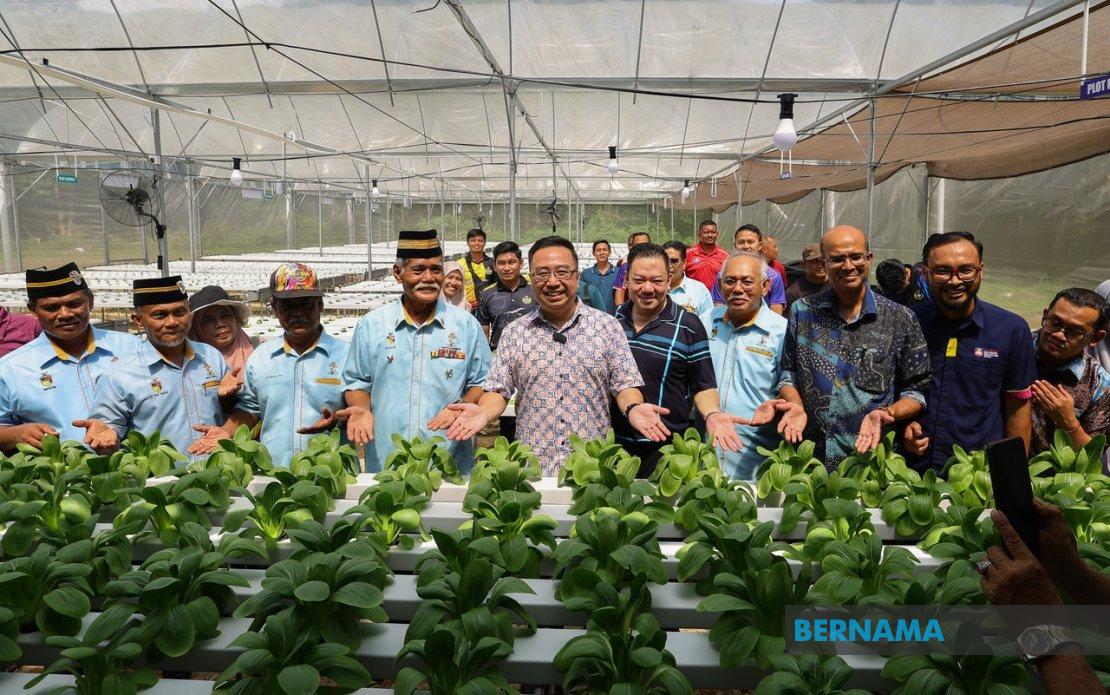
The Malaysia Social Innovation Programme (MyIS Komuniti) has demonstrated significant reach across the nation's vulnerable communities, with more than 6,700 beneficiaries now participating in 67 development initiatives spanning the period from 2021 through 2023. The initiative, managed by Yayasan Inovasi Malaysia (YIM) since its inception in 2015, represents a deliberate effort to harness technology as a vehicle for inclusive social and economic advancement. Science, Technology and Innovation Minister Datuk Chang Lih Kang underscored this approach during the official launch of the MyIS Aquaponics Project Site in Port Dickson, Negeri Sembilan, emphasising how the programme bridges the gap between innovation and grassroots community welfare through structured, community-centric interventions.
The aquaponics initiative unveiled in Pasir Panjang exemplifies the programme's strategic approach to food security challenges affecting Malaysian communities. Integrated aquaponics systems represent a paradigm shift in how marginalised communities can achieve sustained food production using minimal land and water resources. By merging aquaculture—the farming of freshwater fish—with hydroponic vegetable cultivation, the system creates a closed-loop agricultural ecosystem where nutrient-enriched water from fish tanks becomes fertiliser for crops before returning to the aquatic system. This synergy generates multiple benefits simultaneously: significant reductions in water consumption compared to traditional agriculture, optimised use of limited space, minimised waste streams, and the promotion of farming practices aligned with sustainability principles increasingly expected by Malaysian consumers and policymakers alike.
Technology integration represents a critical differentiator in this project's design. Solar-powered systems equipped with Internet of Things (IoT) monitoring capabilities enable real-time tracking of essential parameters including water quality, temperature fluctuations, and overall system performance. This technological layer transforms a simple farming operation into an intelligent, data-driven enterprise where community operators can detect anomalies before they escalate into losses. The ability to respond swiftly to system changes or disruptions reduces the financial and operational risks that typically plague small-scale agricultural ventures in developing economies. For participating communities in Negeri Sembilan and beyond, this translates into greater operational reliability and predictability of yields.
The Pasir Panjang project itself has already demonstrated tangible productivity gains. Production figures for 2023 reveal that the integrated aquaponics system has yielded over 800,000 kilogrammes of vegetables, establishing a meaningful contribution to local food supply chains. This output serves not only immediate community consumption needs but also generates surplus capacity for market-oriented sales. The involvement of the Royal Electrical and Mechanical Engineers (JLJD) and Research Nexus from Universiti Teknologi MARA (UiTM) has ensured technical excellence in system design and ongoing operational optimisation, while fish farming operations remain in their growth phase with potential for substantial expansion as operational expertise deepens.
Beyond production metrics, the programme creates pathways for skills development and local economic empowerment that extend well beyond simple food provision. More than 100 members of the Negeri Sembilan JLJD Veterans Association have engaged with the project both as direct beneficiaries and as strategic partners, creating employment opportunities and income-generating activities within the veteran community. The integration of marketing support through partnerships with the Federal Agricultural Marketing Authority (FAMA) ensures that community producers can reach broader consumer bases, transforming their role from subsistence farmers into participants in formal agricultural value chains. This expansion of economic opportunity is particularly significant given Malaysia's ongoing demographic and labour market transitions.
The MyIS Komuniti programme's financial commitment underscores government recognition of innovation's role in addressing social inequality. The RM13.97 million total allocation distributed across 67 projects since 2021 represents sustained investment in community transformation, with individual project allocations—such as the RM251,616 dedicated to the Pasir Panjang aquaponics initiative—calibrated to deliver meaningful, operationally sustainable outcomes rather than symbolic gestures. This level of funding commitment suggests a medium-to-long-term policy horizon where innovation-driven community development is treated as a core national priority rather than a peripheral pilot programme.
For Malaysian policymakers and development practitioners, the MyIS Komuniti experience offers important lessons regarding how technology adoption can be structured to serve vulnerable populations. Rather than assuming communities will spontaneously embrace technological solutions, the programme embeds comprehensive support mechanisms encompassing facilities provision, knowledge transfer, skills training, and ongoing operational support. This wraparound approach acknowledges that technological uptake requires substantial human and institutional capacity building. Communities cannot sustainably operate sophisticated systems without adequate understanding of underlying principles, troubleshooting capabilities, and access to continuous technical guidance. The involvement of academic institutions like UiTM signals how universities can meaningfully contribute to community welfare beyond traditional research and education functions.
The renewable energy dimension of the aquaponics project reflects broader sustainability considerations shaping development policy across Southeast Asia. Solar-powered systems reduce long-term operational costs for participating communities while simultaneously advancing Malaysia's clean energy transition objectives. This alignment between community welfare and national environmental goals demonstrates how social innovation can serve multiple policy objectives simultaneously. As Malaysia navigates energy security concerns and climate commitments, models demonstrating renewable energy adoption at the grassroots level provide valuable templates for scaled implementation.
The programme's evolution since 2015 reflects lessons learned regarding what works in community-based innovation contexts. The transition from earlier pilot phases to the current scale of operation encompassing multiple communities and diverse technology applications suggests that YIM has developed effective implementation methodologies. However, the relatively modest reach—6,700 beneficiaries across multiple years in a nation of 34 million—also indicates substantial unmet demand for such interventions. Expansion opportunities exist across Malaysia's numerous underserved communities lacking adequate food security infrastructure or economic opportunities.
For communities throughout Southeast Asia confronting similar challenges regarding food security, resource scarcity, and limited economic opportunity, the MyIS Komuniti model offers a replicable framework. The emphasis on appropriate technology, local capacity building, and market integration reflects best practices increasingly recognised as essential for development effectiveness. Government support for such initiatives, combined with academic and technical expertise provision, creates enabling conditions for sustainable community transformation. As regional nations prioritise inclusive development and climate-resilient livelihoods, programmes like MyIS Komuniti demonstrate concrete pathways for translating policy aspirations into tangible community benefits.

