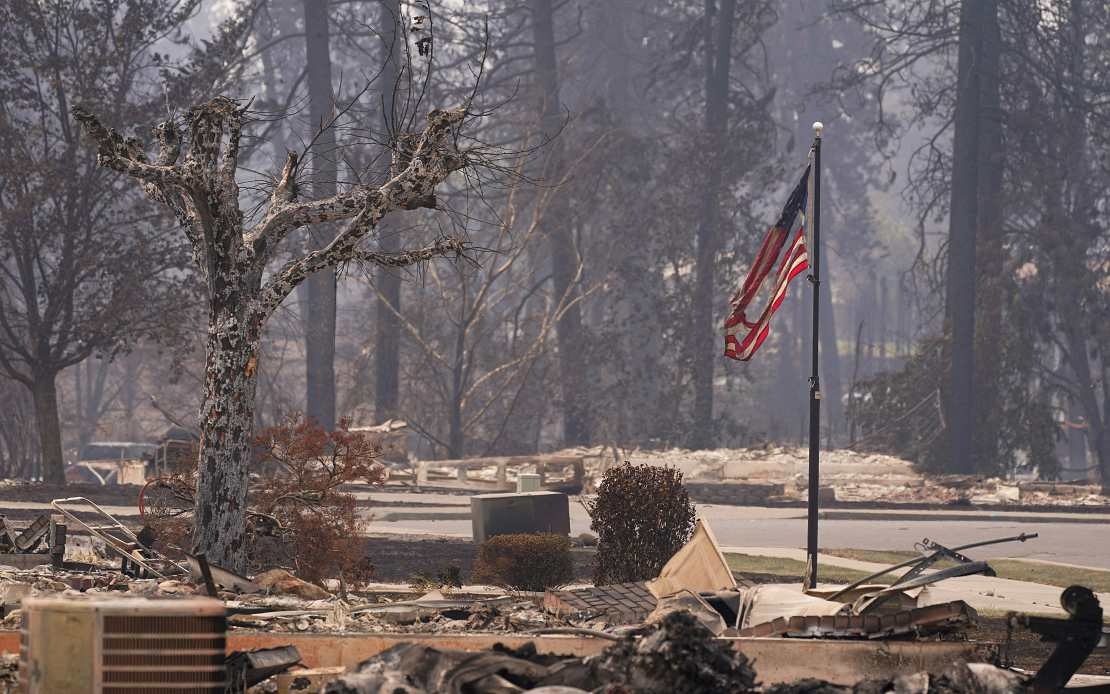
A major humanitarian crisis is unfolding across Washington state as an escalating wildfire emergency has forced the displacement of more than 65,000 residents from their homes. The American Red Cross officially confirmed the evacuation figures on Monday, marking one of the most significant fire-driven population movements in recent US history. The scale of destruction has been extraordinary, with preliminary damage assessments indicating that the spreading flames have already razed more than 700 residential structures, a figure that continues to rise as firefighting crews struggle to contain multiple simultaneous blazes across the state.
The overwhelming majority of confirmed structural damage has been concentrated in Spokane County, where a cluster of fires has created a complex and dangerous situation for emergency responders. The situation took a criminal dimension when local law enforcement identified a suspect connected to one of the major fires. Spokane County Sheriff John Nowels announced that a 37-year-old man named Aaron F. Farinacci was apprehended on Monday afternoon and charged with first-degree arson. Farinacci is being held on a substantial $1 million bond and is alleged to be responsible for igniting the Old Trails Fire, one of the numerous destructive blazes currently threatening communities across the region.
The fire situation near Spokane and Stevens counties has become increasingly severe, with data from InciWeb, an interagency fire monitoring system, revealing that multiple fires have consumed 8,026 acres since Saturday. What makes this situation particularly alarming is that these fires remain completely uncontained, sitting at zero percent containment as of the latest reports. However, fire management officials have indicated that improving weather conditions in recent days have provided crews with a tactical advantage, allowing them to make incremental progress on establishing and reinforcing fire lines. The shift in meteorological conditions offers hope that containment efforts may accelerate in the coming days, though crews remain stretched extremely thin across the active fire zones.
The crisis extends well beyond the Spokane area, with other regions of Washington facing even more catastrophic fire damage. The Sinlahekin fire stands as a particularly devastating example, having ballooned to 85,000 acres since being ignited by lightning on July 26. This massive blaze has mobilized more than 820 personnel dedicated solely to fighting this single fire, yet it too remains at zero containment. Further west, the Little Giant Fire, which is burning in the Okanogan-Wenatchee National Forest northwest of the town of Leavenworth, has charred 51,298 acres of forested land. The scale of these individual fires demonstrates the unprecedented challenge facing state and federal firefighting resources, which are being stretched across multiple major incidents simultaneously.
Governor Bob Ferguson has provided regular updates on welfare checks being conducted across the affected regions. Officials have successfully made contact with nearly everyone who placed emergency calls requesting assistance, representing a significant coordination achievement given the chaotic circumstances. However, authorities are still attempting to reach 14 individuals to confirm their safety and well-being. Ferguson clarified that these 14 people are not classified as missing persons but rather represent individuals with whom contact has not yet been established. The governor emphasized that officials simply want direct confirmation that these individuals are secure, whether they evacuated successfully or sheltered in place. As of the latest update, no deaths have been confirmed related to the fires, though the scale of the emergency and the ongoing nature of the threat mean that situation could change.
The Washington wildfire situation carries significant implications for broader discussions about disaster response capacity and climate-related emergency management in the United States. The convergence of multiple major fires in a single state within a concentrated timeframe has created resource allocation challenges that extend beyond what individual counties or even the state can manage independently. Federal resources have been mobilized to support local and state efforts, reflecting the magnitude of the crisis. For regional observers in Southeast Asia, this event underscores the reality that extreme weather events and natural disasters of unprecedented scale are becoming more frequent and severe in developed nations with advanced infrastructure and resources, raising sobering questions about preparedness in less-resourced regions.
The arson arrest adds a troubling dimension to an already catastrophic natural disaster situation. The alleged intentional ignition of the Old Trails Fire raises questions about fire prevention measures and community safety protocols during high-risk fire seasons. Even as nature-driven fires like the Sinlahekin blaze demonstrate the raw power of uncontrolled wildfire in forested landscapes, the possibility of human negligence or deliberate action compounding the crisis highlights the multi-layered complexity of modern emergency management. Prosecutors and law enforcement will need to establish clear evidence linking Farinacci to the Old Trails Fire, a process that may take considerable time given the urgency of current firefighting operations.
The evacuation of 65,000 people represents an extraordinary logistical undertaking that exposes both the competence of emergency management systems and their vulnerability to events of this magnitude. The American Red Cross and local emergency management agencies have coordinated shelter operations, supply distribution, and communication efforts to support displaced residents. Families have been separated, businesses shuttered, and entire communities upended with minimal notice. The psychological impact on evacuees extends beyond the immediate crisis, as residents face profound uncertainty about whether their homes, possessions, and livelihoods will survive the approaching flames.
Looking forward, the immediate priority remains containing the active fires and protecting remaining structures and lives. The improving weather conditions provide a window of opportunity, but sustained firefighting operations will be necessary over coming days and potentially weeks. Recovery efforts, once the fires are brought under control, will involve massive reconstruction challenges, debris removal, environmental remediation, and the complex process of helping displaced residents return to or relocate from affected areas. The long-term implications for forest management, building codes, and disaster preparedness in Washington state will undoubtedly become subjects of intense public and political scrutiny.

