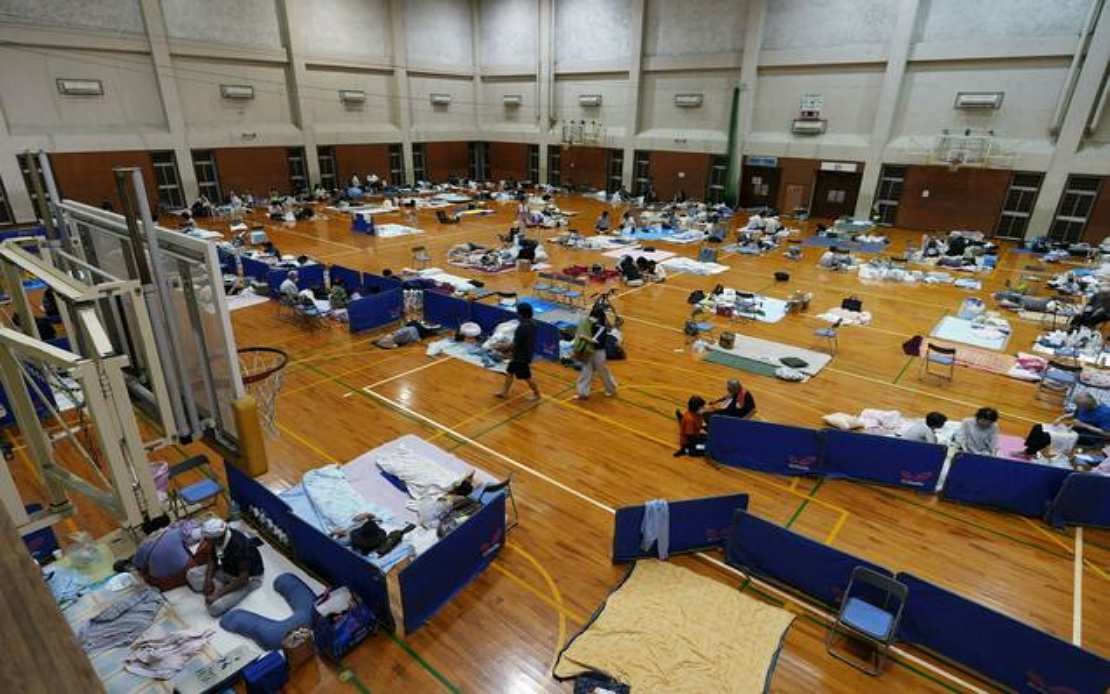
Seven days have passed since the magnitude 7.1 earthquake ravaged Kumamoto Prefecture in southwestern Japan, yet the crisis shows no signs of abating. Over 8,000 displaced residents continue seeking refuge across 150 evacuation shelters as the prefecture grapples with compounding emergencies—persistent water outages combined with oppressive heat that has claimed at least one life and threatens many more. The disaster's humanitarian toll continues mounting, even as initial seismic activity has subsided, highlighting how natural disasters' consequences often extend far beyond the tremor itself.
The earthquake that struck around 4:27 p.m. on July 28 has claimed 38 lives to date, with circumstances varying dramatically across the prefecture. Particularly devastating were two catastrophic secondary incidents: an explosion at an Aeon shopping mall in Kashima that killed seven people, and a chimney collapse at Nippon Paper Industries Co.'s Yatsushiro facility that resulted in nine deaths. These incidents underscore how earthquake damage extends beyond structural failure, triggering dangerous cascading failures in infrastructure and industrial installations. The prefecture estimates approximately 12,000 buildings sustained damage from the initial tremor and its powerful aftershocks.
The humanitarian crisis has intensified as rescue and recovery efforts collide with Japan's summer weather extremes. Temperature records are being shattered across the region, with many areas logging highs of 35 degrees Celsius or above, whilst several municipalities recorded 40 degrees Celsius for the first time in recorded history. This meteorological assault compounds the misery for those sleeping in evacuation shelters and, more critically, those who have opted to remain in vehicles due to overcrowding or personal circumstances. One suspected heat-related death has already been reported among those sheltering in cars, prompting alarm among government officials about the unsustainability of current conditions.
Water supply remains the most pressing immediate challenge across the disaster zone. Approximately 45,000 households spread across five municipalities remain without regular water access, creating a vicious cycle of worsening conditions. Without adequate water, residents cannot maintain personal hygiene, prepare meals, or manage the basic sanitation necessary to prevent disease outbreaks. The situation is particularly acute at facilities caring for vulnerable populations, such as nursing homes where elderly residents face elevated health risks from both the heat and unsanitary conditions.
The Japanese government has mobilized resources on an impressive scale to address these interconnected crises. Prime Minister Sanae Takaichi visited evacuation shelters on Monday and subsequently announced that the government will designate the disaster as a "disaster of extreme severity," unlocking additional financial support for reconstruction efforts and enabling municipalities to access enhanced government subsidies. Simultaneously, water trucks dispatched from across Japan are operating throughout the affected region, whilst portable toilet facilities are being expanded and spot cooling equipment deployed to evacuation centres to combat heatstroke risks. These measures represent an acknowledgment that the crisis requires systematic, coordinated national intervention.
Transitional housing solutions are beginning to materialize, though progress remains slow relative to need. Secondary evacuation applications to hotels have commenced, offering temporary respite for those willing to leave community shelters. More substantially, construction of temporary housing units has started in the hardest-hit municipalities of Uki and Hikawa, though these facilities will take weeks to complete. The challenge of housing thousands of displaced persons presents an administrative and logistical puzzle that will persist well beyond the initial emergency phase.
The disaster's ripple effects extend beyond Japan's borders, demonstrating the interconnectedness of East Asian communities. The southern Taiwanese city of Kaohsiung responded to requests from Yatsushiro by dispatching essential care supplies to Miyabien, a nursing home in the devastated industrial city. Midori Tagata, the facility's director, publicly acknowledged the donation's importance, explaining how local water shortages have compromised the ability to maintain basic hygiene standards for residents—many of whom are elderly and immunocompromised. This cross-border humanitarian gesture underscores regional solidarity whilst highlighting the specific vulnerability of institutional populations during infrastructure failures.
Transportation infrastructure remains severely disrupted, with broad implications for the region's economic recovery and population mobility. The Kyushu Shinkansen Line bullet train service remains suspended between Kumamoto and Kagoshima-chuo stations, severing one of Japan's most important transportation corridors. Simultaneously, the Kyushu Expressway is closed to general traffic between the Matsubase and Ebino exits, constraining road-based logistics and evacuation routes. These disruptions will persist until engineering assessments confirm structural integrity, a process that typically requires several weeks. The suspension of transportation networks compounds displacement challenges and restricts economic activity across the entire region.
For Malaysian and Southeast Asian observers, the Kumamoto disaster offers sobering lessons about earthquake preparedness and the cascading humanitarian consequences of natural disasters. While Japan possesses world-class building codes and disaster response infrastructure, even this advanced preparedness could not prevent widespread displacement or secondary catastrophes. The emphasis on heat-related mortality in evacuation shelters and vehicles is particularly relevant for tropical Southeast Asia, where similar earthquakes would occur amid ambient temperatures already approaching dangerous thresholds. The speed with which water shortages create public health emergencies, and the difficulty of establishing adequate temporary housing and sanitation, represents challenges that developing nations with fewer resources would find exponentially more difficult to manage.
The week-long duration of mass displacement, combined with ongoing infrastructure failures, demonstrates that earthquake recovery extends far beyond search-and-rescue operations. Authorities face weeks of sustained effort to restore water supplies, establish temporary housing, and clear transportation corridors. For the 8,000 currently sheltering in converted gymnasiums and community centres, and the thousands more sleeping in vehicles, the crisis feels far from resolved despite the passage of seven days. As temperatures remain elevated and water remains scarce, the race to prevent additional heat-related deaths and disease outbreaks continues with urgency that matches the initial seismic emergency.

