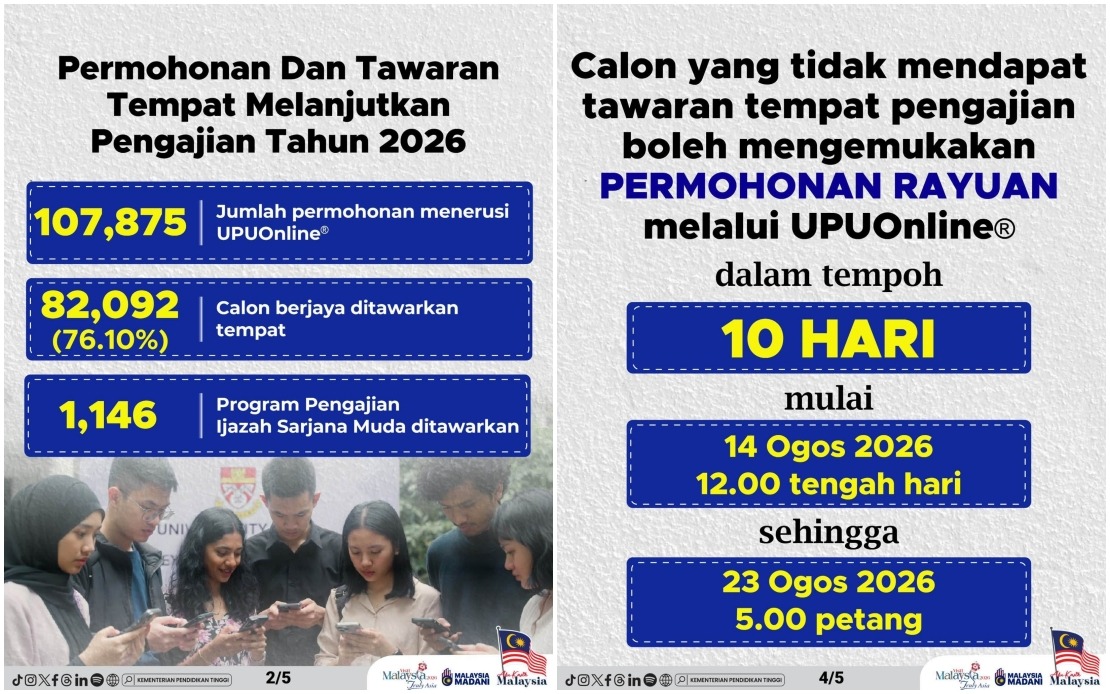
The Ministry of Higher Education has confirmed that 82,092 candidates have secured admission offers for undergraduate studies at Malaysia's 20 public universities this academic year, marking a significant milestone in the nation's annual university intake cycle. This figure represents approximately three-quarters of the 107,875 applications deemed eligible under the UPUOnline centralised admissions system, reflecting the competitive landscape of public university entrance in the country.
The intake spans an impressive portfolio of 1,146 bachelor's degree programmes across the public university network, demonstrating the breadth of academic options available to Malaysian students. The diversity of offerings reflects strategic efforts by higher education authorities to align university curricula with both labour market demands and evolving student aspirations across engineering, sciences, social sciences, business, and humanities disciplines.
Underscoring the admissions process is Malaysia's established merit-based selection framework, which has remained the cornerstone of public university entrance for decades. All eligible candidates are ranked according to their merit scores, with places allocated from the highest-scoring applicants downward, ensuring a transparent and standardised approach that theoretically provides equal opportunity regardless of socioeconomic background. This meritocratic principle aims to identify and nurture academic talent while maintaining institutional standards across the public higher education sector.
The 76.10 per cent acceptance rate carries important implications for Malaysian education policy and youth development. While the majority of eligible applicants receive offers, nearly a quarter face disappointment, underscoring the intense demand for public university places relative to available capacity. This gap highlights ongoing discussions about whether Malaysia's public universities have sufficient infrastructure and resources to accommodate larger cohorts, and whether alternative pathways through private institutions or international opportunities warrant greater strategic emphasis.
For candidates who miss out on initial placement, the Ministry has established a formal appeal mechanism designed to provide recourse and additional consideration. Beginning on 14 August at noon and continuing until 5 PM on 23 August 2026, unsuccessful applicants may lodge appeals through the UPUOnline platform, offering a 10-day window to present additional information or circumstances that may have affected their initial assessment. This process recognises that merit-based systems, while principled, may occasionally overlook candidates whose potential or circumstances warrant second review.
The timing of these admissions announcements typically influences major decisions for Malaysian families during the critical transition period between secondary and tertiary education. For thousands of teenagers nationwide, the UPUOnline results shape not only immediate academic paths but longer-term career trajectories and professional prospects. The stakes are particularly high in Malaysia's competitive educational environment, where university tier and programme selection significantly influence graduate employment outcomes and earning potential.
From a regional perspective, Malaysia's centralised admissions system through UPUOnline represents a more streamlined approach compared to university application processes in several other Southeast Asian nations. The single-platform model theoretically reduces administrative burden on students and creates systematic equity, though it also concentrates significant weight on academic performance metrics rather than alternative indicators of potential such as extracurricular achievement or demonstrated resilience.
The Ministry's statement emphasising that successful candidates should maximise their university experience reflects broader policy messaging around the importance of higher education in Malaysia's economic development strategy. As the nation pursues higher-value economic sectors and knowledge-based industries, ensuring that university graduates emerge fully prepared for professional demands remains a priority for policymakers concerned with maintaining competitiveness in the regional and global economy.
These annual admissions cycles also illuminate broader questions about Malaysia's higher education landscape and workforce planning. With approximately 82,000 new undergraduates entering the public university system annually, questions arise about graduate employment absorption, skills alignment with industry needs, and whether current university output adequately prepares Malaysian workers for emerging sector demands in technology, sustainability, and digital transformation.
For unsuccessful applicants considering their options, Malaysia's private university sector and international study opportunities present viable alternatives, though typically at higher financial cost. Some students may also choose to pursue vocational and technical qualifications through institutions under the purview of the Ministry of Human Resources, reflecting growing recognition that university degrees represent one of several pathways to sustainable careers and professional advancement.

