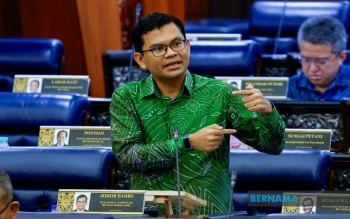
Malaysia's small and medium enterprise sector still has access to more than RM4 billion in financing support under Bank Negara Malaysia's Small and Medium Enterprise Stabilisation Relief Facility, Economy Minister Akmal Nasrullah Mohd Nasir revealed during parliamentary proceedings. The announcement underscores the government's continued commitment to cushioning businesses against the dual pressures of supply chain disruptions and mounting economic uncertainty that have strained operational capacities across the country.
Out of the RM5 billion total allocation established for the SME SRF, approximately RM700 million had been approved for more than 1,000 enterprises as of June 18, 2026, according to Akmal's statement in the Dewan Rakyat. The relatively modest uptake of available funds suggests that awareness and accessibility remain challenges despite the facility's availability. This gap between allocated and utilised capital presents both an opportunity and a puzzle for policymakers seeking to understand why eligible businesses have not yet capitalised on this relief mechanism.
The SME SRF represents one of several parallel initiatives designed to address cash flow constraints that have become increasingly acute for smaller operators. Complementing this is an additional RM5 billion in financing guarantees channelled through Syarikat Jaminan Pembiayaan Perniagaan Bhd, expanding the safety net for enterprises seeking to maintain operational continuity. Together, these facilities create a substantial financial cushion for the MSME ecosystem, though uptake figures suggest more aggressive promotion and simplified application processes may be necessary.
Firms experiencing cash flow difficulties can approach their respective financial institutions to secure tailored solutions, with participating banks committing to processing applications within seven working days. This streamlined timeline attempts to address a traditional bottleneck in SME financing, where lengthy approval processes often force businesses to seek higher-cost alternatives or defer critical purchases. However, the effectiveness of this seven-day commitment depends heavily on transparent communication between businesses and their banks about eligibility criteria and required documentation.
Beyond credit facilities, the government has deployed the Progressive Acceleration for Capability and Employability, or PACE Economic Resilience Package, valued at more than RM710 million. This broader intervention tackles employment protection and business continuity through four interconnected pillars: safeguarding workers through enhanced social protection mechanisms, facilitating skills development and job placement, supporting the growing gig economy workforce, and nurturing young talent alongside SME expansion. The multi-pronged approach recognises that SME resilience depends not solely on access to capital but equally on workforce stability and capability development.
Under PACE, more than RM580 million flows through PERKESO to reinforce the Employment Insurance System, providing a safety net for displaced workers while reducing hiring reluctance among businesses. Concurrently, the Human Resources Development Corporation allocates RM100 million for training and job placement initiatives, leveraging the MYFutureJobs platform to match skills with employer demand. These employment-focused measures acknowledge that retaining and reskilling workers during economic downturns protects institutional knowledge and maintains competitiveness when conditions improve.
The package further allocates RM20 million through the Skills Education Fund Corporation specifically for training among gig workers—an increasingly significant segment of the Malaysian workforce whose traditional employment protections often remain inadequate. An additional RM10 million through TalentCorp supports industrial training partnerships between SMEs and emerging startups, fostering knowledge transfer and innovation diffusion across the business ecosystem. These investments in human capital represent long-term productivity enhancement beyond immediate crisis relief.
The government is simultaneously strengthening supply chain resilience by intensifying monitoring of essential goods and critical raw materials across manufacturing, food and agriculture, and services sectors. This oversight aims to prevent speculative pricing, hoarding, or distribution bottlenecks that disproportionately affect smaller enterprises lacking the negotiating power of larger corporations. Transparent supply data enables more rational business planning and reduces the uncertainty premiums that currently inflate operational costs.
Akmal's parliamentary response emerged in reply to concerns raised by Mohd Syahir Che Sulaiman (PN-Bachok) regarding employment losses and business downsizing driven by supply crises and global economic turbulence. The minister's detailed enumeration of government mechanisms suggests official recognition that the crisis extends beyond temporary cyclical weakness, requiring sustained structural interventions. The breadth of these measures—spanning credit access, employment protection, skills development, and supply monitoring—indicates a coordinated strategy rather than ad-hoc emergency responses.
Looking ahead, the government plans to present a comprehensive ministerial statement on the global supply crisis to parliament on the following Monday, pending legislative approval for debate. This forthcoming explanation suggests deeper policy deliberations about supply chain vulnerabilities, potential longer-term structural adjustments, and possibly revised strategic priorities for domestic manufacturing and supply security. For SMEs already stretched by operational pressures, such clarity on government direction and anticipated policy shifts could materially influence investment and hiring decisions in coming months.

