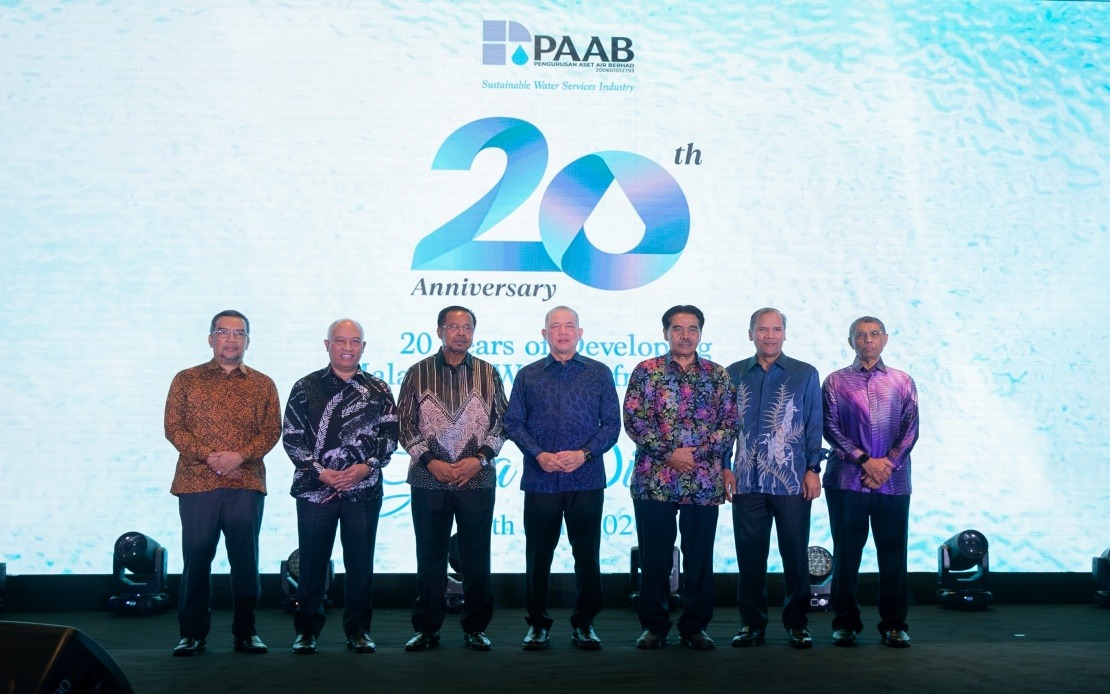
Pengurusan Aset Air Berhad (PAAB), the state-owned water asset management company, is reflecting on two decades of steering structural reforms across Malaysia's water services sector. Since its establishment on 5 May 2006, the entity has become instrumental in modernising the nation's water infrastructure and reinforcing supply resilience for both households and industry. The milestone was marked at an anniversary dinner on 25 June, attended by Deputy Prime Minister Datuk Seri Fadillah Yusof, underscoring the government's continued commitment to the sector's strategic importance.
The financial scale of PAAB's contribution to national development has been substantial. Over its twenty-year period, the organisation has arranged RM23.04 billion in financing to absorb water industry loans from previous arrangements, while simultaneously deploying RM23.84 billion in direct capital expenditure for infrastructure development. Combined, these figures represent RM46.88 billion in total mobilised resources—a commitment that positions water services among Malaysia's most significant public investment priorities alongside energy and transport.
The physical transformation of Malaysia's water networks has been equally impressive. As of December 2025, ten states have formally enrolled in the National Water Services Industry Restructuring Plan, triggering a wave of modernisation across the country. Completed initiatives include the commissioning of 21 new water treatment plants with combined daily processing capacity reaching 2,085 million litres, the installation of 42 storage tanks holding 783 million litres of treated water, and the comprehensive upgrade and extension of 3,263 kilometres of distribution pipelines. These figures illustrate a systematic approach to building redundancy and coverage across populated areas.
Yet the sector faces a critical challenge that threatens to undermine these infrastructure gains. Deputy Prime Minister Fadillah, who also holds the Energy Transition and Water Transformation portfolio, emphasised during his remarks that non-revenue water (NRW)—the proportion of treated water lost through leakage, theft, and metering faults before reaching consumers—remains stuck at approximately 40 per cent nationally. This means that for every ten litres PAAB and its partner operators produce, four are wasted before generating revenue or serving households. The persistence of this loss rate despite decades of infrastructure investment reveals structural inefficiencies in network management, operational practices, and asset maintenance across multiple water authorities.
The urgency Fadillah articulated reflects broader economic pressures on Malaysia's growth trajectory. The nation is intensifying efforts to attract foreign direct investment into high-value sectors including semiconductor manufacturing and data centre development. These industries demand exceptional reliability in utility provision; a data centre experiencing even brief water supply disruptions can suffer operational downtime worth millions of ringgit. Improving water security is therefore not merely a public health imperative but an essential prerequisite for Malaysia to credibly compete for technology investment against rival economies in the region with more stable utilities.
Critically, Fadillah signalled impatience with extended planning timelines. PAAB and the National Water Services Commission (SPAN) have structured their transformation roadmap across four phases extending to 2050: Migration (2008–2020), Stabilisation (2021–2030), Consolidation (2031–2040), and Full Cost Recovery (2041–2050). While this long-term framework provides clarity for investment and policy sequencing, the deputy prime minister indicated that waiting another twenty-five years to resolve water losses is strategically untenable. He called for coordinated action across all federal agencies and state governments to tackle leakage and operational failures immediately, rather than deferring solutions to mid-century targets.
The composition of PAAB's accumulated capital spending reveals how resources have been allocated through the sector restructuring journey. Of the RM23.84 billion deployed to December 2025, RM8.33 billion has funded projects already completed and handed to water operators for ongoing management. A further RM1.84 billion is committed to works still under construction, while RM13.67 billion remains tied up in projects at the design and planning phase—indicating that the infrastructure expansion agenda remains unfinished and will consume significant additional years of implementation.
Fadillah's remarks also emphasised the institutional coordination challenge inherent in water reform. Malaysia's water services are fragmented across thirteen states plus federal territories, each with varying operational competencies, asset conditions, and revenue models. PAAB and SPAN function as coordinating bodies seeking to standardise practices and align incentives, yet true progress on leakage reduction requires simultaneous action from multiple operators simultaneously improving their networks. This demands either financial incentives linking operator revenues to leakage reduction, regulatory pressure imposing performance standards, or technological investment enabling better network monitoring—preferably all three combined.
The investment requirements ahead should not be underestimated by policymakers or the public. Current treatment capacity remains insufficient during peak demand periods; more plants must be built, requiring additional capital raising in an environment where government finances face competing demands. Simultaneously, the installed network of pipes and valves serving major urban areas is ageing, necessitating systematic renewal rather than waiting for catastrophic failures. Climate variability also complicates planning, as dry seasons intensify while monsoon downpours create flooding challenges that water infrastructure must accommodate.
For Malaysian businesses and consumers, PAAB's twenty-year record offers mixed signals. The scale of infrastructure investment and the completion of substantial projects demonstrate serious government commitment to improving service quality and reliability. Yet the persistence of 40 per cent non-revenue water, even after two decades and tens of billions invested, suggests systemic problems that capital spending alone cannot resolve. Operational excellence, metering accuracy, and maintenance discipline must improve in parallel with physical assets. Until these operational metrics show sustained improvement, even more advanced infrastructure will be subject to the same efficiency losses that have plagued existing systems.
PAUB chairman Datuk Seri Jaseni Maidinsa framed the organisation's mandate as implementing transformation through a Full Cost Recovery Roadmap designed to make water services financially self-sustaining without perpetual government subsidy. This represents an important conceptual shift toward commercial discipline, yet poses challenges for poorer households for whom water affordability already strains household budgets. Balancing cost recovery with social equity will require carefully designed tariff structures and targeted assistance to low-income consumers.
Looking ahead, Malaysia's water sector enters a critical phase where infrastructure expansion must accelerate while operational performance simultaneously improves. The next five years will substantially determine whether PAAB's restructuring plan achieves its intended transformation or becomes another example of ambitious planning undermined by implementation fragmentation. Stakeholders across government, industry, and civil society should monitor progress on non-revenue water reduction as the leading indicator of whether genuine sector reform is occurring.

