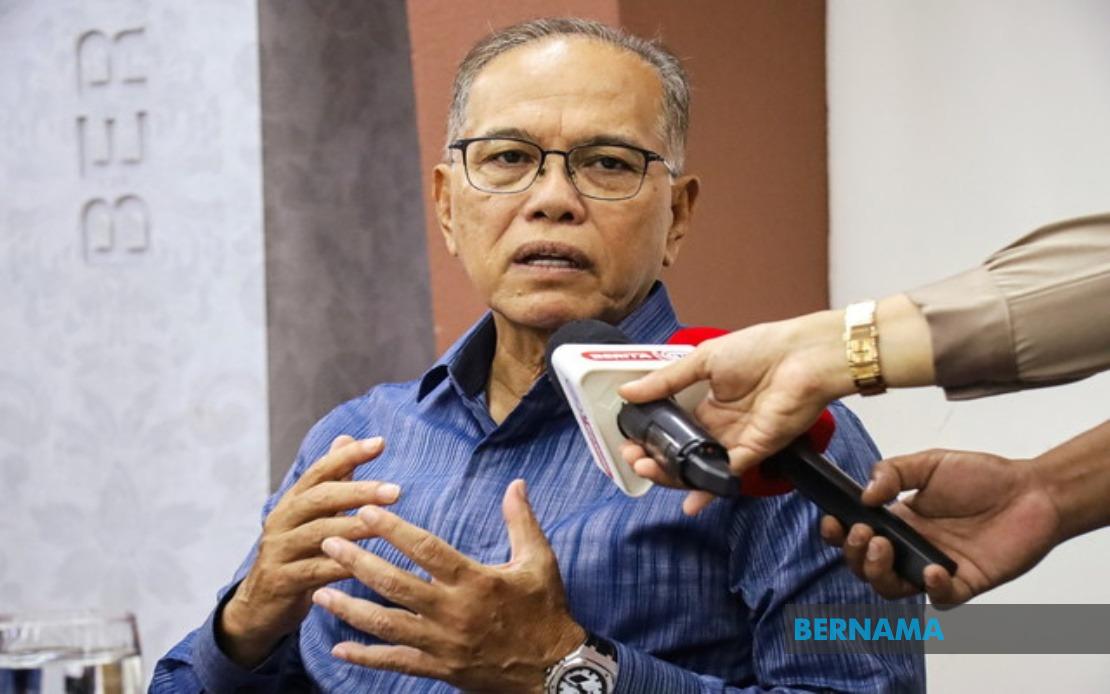
Pahang's Barisan Nasional leadership has signalled its determination to keep the current power-sharing arrangement with Pakatan Harapan intact through the 16th General Election, offering fresh reassurance of political stability in the eastcoast state. Datuk Seri Wan Rosdy Wan Ismail, who serves as both Pahang Menteri Besar and BN state chairman, made the declaration while presiding over a scholarship distribution ceremony in Kuantan on August 14, emphasizing that maintaining the coalition remains a priority for state governance.
The Pahang Unity Government framework represents a significant political development within Malaysia's broader coalition landscape. Formed in November 2022 with the consent of Pahang Regent Tengku Hassanal Ibrahim Alam Shah Al-Sultan Abdullah Ri'ayatuddin Al-Mustafa Billah Shah, the arrangement brought together two traditionally opposing blocs to govern the state. This partnership emerged following the inconclusive results of the 15th General Election, which left no single coalition commanding an unambiguous majority in the 42-seat state assembly.
The electoral mathematics that necessitated this unity approach remain relevant to understanding Pahang's current political trajectory. In GE15, both Barisan Nasional and Perikatan Nasional secured 17 seats each within the Pahang Legislative Assembly, while Pakatan Harapan captured eight seats. This fragmented outcome left the state without a clear governing majority, making cross-coalition cooperation essential for forming any viable government. The subsequent BN-PH arrangement broke conventional political patterns by uniting two philosophically distinct coalitions.
Wan Rosdy's reiteration of commitment to the Unity Government framework carries significance beyond Pahang's borders. The state's experience with inter-coalition governance has become a reference point for national discourse on political stability and consensus-building across Malaysia's polarized political landscape. Should the partnership endure through GE16, it would demonstrate that pragmatic cooperation can supersede adversarial partisanship when electoral outcomes demand flexibility.
Simultaneously, the Menteri Besar signalled that Pahang BN remained open to forming additional political arrangements ahead of the next general election. This dual positioning—affirming the current partnership while leaving doors open to other alliances—reflects the fluid nature of Malaysian coalition politics. Pahang's experience illustrates how state-level political calculations often diverge from national party strategies, creating space for unconventional arrangements that prioritize governance over ideological consistency.
Beyond the coalition politics, Wan Rosdy's remarks touched on the state government's educational investment strategy, which carries implications for Pahang's human capital development. The state allocated RM118,000 to support 118 students from local institutions of higher learning pursuing further education in Egypt and New Zealand during the current academic year. Additionally, through Yayasan Pahang, the government channelled USD1,000 to assist students undertaking studies in Jordan and Morocco.
The expansion of the Makmur Pahang Initiative reflects state-level efforts to position Pahang as competitive in knowledge-based development. By directing students toward countries with diverse educational strengths—whether in Islamic studies, technical fields, or specialized disciplines—the initiative demonstrates intentional curriculum alignment with state development priorities. Pahang's approach to overseas education assistance suggests a government seeking to develop human resources suited to its economic aspirations.
The Menteri Besar's emphasis on course selection criteria, particularly the inclusion of programmes with Islamic elements alongside career-relevant fields, illustrates how state governments balance multiple policy objectives. This framework acknowledges Malaysia's Muslim-majority character while pursuing pragmatic skills development for economic competitiveness. The approach reflects broader Malaysian state efforts to integrate religious and secular educational frameworks.
Wan Rosdy's exhortation that overseas students uphold Pahang's reputation and return home with achievements speaks to persistent concerns within Malaysian governance about brain drain and talent retention. State governments compete not merely for academic performance but for the return of invested talent to contribute to regional development. The framing suggests Pahang views overseas education as an investment in future leadership and expertise that should ultimately benefit the state's long-term development trajectory.
The Menteri Besar's acknowledgment that studying abroad presents considerable challenges—requiring mental and physical resilience—indicates government awareness of the difficulties faced by Malaysian students navigating foreign education systems. This recognition potentially signals openness to expanding support structures and counselling services for students undertaking international education, though specifics remain undetermined.
Looking ahead, Pahang's continuation of the Makmur Pahang Initiative alongside political affirmations about coalition stability suggests a state government focused on demonstrating effective administration across traditional political divides. The combination of educational investment announcements with political commitment statements serves dual purposes: signalling ongoing governance capacity while building constituencies around concrete benefits distribution.
The persistence of the Unity Government through potential general election cycles would carry significance for Southeast Asia's emerging democracies. Malaysian state-level coalition experiments provide observable lessons about whether institutionalized power-sharing can survive electoral uncertainty and partisan pressures. Pahang's trajectory will remain closely watched as evidence of coalition durability or as a cautionary tale about the fragility of cross-partisan arrangements.
As GE16 approaches, Pahang BN's dual messaging—committed to current partnerships yet pragmatically open to reconfiguration—reflects the calculated ambiguity often required in Malaysian politics. Whether such arrangements prove durable will depend on factors extending beyond leadership declarations, including electoral outcomes, internal party dynamics, and broader national political shifts that no state administration can fully control.

