Pahang's approach to degazetting Permanent Forest Reserves operates within a defined regulatory framework rather than through arbitrary decision-making, according to Menteri Besar Datuk Seri Wan Rosdy Wan Ismail. Speaking in Kuantan on August 30, he emphasised that the state government implements stringent oversight mechanisms and established protocols when removing forestland from protected status, positioning the practice as consistent with constitutional allocations of power over land and forest administration.
The comments come as Pahang faces scrutiny for declining to adopt two principal protective mechanisms introduced under the National Forestry Act (Amendment) 2022. Specifically, the state has not implemented mandatory public inquiry processes or required replacement land provisions before degazetting forest reserves. This stance has made Pahang the fourth state to opt out of these dual safeguards, raising questions about divergent approaches to environmental stewardship across Malaysia's federation.
Wan Rosdy's justification centres on the constitutional division of authority, where states retain jurisdiction over land and forest resources within their boundaries. This invocation of federalism reflects a broader tension between centralised national environmental standards and state-level autonomy. The Menteri Besar suggested that Pahang's methodology represents a legitimate exercise of state prerogative, with enforcement through internal mechanisms rather than public engagement.
However, the absence of public inquiry requirements represents a significant departure from contemporary environmental governance principles. Public participation in land-use decisions has become increasingly recognised as essential for environmental accountability, particularly given the long-term ecological and economic implications of converting forest reserves to alternative uses. The removal of this transparency mechanism raises concerns about stakeholder consultation, indigenous rights considerations, and whether affected communities can meaningfully contribute to decisions affecting their surroundings.
The fact that multiple states have similarly eschewed these National Forestry Act amendments suggests either divergent interpretations of federal environmental law or deliberate policy choices prioritising state developmental autonomy. For Malaysian environmental advocates and international observers monitoring deforestation trends in Southeast Asia, this fragmentation of protective standards creates inconsistency in how critical forest ecosystems are safeguarded across the nation.
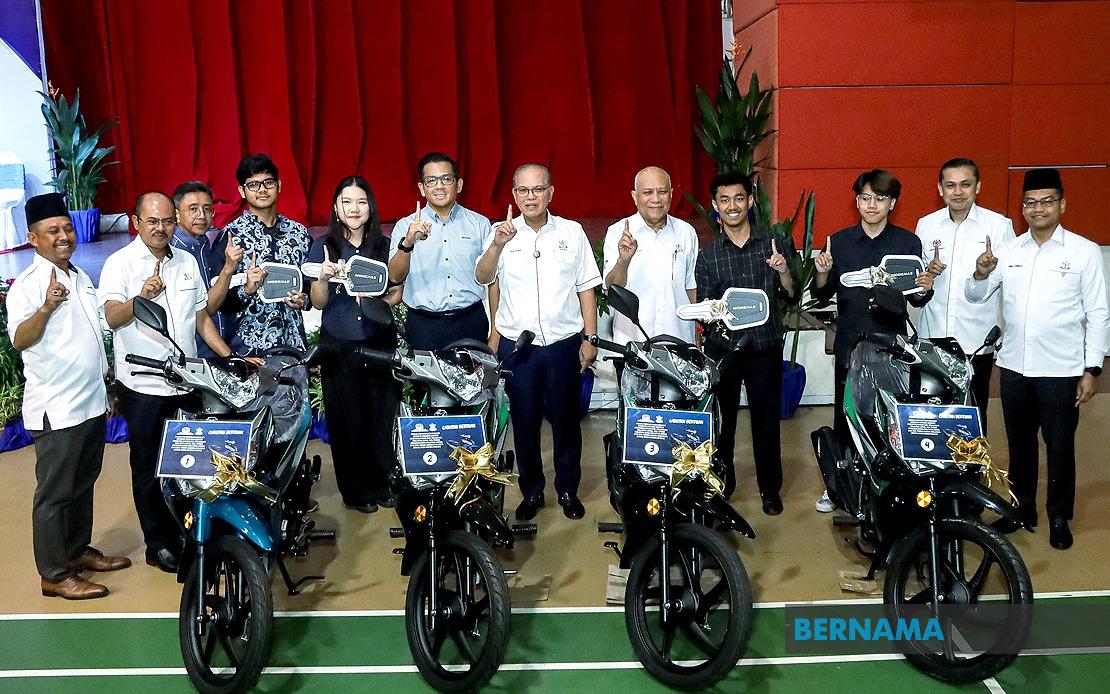
Beyond forest management, Wan Rosdy used the occasion to announce a youth-focused financial initiative. The state government plans to introduce an interest-free motorcycle loan scheme targeting tertiary students aged 18 to 21 enrolled in both public institutions (IPTA) and private higher education providers (IPTS). This proposal will be formally presented to the Pahang State Legislative Assembly as part of the 2027 state budget discussions, reflecting a policy shift toward making vehicle ownership more accessible for young adults pursuing education.
The motorcycle financing scheme addresses a practical concern for students requiring personal transport while managing educational expenses. By eliminating interest charges, the initiative reduces the total cost of vehicle acquisition, potentially enabling younger Malaysians to avoid debt accumulation during formative years. This aligns with broader regional trends of governments facilitating youth economic participation through targeted subsidised credit programs.
Simultaneously, the state government recognised academic excellence among Pahang's student population. More than 2,000 high-achieving pupils who attained distinguished results in the 2025 Sijil Pelajaran Malaysia (SPM), Sijil Tinggi Agama Malaysia (STAM), and Sijil Tinggi Persekolahan Malaysia (STPM) examinations received monetary incentives during a recent ceremony. The aggregate allocation of RM2.4 million underscores state commitment to rewarding educational merit and encouraging continued academic pursuit among the younger generation.
These education-focused initiatives reflect broader policy priorities balancing economic support with performance recognition. For families in Pahang, such programs reduce barriers to tertiary education access while maintaining meritocratic principles through examination-based award allocation. The combination of achievement recognition and subsequent financial assistance for vehicle ownership creates a pathway encouraging youth workforce participation and economic mobility.
Yet the juxtaposition of these education-related announcements with the forest degazettement debate reveals competing developmental philosophies. While the motorcycle loan scheme and academic incentives represent investment in human capital, the relaxed environmental safeguards potentially prioritise short-term economic or developmental gains over long-term ecological preservation. This tension between immediate material support for citizens and conservation-oriented governance frameworks characterises contemporary policy-making in Malaysian states navigating development imperatives.
The degazettement methodology adopted by Pahang and three other states warrants closer examination by federal authorities and environmental stakeholders. Understanding whether state-level omission of public inquiry requirements reflects genuine constitutional interpretation or deliberate policy divergence remains crucial for assessing national forest preservation capacity. As Southeast Asia confronts accelerating deforestation pressures, ensuring consistent environmental standards across federal structures becomes increasingly important for regional sustainability outcomes.

