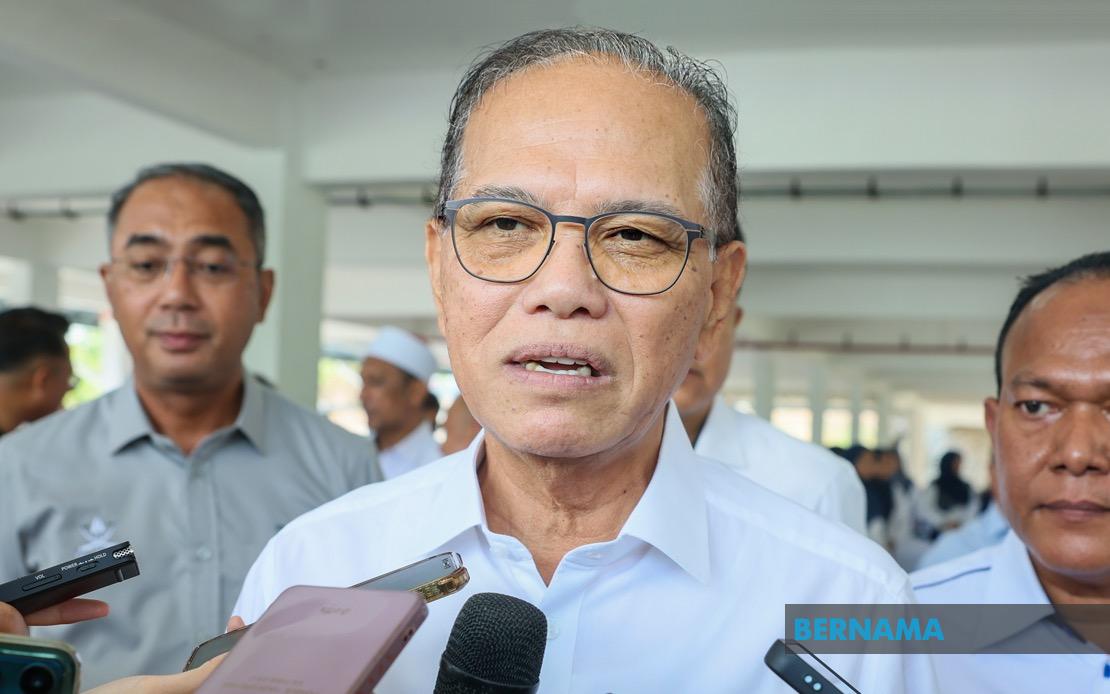
The Pahang state government has unveiled an ambitious sports funding initiative, committing RM3.5 million this financial year to accelerate development across three disciplines as it seeks to establish itself as a serious contender in Malaysia's national sports landscape. Menteri Besar Datuk Seri Wan Rosdy Wan Ismail announced the strategic allocation during the closing ceremony of the Pahang 1st Netball League Championship at the Pahang Sports Complex on July 5, signalling the administration's determination to build a sustainable pipeline of internationally competitive athletes from within the state.
The financial commitment is distributed across football, which receives RM2 million in funding, netball allocated RM1 million, and sepak takraw, a traditional Southeast Asian sport, granted RM500,000. This tiered approach reflects the state government's assessment of development priorities and existing infrastructure capacity. The allocation strategy demonstrates recognition that different sports require varying levels of investment depending on their current institutional maturity, participation base, and competitive standing within national tournaments.
Wan Rosdy articulated a broader vision extending beyond elite competition, emphasizing that the initiative prioritizes grassroots development and systematic talent identification processes. By investing in foundational infrastructure and community-level programmes, Pahang aims to establish efficient mechanisms for spotting promising young athletes early in their sporting careers, allowing authorities to provide targeted developmental pathways before athletes reach secondary and tertiary competitive levels. This emphasis on nurturing emerging talent represents a departure from solely funding established competitive structures.
The Menteri Besar framed the commitment within the context of regional competitiveness, acknowledging that several Malaysian states have historically dominated national championships through sustained investment and institutional expertise. Pahang's initiative suggests recognition that competing effectively at national level requires deliberate, substantial resource allocation over multiple years. The state government's resolve to avoid half-measures in implementation underscores acknowledgment that sporadic or under-resourced programmes generate minimal returns and damage credibility among athletes and sporting associations.
Netball represents a particular growth priority for Pahang's sporting ambitions. Beyond the immediate RM1 million allocation, the state government has committed to increasing netball funding by an additional RM500,000 in the following financial year, bringing total annual investment to RM1.5 million. This escalation signals confidence in netball's potential for Pahang and reflects the sport's expanding participation base among female athletes across the state. The commitment to increased funding demonstrates medium-term strategic planning rather than reactive, year-to-year budgeting.
The closing ceremony of the Pahang 1st Netball League Championship showcased the sport's organizational capacity and grassroots engagement within the state. The tournament drew 42 participating teams, indicating robust community involvement and competitive depth. Semambu emerged as champions, securing the trophy and RM10,000 in prize money, illustrating that competitive structures already exist to incentivize performance and organizational excellence among participating clubs and associations.
Wan Rosdy articulated an often-overlooked dimension of sports development, recognizing its social cohesion function beyond competitive achievement. Strategic investment in sports creates platforms for fostering unity, cooperation and discipline across diverse community demographics regardless of ethnic or socioeconomic background. This perspective positions sports funding as an instrument of social policy, contributing to broader governance objectives around community development and intercommunal harmony. For Malaysian policymakers, this framing justifies sports expenditure within comprehensive development agendas.
The allocation pattern reflects evolving thinking about how state governments can differentiate themselves through sports. Unlike federal government initiatives that necessarily cast wide nets across numerous disciplines, state-level strategies permit focused investment in selected sports aligned with local strengths, demographics, or aspirational development paths. Pahang's selection of football, netball, and sepak takraw suggests deliberate choices based on existing community participation patterns and potential for competitive advancement within national frameworks.
Sepak takraw, the recipient of RM500,000, occupies particular significance within this initiative. As a traditional Southeast Asian sport with deep cultural roots in Malaysia, investment in sepak takraw development carries cultural resonance beyond athletic competition. The sport's inclusion alongside football and netball indicates Pahang's commitment to preserving and modernizing traditional sporting practices while ensuring they remain competitive at national championship levels, an increasingly challenging objective as newer, globally-connected sports gain resources and institutional support.
For Malaysian sports administrators and state governments beyond Pahang, this allocation model offers instructive lessons about sequencing and resource distribution. The RM3.5 million investment, while substantial in state government terms, operates within realistic budget parameters for regional administrations. By concentrating resources on three disciplines rather than dispersing investment thinly across multiple sports, Pahang maximizes impact potential and demonstrates clear priority-setting discipline. This targeted approach contrasts with some sports development programmes that attempt comprehensive coverage with insufficient resources.
The timing of this announcement and funding commitment reflects broader national conversations about developing indigenous sporting talent and reducing dependence on imported or foreign-trained athletes in competitive representative teams. State-level initiatives like Pahang's contribute to decentralized talent development infrastructure that feeds into national sporting systems and helps build competitive depth across multiple disciplines simultaneously. The cumulative effect of state governments across Malaysia implementing similar systematic development programmes strengthens the nation's overall sporting capacity.
Wan Rosdy's emphasis on serious, comprehensive implementation signals awareness that previous sports initiatives have sometimes faltered through inconsistent execution or insufficient follow-through. By explicitly committing to avoiding half-measures and maintaining implementation discipline, the Menteri Besar establishes expectations for project management rigor and resource deployment accountability. This rhetorical commitment to excellence in execution becomes itself a performance metric against which the state government's sports administration can be measured over time.
Moving forward, success measurement will determine whether this RM3.5 million investment generates proportionate returns in terms of national championship performance, athlete development trajectories, and grassroots participation growth. The commitment of additional netball funding for subsequent years provides initial evidence of sustained institutional commitment, though multi-year outcomes will ultimately validate the programme's effectiveness. For other Malaysian states observing Pahang's strategic sports investment approach, results from this initiative will likely influence future resource allocation decisions and inform regional conversations about optimal funding models for athletic development.

