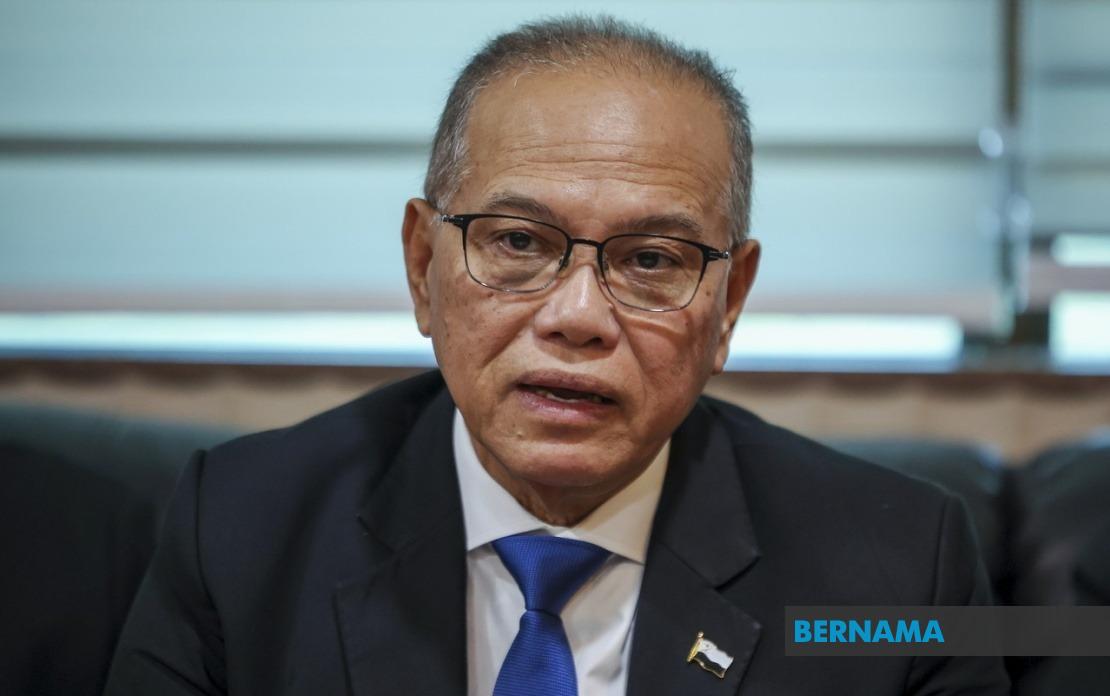
The Pahang state government is demonstrating solid fiscal momentum as it heads into the final quarter of 2026, having secured RM921.72 million in revenue collection by late August. Menteri Besar Datuk Seri Wan Rosdy Wan Ismail disclosed the figures during the state legislative assembly session, noting that the achievement represents 72 per cent of Pahang's annual revenue target of RM1.279 billion. The disclosure signals that the state's coffers remain adequately replenished to fund public services and development initiatives across the peninsula's east coast.
Wan Rosdy's assertion that Pahang's financial trajectory remains sound reflects the broader economic recovery narrative that state administrations across Malaysia are narrating as the nation navigates post-pandemic growth dynamics. The Menteri Besar stressed that current revenue performance positions the state government to maintain its spending commitments without fiscal strain, a particularly important assurance given the economic uncertainties that periodically buffet regional economies dependent on commodity sectors and tourism. For Malaysian investors and businesses operating in Pahang, the revenue stability indicates continuity in government service delivery and infrastructure maintenance, both factors that underpin investor confidence in the state's institutional capacity.
Beyond immediate revenue figures, Pahang's economic fundamentals paint a picture of consistent expansion. The state's gross domestic product surged to RM71 billion in 2025, up from RM68.8 billion the previous year, demonstrating growth momentum across the state's diversified economic base spanning manufacturing, agriculture, tourism, and services. This GDP expansion directly underpins the revenue growth trajectory, as a larger economic base naturally generates increased tax receipts and other state revenue streams. For the broader Southeast Asian context, Pahang's performance mirrors trends seen across Malaysian states as domestic demand strengthens and investor appetite for regional locations persists despite global uncertainties.
Investment inflows into Pahang further validate the state's economic attractiveness. The state government recorded committed investments totalling RM11.47 billion as of August 2026, demonstrating substantial project pipelines across multiple sectors. Concurrently, realised investments—those already deployed and operational—reached RM1.044 billion, translating theoretical interest into tangible economic activity and employment generation. This distinction between committed and realised investments is crucial for policymakers and analysts assessing the sustainability of growth trajectories; while committed investments signal future momentum, realised investments confirm present economic activity and tax-generating capacity.
Wan Rosdy highlighted the Pahang government's ability to translate economic gains into direct social benefits for residents through the Makmur Pahang Initiative. The initiative, allocated RM173.93 million across 2024 to 2026, represents a structured approach to ensuring that economic growth translates into improved living standards. The progressive increase in annual allocations—from RM38.8 million in 2024 to RM84.59 million in 2026—reflects growing confidence in the state's fiscal capacity and commitment to expanded welfare and development programmes. For Malaysian residents in Pahang, these allocations theoretically enhance access to social services, infrastructure upgrades, and economic empowerment schemes targeting smaller communities and rural areas.
The escalating budget allocations for the Makmur Pahang Initiative also signal the state government's intention to sustain this spending trajectory into subsequent years. Wan Rosdy indicated that future state budgets would incorporate enhanced provisions for the initiative, suggesting that revenue collection patterns remain positive enough to warrant increased commitments. This forward-looking budgetary approach contrasts with fiscally constrained administrations forced to maintain or reduce spending, indicating that Pahang's financial management has generated sufficient breathing room for expanded social programming. For Malaysian policy observers and economists tracking state-level fiscal governance, Pahang's approach offers a case study in how economic growth, if properly channelled through taxation and prudent expenditure, enables administrations to simultaneously discharge social obligations and maintain fiscal stability.
The timing of Wan Rosdy's revenue disclosure warrants contextual attention. Presented in late August with revenue collection at 72 per cent of annual targets, the figures suggest that seasonal revenue variations and third-quarter collection patterns remain within expected parameters. Most state governments experience uneven monthly revenue flows reflecting economic cycles, business activity timing, and property transaction patterns. Pahang's steady progress toward its full-year target by August indicates that the remaining four months face no extraordinary revenue collection impediments, assuming economic conditions remain broadly stable. For Malaysian businesses and investors planning operational decisions for the final quarter, this stability provides reasonable assurance regarding government service continuity and infrastructure investment momentum.
The response to Datuk Mohd Sharim Md Zain's parliamentary question demonstrates how state legislators deploy budget interrogation mechanisms to scrutinise executive performance on economic indicators. The BN-Chini representative's inquiry into economic performance, revenue collection, and the Pahang 1st agenda implementation reflects standard parliamentary oversight practices where opposition and backbench members demand accountability from sitting executives. Wan Rosdy's comprehensive response—traversing GDP metrics, investment figures, revenue collection, and social initiative spending—illustrates how modern state legislatures expect administrators to articulate measurable performance indicators rather than vague assurances of competence.
For Malaysian stakeholders monitoring Pahang's trajectory, the revealed figures establish a baseline for assessing whether the state sustains current growth momentum through 2027 and beyond. The RM1.279 billion revenue target represents an implicit forecast of economic activity and tax compliance across the state's formal economy. Should revenue fall significantly short of targets in subsequent reporting periods, analysts would rightfully question whether underlying economic fundamentals have weakened or whether tax collection efficiency has deteriorated. Conversely, should revenue exceed targets, the state gains additional fiscal capacity for enhanced spending without debt accumulation—an enviable position for many regional administrations operating under tighter fiscal constraints.
The convergence of robust revenue collection, positive economic growth, substantial investment pipelines, and expanded social programming reflects a state administration capitalising on favourable economic conditions. However, this prosperity remains contingent upon sustained business investment, consumer spending, and stable commodity markets that underpin Pahang's economic base. Global economic downturns, regional geopolitical disruptions, or sectoral challenges in agriculture or manufacturing could rapidly alter the financial landscape that currently supports Pahang's optimistic fiscal projections. For Malaysian economic planners and state administrators across the nation, Pahang's current performance serves both as an exemplar of effective financial management and as a reminder of economic fragility requiring continuous adaptation and policy flexibility.

