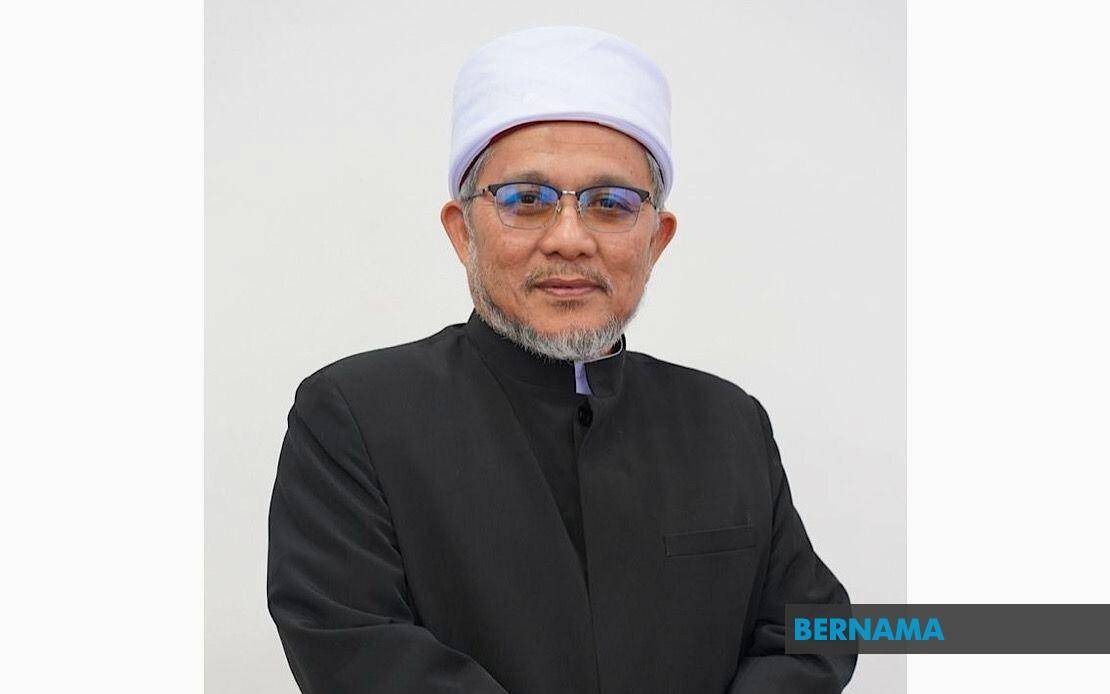
The Pahang State Mufti Department and the Pahang Islamic Religious and Malay Customs Council (MUIP) have renewed their commitment to implementing the Sultan of Pahang Al-Sultan Abdullah Ri'ayatuddin Al-Mustafa Billah Shah's directive to enhance and elevate the roles of mosques and suraus throughout the state, marking a deliberate stance on religious infrastructure development in the region.
Pahang Mufti Prof Datuk Dr Asmadi Mohamed Naim clarified that the Sultan has reviewed proposals for establishing Friday prayer facilities within shopping malls across the country, but has determined that such developments are not aligned with Pahang's religious framework. The Sultan's position reflects a constitutional foundation rooted in state-level religious autonomy, positioning MUIP as the authoritative body representing the state's Islamic leadership in matters concerning mosque administration and religious facilities management.
The reaffirmation carries significant implications for Malaysia's evolving discussion about religious service delivery in modernising urban environments. While some jurisdictions have embraced the concept of Friday prayer facilities in commercial centres to accommodate working professionals and shoppers, Pahang's leadership has signalled that existing authorised Friday prayer venues (SKJ) in the state remain the appropriate channels for congregational worship. This decision underscores the importance of maintaining established religious institutions as the backbone of Islamic practice rather than fragmenting prayer activities across multiple settings.
Dr Asmadi emphasised that Pahang's existing mosque infrastructure, including established facilities and approved suraus, already possesses the capacity to serve the state's Muslim population effectively. The state has invested strategically in flagship religious institutions such as the Sultan Ahmad 1 State Mosque in Kuantan, the Tepian Putra Mosque, the Bandaraya Mosque which is nearing completion, and the Al-Shafie Mosque located in Kota SAS. These venues represent carefully planned and distributed facilities designed with community needs and congregation volumes in mind, reducing the necessity for alternative prayer locations in commercial spaces.
Underlying this policy position are specific religious requirements that govern the conduct of Friday prayers within Islamic jurisprudence. Under the Syafi'i school of thought, which guides Islamic practice in Pahang, Friday prayers are subject to stringent conditions including their performance during the Zohor prayer period, the presence of at least 40 congregants, the delivery of two sermons before the prayer, and their conduct at an officially designated venue. Critically, the Syafi'i tradition prohibits the simultaneous holding of Friday prayers in proximate locations, as such overlap would violate the unified congregation principle central to Friday prayer observance. Shopping malls, with their dispersed layouts and varying accessibility, would complicate adherence to these foundational requirements.
The constitutional framework supporting Pahang's position derives from the Ninth Schedule of the Federal Constitution, which explicitly designates matters concerning Islam and Islamic institutions as falling within state authority rather than federal jurisdiction. By invoking this constitutional provision, Pahang's religious authorities have grounded their decision in fundamental law, reinforcing that mosque administration and religious facility planning remain prerogatives of the state. This demarcation of responsibility prevents conflicting religious policies across Malaysia's thirteen states and federal territories, each of which may interpret religious matters according to their respective Islamic jurisprudence and administrative capacity.
The timing of Pahang's reaffirmation follows recent comments by Datuk Dr Zulkifli Hasan, the Minister in the Prime Minister's Department (Religious Affairs), who expressed tentative support for state initiatives to introduce Friday prayers in shopping malls following reported positive experiences in the Federal Territories. However, Pahang's response demonstrates that not all state governments view this development as compatible with their religious framework or infrastructure planning. This differentiation illustrates Malaysia's federal structure in action, where religious policy reflects local contexts and institutional preferences rather than uniform national diktat.
From a practical standpoint, Pahang's decision prioritises the consolidation and strengthening of existing religious institutions over their dilution across multiple venues. The state's approach rests on the premise that robust, well-resourced mosques and authorised suraus serve congregations more comprehensively than dispersed prayer facilities, offering not only prayer spaces but also Islamic education, community services, and social cohesion activities. Shopping mall prayer facilities, by contrast, typically function as transactional spaces providing minimal engagement beyond the prayer itself.
The directive also reflects broader considerations about urban planning and the integration of religious infrastructure with overall community development. Rather than accommodate working professionals through prayer facilities in commercial spaces, Pahang appears to be signalling that employers and urban planners should consider allocating adequate prayer facilities within employment and public spaces themselves, shifting the burden of accommodation away from commercial proprietors. This philosophy emphasises that religious observance remains a fundamental right requiring institutional support rather than an afterthought managed through available shopping mall space.
The Sultan's position carries weight beyond Pahang's borders, potentially influencing discussions in neighbouring states and serving as a counterpoint to the federal government's emerging openness toward mall-based Friday prayers. As Malaysia navigates modernisation and urbanisation, the tension between convenience-oriented religious service delivery and the preservation of traditional institutional structures will likely persist. Pahang's reaffirmation suggests that some state leaderships prioritise institutional integrity and religious compliance over expedience, viewing their role as custodians of Islamic practice rather than facilitators of administrative convenience.
Looking forward, Pahang's stance implies continued investment in its mosque and surau network, with these facilities expected to evolve and adapt to serve contemporary community needs without compromising religious principles. The state's religious authorities will likely face pressure to demonstrate that existing infrastructure genuinely meets congregational demands, particularly in rapidly urbanising areas where population growth may outpace facility development. The success of Pahang's approach will ultimately depend on whether its mosque network genuinely accommodates all those seeking Friday prayer facilities, or whether practical limitations eventually force reconsideration of the ban on alternative venues.

