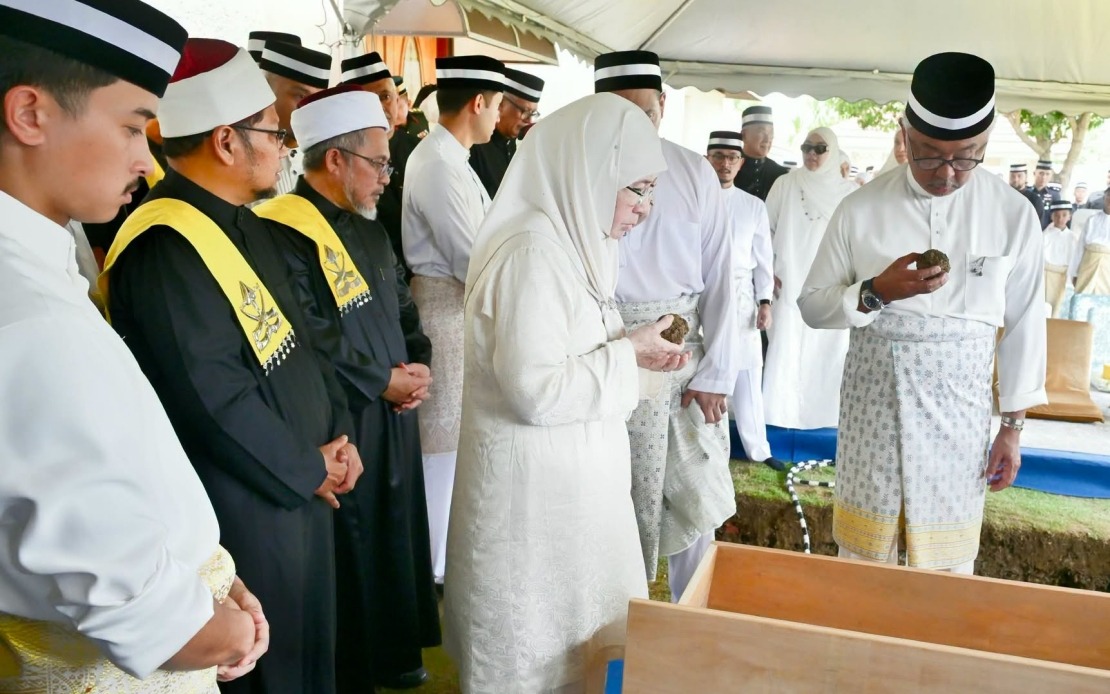
The Pahang royal family has been called to observe a period of formal mourning spanning three days in response to the death of Tengku Puteri Seri Kemala Tengku Datuk Seri Aishah, the elder sister of Sultan Al-Sultan Abdullah Ri'ayatuddin Al-Mustafa Billah Shah. The directive, issued by the Sultan himself, underscores both the significance of the loss within the royal household and the customary observances that accompany the passing of senior members of the reigning family. The mourning period commenced on Wednesday and will extend through Saturday, marking a significant moment for one of Malaysia's oldest established sultanates.
Maj Gen Datuk Mohamed Zahari Yahya, serving as Comptroller of the Royal Household of the Sultan of Pahang, formalised the arrangements through an official statement released from Kuantan. The prescribed protocols during this period carry specific requirements for members of the royal household, reflecting Islamic and royal traditions that have governed state ceremonies in Pahang for generations. These protocols represent more than mere ceremonial formality; they constitute a structured expression of collective grief and respect within the hierarchical context of the institution.
During the three-day observance, all members of the Pahang royal family are required to dress in white, a colour traditionally associated with mourning in Islamic custom. Male members of the household face an additional requirement, though the statement provided by the Comptroller's office did not fully specify this particular regulation. These dress codes serve both as outward manifestations of the family's state of mourning and as visible affirmations of unity during a period of loss, communicating to the broader public the significance of the occasion and inviting collective empathy from the people of Pahang.
Tengku Puteri Seri Kemala held considerable significance within the royal hierarchy as the sister of the current Sultan. Her position within the family carried weight not merely through bloodline but through her role as a living link to the continuity of the Pahang sultanate and its institutional memory. The Comptroller's statement acknowledged this stature, describing her passing as a profound loss to the royal family, with particular emphasis on its impact upon Sultan Al-Sultan Abdullah Ri'ayatuddin Al-Mustafa Billah Shah himself and upon Tengku Ampuan of Pahang Tunku Azizah Aminah Maimunah Iskandariah, the Sultan's consort.
The late Tengku Puteri Seri Kemala passed away at a private hospital in Kuala Lumpur at 9:15 pm on Wednesday evening. Her final resting place was established at the Royal Mausoleum located in Pekan, the historic royal capital of Pahang. The placement of her remains at this significant location reflects her rank and importance within both the family and the state's institutional structures. The rapid completion of funeral arrangements, accomplished within the same day, adhered to Islamic practices governing the treatment of the deceased and the timing of burial rituals.
In his statement, Comptroller Yahya extended an invitation to the people of Pahang to participate spiritually in honouring the memory of Tengku Puteri Seri Kemala. The public was urged to recite Al-Fatihah, the opening chapter of the Quran, and to offer prayers seeking divine forgiveness and mercy for the deceased. This approach transforms the royal loss into a communal spiritual exercise, creating space for ordinary citizens to engage meaningfully with the mourning process despite their distance from the palace. Such invitations acknowledge the interconnected nature of royal and popular sentiment within Malaysian sultanates.
The instructions further requested that prayers be offered with the intention that Tengku Puteri Seri Kemala be granted a place in paradise, consistent with Islamic eschatological beliefs and customary Muslim funeral practices. This spiritual dimension of the mourning protocol reflects the manner in which Islam is interwoven with the institutions and ceremonies of Malaysia's constitutional monarchies. For the people of Pahang, participation in these prayers represents not merely a gesture of respect toward the royal household but also an expression of their role as subjects within a monarchy shaped by Islamic principles and traditions.
The three-day mourning directive issued by Sultan Al-Sultan Abdullah Ri'ayatuddin Al-Mustafa Billah Shah represents a measured and dignified response to the loss of a senior family member. Such periods of formal observation serve multiple functions within royal institutions: they provide structured space for private grief within public view, they reaffirm the bonds connecting the royal family to the state and its people, and they demonstrate continuity in the observance of protocols that have sustained the institution across generations. The specificity of the arrangements, from dress codes to the duration of the period, reflects the carefully calibrated nature of royal ceremony in Malaysia.
For observers of Malaysian politics and royalty, the event illustrates the continued vitality of sultanate institutions in the country's constitutional framework. Despite modernisation and social change, the Pahang royal family continues to observe traditional mourning practices that connect contemporary Malaysia to its pre-colonial heritage and Islamic traditions. The public nature of the announcement and the invitation for popular participation demonstrates how royal institutions maintain relevance by creating pathways for broad-based engagement with their significant moments and observances.

