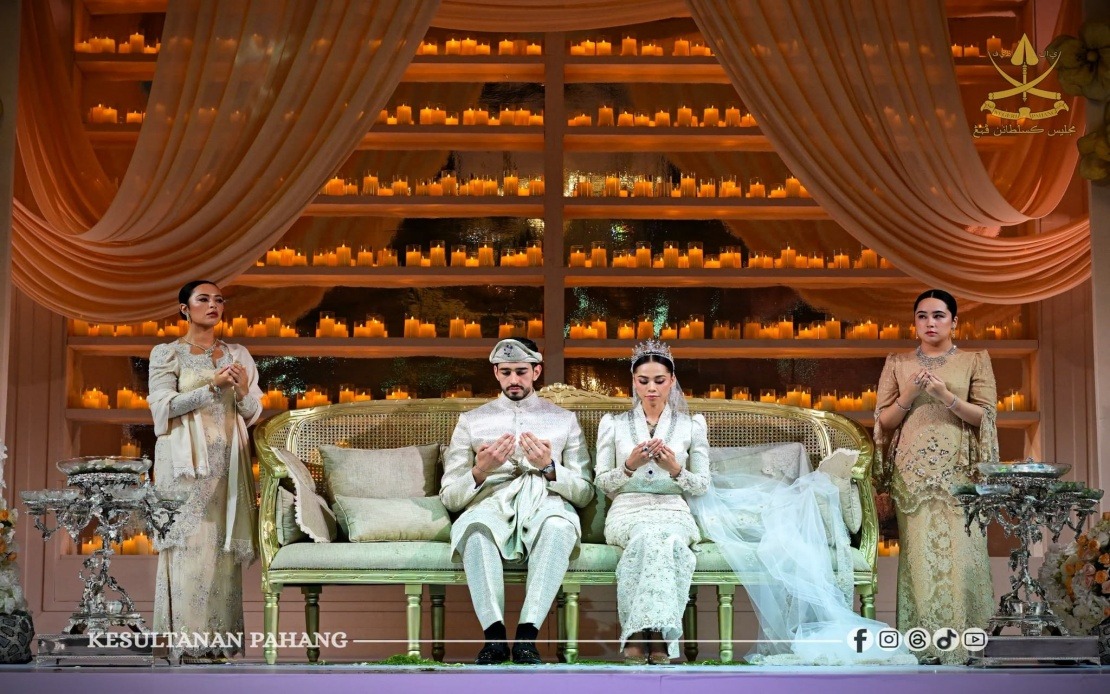
The Pahang Sultan Al-Sultan Abdullah Ri'ayatuddin Al-Mustafa Billah Shah graced the wedding reception of his daughter Tengku Puteri Raja Tengku Puteri Ilyana Alia and her husband Christopher Lionel Froggatt in Kuala Lumpur, underscoring the significance of the union within the royal household. The event brought together members of the extended royal family and dignitaries, reflecting the prominence of the occasion within Malaysia's constitutional monarchy.
Accompanying the Sultan at the ceremony were several key figures from the Pahang royal establishment. The Regent of Pahang, Tengku Hassanal Ibrahim Alam Shah, attended alongside the Sultan's siblings and other immediate family members, demonstrating the collective participation of the royal household in celebrating the marriage. The formal presence of senior royals at such functions remains an important tradition within Malaysia's palace circles, serving both ceremonial and symbolic purposes for the institution.
The guest list extended beyond the immediate royal family to include government and international representatives. Pahang Menteri Besar Datuk Seri Wan Rosdy Wan Ismail represented the state administration, while Shaikh Mohammed Hamad Tahnoon Al Nahyan attended as the representative of the President of the United Arab Emirates. The presence of the Emirati dignitary suggests diplomatic dimensions to the wedding, possibly reflecting broader bilateral relations or business connections between the Malaysian and UAE leadership circles.
The reception ceremonies incorporated several significant elements of Malay royal tradition, demonstrating the continuation of customary practices within the modern Malaysian monarchy. The 'Istiadat Menyuap Nasi Semangat' ceremony, which translates to the ritual of feeding blessed rice, was conducted by Tengku Puteri Seri Lela Wangsa Tengku Tan Sri Meriam Sultan Ahmad Shah. This ancient custom carries deep cultural and spiritual significance, symbolizing nourishment and blessing for the newlywed couple as they begin their shared life together.
Following this initial ceremonial act, the proceedings progressed to the 'Istiadat Bersanding dan Merenjis', a traditional Malay wedding ritual where the couple sits in state on an elevated dais while family members sprinkle blessed water upon them. The Sultan himself performed this ceremonial aspect, indicating his direct participation in blessing the union rather than merely observing from a distance. This hands-on involvement by the Sultan reflects both cultural reverence for these traditions and the personal significance he attaches to his daughter's marriage.
A particularly notable moment came when Sultan Al-Sultan Abdullah performed the 'Istiadat Meletakkan Panca Bicara', described as a gesture of blessing and honour for the newlyweds. The panca bicara, or five pillars, represents foundational elements within Malay-Islamic tradition, and the Sultan's performance of this ritual added a layer of spiritual authority and familial blessing to the occasion. The ceremony underscores how Malaysia's constitutional monarchs maintain active roles in presiding over important family milestones, despite their predominantly ceremonial political function.
Religious elements remained integral to the celebration's structure and meaning. Pahang Mufti Datuk Dr Asmadi Mohamed Naim concluded the ceremonial proceedings with a prayer, grounding the festivities within Islamic practice and worldview. This integration of religious observance reflects the constitutional position of the Pahang Sultan as head of Islam in his state, a role that extends into family matters and significant personal occasions. The formal inclusion of the mufti in the proceedings demonstrates how religious and royal authority intersect within Malaysia's institutional framework.
The wedding of Tengku Puteri Ilyana Alia to Christopher Lionel Froggatt represents the evolving nature of Malaysian royal marriages in contemporary times. The groom's English name suggests possible cross-cultural dimensions to the union, indicating how modern marriages within the royal family increasingly reflect Malaysia's multicultural society and globalized world. Such unions, while still embedded in traditional ceremonial frameworks, speak to the adaptability of royal institutions to changing social circumstances.
The detailed documentation of these ceremonial elements on the Kesultanan Pahang's official Facebook page reflects modern practices of royal communication. By sharing images and descriptions of the wedding ceremonies with the broader public through social media, the Pahang palace demonstrates how traditional institutions now engage with contemporary modes of public engagement. This practice allows Malaysians outside the immediate royal circles to participate vicariously in significant royal family moments, fostering public connection to the monarchy.
For observers of Malaysian royal protocol and customs, the event serves as a reminder of the persistent cultural importance placed upon traditional ceremonies even within modernizing institutions. The participation of senior government figures and international representatives indicates how royal family occasions often extend beyond private family affairs into the realm of state ceremony and diplomatic relations. The meticulous observation of Malay-Islamic wedding traditions by the Sultan himself sends a powerful message about continuity and cultural pride within one of Malaysia's oldest sultanates.
The Pahang Sultan's direct involvement in performing multiple ceremonial roles during his daughter's wedding reflects the active participation expected of Malaysia's constitutional monarchs in maintaining cultural traditions and family obligations. While the Sultan's primary responsibilities lie in representing the state and upholding the constitution, these personal ceremonial duties remain deeply valued within Malaysia's royal culture. The event ultimately illustrates how Malaysia's modern monarchy continues to bridge traditional customs with contemporary reality, sustaining practices that date back centuries while adapting to present-day circumstances.

