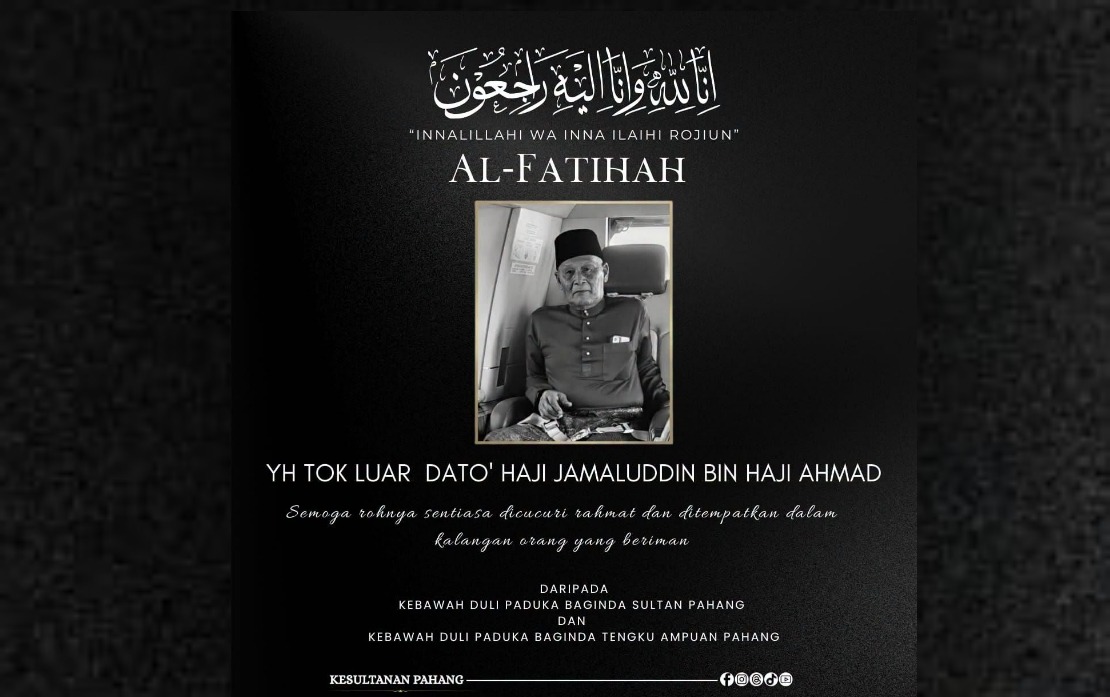
The Sultan of Pahang Al-Sultan Abdullah Ri'ayatuddin Al-Mustafa Billah Shah and Tengku Ampuan of Pahang Tunku Azizah Aminah Maimunah Iskandariah have conveyed their sympathies to the family of Tok Luar Datuk Jamaluddin Ahmad, who passed away on Thursday morning at Tengku Ampuan Afzan Hospital in Kuantan at 6.48 am.
Through a statement issued via the Kesultanan Pahang Facebook page, the royal couple expressed their profound sorrow at the loss of a figure they characterised as a devoted friend of the Pahang Sultanate. The death of prominent state figures, particularly those closely associated with the royal institution, carries significant weight in Pahang's social and political landscape, and the prompt expression of royal condolences underscores the departed's standing within the community.
The Sultan and Tengku Ampuan's message reflected traditional Islamic sentiments of compassion and remembrance. The statement noted their prayers for divine mercy upon Jamaluddin's soul, requesting forgiveness for his earthly transgressions, acceptance of his virtuous deeds, and his placement among the faithful and honourable servants of Allah. These sentiments, carefully articulated in the royal statement, reflect both personal grief and the ceremonial obligations that accompany the death of esteemed community members in a state where the Sultan maintains a central role in cultural and social affairs.
Beyond the expressions of spiritual solace, the royal household extended their hopes that Jamaluddin's family would find the inner reserves necessary to endure their loss. The provision of emotional support to bereaved families from the highest echelons of state leadership carries particular resonance in Malaysian society, where respect for hierarchical relationships and acknowledgment of personal bonds within the community remain culturally significant. The Sultan and Tengku Ampuan's message conveyed not merely formal acknowledgment but genuine recognition of the family's suffering.
Tok Luar Datuk Jamaluddin Ahmad's association with the Pahang Sultanate speaks to a life spent in service or support of the institution. In Pahang, a state with one of Malaysia's most active and engaged royal households, individuals who develop long-standing relationships with the Sultan and the palace often occupy positions of influence or respect within state circles. The characterisation of Jamaluddin as a loyal supporter suggests a relationship built over considerable time, likely spanning multiple dimensions of state life.
The death of such figures often prompts broader reflection within state societies about continuity and change. Pahang, like other Malaysian states, has experienced significant social and economic transformation in recent decades, yet the relationship between the royal institution and prominent community members remains a thread connecting past and present. The passing of individuals like Jamaluddin marks the transition of another generation and the gradual evolution of institutional relationships.
In the Malaysian context, where Islam remains the official religion in most states and Islamic observances permeate state ceremonies and protocols, the language and tenor of royal condolence messages carry particular weight. The specific invocation of Islamic principles in the Sultan and Tengku Ampuan's statement reflects both personal faith and the constitutional role of Pahang's Sultan as the guardian of Islamic affairs within the state. Such messages serve simultaneously as expressions of personal sympathy and as reaffirmations of the state's Islamic identity.
The use of the Kesultanan Pahang's social media platforms to disseminate the condolence message demonstrates how Malaysia's royal institutions have adapted to contemporary communication methods while maintaining traditional protocols. The reach of such announcements extends far beyond palace circles, allowing the broader public to participate in the collective mourning process and to recognise the contributions of deceased community members.
For Malaysian readers, the death of respected state figures and the formal royal responses that follow serve as reminders of the interconnected nature of institutional life at state level. Pahang's Sultan and royal household maintain a visible and engaged presence in state affairs, and their acknowledgment of significant passings reinforces the social bonds that sustain communities. The carefully worded expressions of sympathy also model the dignified approach to grief that remains valued in Malaysian Islamic tradition and broader Malaysian culture.

