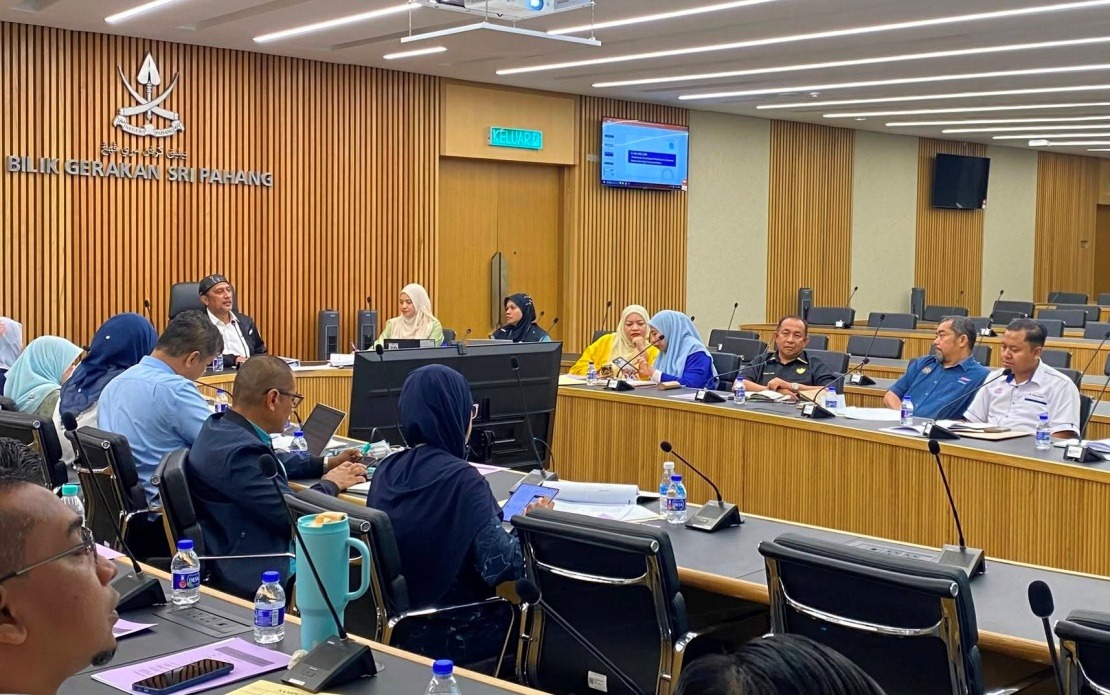
The Pahang state government has announced plans to seek intervention from the Department of Orang Asli Development (JAKOA) and the Pahang Land and Mines Office (PTG) to resolve a long-standing land dispute affecting the Orang Asli community in Kampung Sungai Cot, Maran. The move comes as authorities attempt to untangle conflicting claims to the same parcel of land, where indigenous cultivators and a private company hold competing interests sanctioned at different points in time.
Datak Seri Syed Ibrahim Syed Ahmad, who chairs Pahang's committee on Islamic religious affairs, rural development and Orang Asli matters, disclosed the initiative through a statement released in Kuantan. He emphasized that the state administration intends to approach the matter with legal rigour and through collaborative consultation, ensuring that resolutions benefit all stakeholders. His remarks appeared designed to counter what he characterized as misrepresentations of the situation by unspecified third parties.
At the heart of the dispute lies a fundamental timing problem. Twelve members of the Orang Asli community submitted written claims to JAKOA for the land they were actively cultivating in the area. However, in a decision dated November 4, 2015, Pahang's State Executive Council (MMK) granted approval for the same land to be allocated to a private company. This dual authorization created the legal overlap that has since proven difficult to resolve. The situation exemplifies a recurring challenge in Malaysia's management of indigenous land rights, where bureaucratic processes at different levels can inadvertently create conflicting entitlements.
KAJOA has reportedly held multiple rounds of discussions with representatives of the Orang Asli claimants in an effort to negotiate a path forward. These engagements have narrowed the scope of the dispute considerably. According to Syed Ibrahim, the deliberations revealed that only six of the original twelve claimants remain actively pursuing their land claims through official channels. During these discussions, these six individuals contended that the territory represents their ancestral homeland with deep cultural and historical significance. However, when state authorities examined existing records and documentation, they were unable to independently verify these ancestral claims based on the available administrative evidence.
This evidentiary gap underscores a broader challenge within Malaysia's indigenous affairs administration. Orang Asli communities often possess deep oral histories and customary knowledge systems regarding their traditional territories, yet formal land verification procedures typically rely on written documentation, cadastral surveys, and official records that may not capture or reflect such claims. The mismatch between indigenous historical memory and state-maintained land records has historically complicated the adjudication of Orang Asli land rights across the peninsula.
Pahang's approach to Orang Asli affairs extends well beyond this single dispute. The state currently administers 264 registered Orang Asli villages, collectively housing more than 90,000 indigenous residents. Among these settlements, 30 communities have been formally gazetted under the provisions of the Orang Asli Act 1954 and the National Land Code, signifying official state recognition of their territorial claims. Additionally, the state government has already granted formal land ownership to members of the Orang Asli community across 16 villages under Section 76 of the National Land Code, representing a concrete acknowledgment of indigenous tenure rights.
The pipeline of pending applications reflects sustained administrative engagement with land recognition matters. Pahang is currently processing 75 separate applications seeking gazettement of Orang Asli lands. Of these applications, 31 have completed preliminary review and now await consideration by the MMK meeting where final decisions occur. However, progress has been hampered by overlapping claims; 44 applications are currently stalled in resolution procedures aimed at disentangling conflicting interests. Beyond these contested cases, an additional 143 applications remain at the preliminary measurement and verification stage conducted by JAKOA staff.
The deliberate pace of processing reflects the complexity inherent in adjudicating indigenous land claims within Malaysia's formal legal framework. Each application requires careful documentation, survey work, stakeholder engagement, and assessment against existing records. The bottleneck of overlapping applications, which accounts for nearly 59 percent of the applications under review, suggests that conflicts between indigenous claims and other land allocations have become systemic. This pattern points to historical instances where land was committed to multiple parties without adequate coordination between federal and state authorities.
For Malaysian policymakers and indigenous rights advocates, the Kampung Sungai Cot situation illustrates the practical difficulties of implementing protections for Orang Asli lands within an administrative system designed primarily around commercial and government development patterns. The existence of overlapping approvals granted by the MMK and claims filed with JAKOA demonstrates how bureaucratic fragmentation can inadvertently disadvantage vulnerable communities. Resolving such conflicts requires not only legal expertise but also diplomatic negotiation that respects indigenous perspectives while maintaining institutional credibility.
The decision to engage PTG, JAKOA, and district land offices signals Pahang's intention to deploy the full machinery of state land administration toward resolution. This multi-agency approach offers potential benefits, as different offices control distinct aspects of land administration—from records management to survey work to gazettement procedures. However, such coordination can also be lengthy and require consensus across entities that may have divergent institutional interests or interpretations of regulatory frameworks.
For the six remaining Orang Asli claimants in Maran, this resolution process represents a critical juncture. Their ability to retain or recover cultivation rights to the land depends on outcomes of negotiations and administrative reviews that lack transparent timelines or clear benchmarks for success. The involvement of a private company with formal government approval adds commercial interests to what is fundamentally a question of indigenous livelihood and cultural continuity. How Pahang balances these competing claims will signal the state's actual commitment to indigenous land recognition beyond the statistical progress represented by gazettements and ownership transfers.
The broader context of 143 applications at the measurement stage suggests that Orang Asli land recognition will remain a significant administrative priority in Pahang for years to come. Each application represents communities seeking formal acknowledgment of their historical relationship with specific territories. The parallel progress of these cases, alongside dispute resolution for the 44 applications caught in conflicts, will determine whether Pahang's ostensibly supportive policies translate into tangible improvements in indigenous land security and autonomy.

