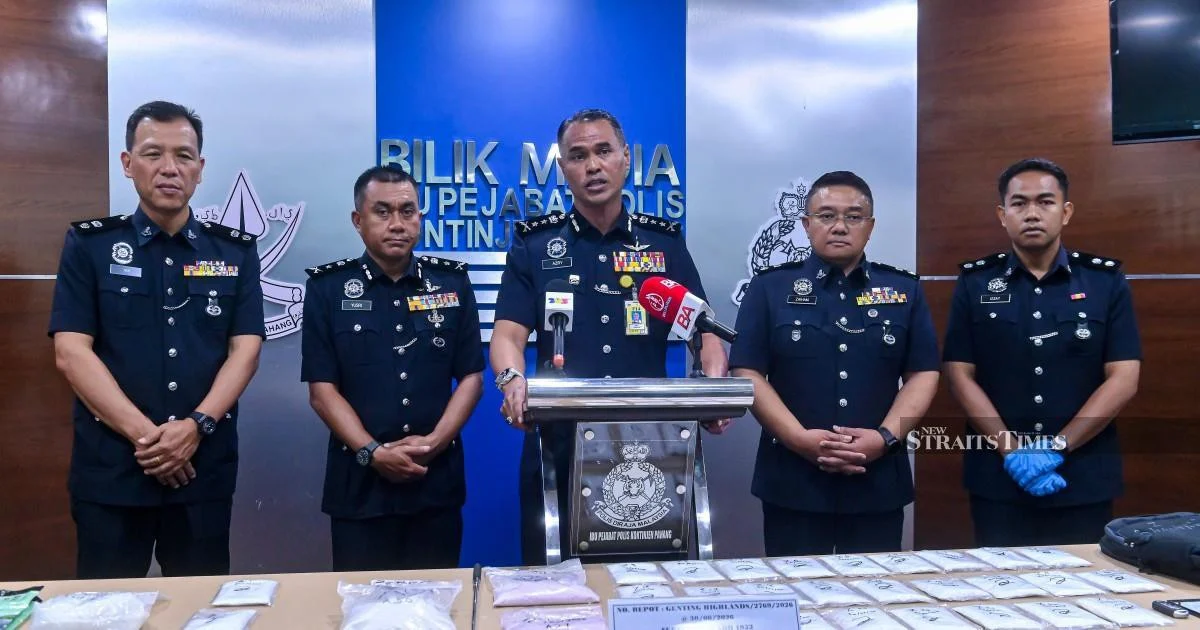
Police in Pahang have concluded a significant three-day anti-drug enforcement operation that demonstrated the state's commitment to tackling the persistent narcotics problem plaguing communities. Operation Hawk, which swept across all 11 districts in the state, resulted in the arrest of 333 suspects and the confiscation of contraband and assets exceeding half a million ringgit in value.
The coordinated campaign reflects the severity of drug-related challenges in Pahang, one of Malaysia's largest states by land area and home to numerous communities spanning urban centres and rural localities. By targeting known drug hotspots systematically across the entire state rather than concentrating enforcement efforts on isolated areas, authorities sought to disrupt trafficking networks and interrupt the supply chains that fuel local addiction and petty crime. The breadth of the operation underscores recognition that organised drug distribution operates across multiple jurisdictions within Pahang, requiring a comprehensive rather than piecemeal response.
The seizures encompassing narcotics, cash proceeds and vehicles represent the tangible disruption of criminal assets accumulated through the drug trade. The inclusion of vehicles in the confiscation haul is particularly significant, as traffickers routinely use motor vehicles to transport contraband across state lines and between urban and rural distribution points. By removing these logistics assets from circulation, enforcement agencies impede the operational capacity of organised trafficking groups, forcing them to rebuild infrastructure and incur additional costs to resume operations.
The arrest tally of 333 individuals spans the range of drug-related offences, from street-level users to mid-tier distributors. This broad sweep approach differs from targeting only major dealers, reflecting a public health dimension alongside law enforcement. The inclusion of possession and smaller-scale dealing arrests suggests police sought to interrupt the entire drug consumption chain, from production and wholesale distribution down to retail availability on neighbourhood streets. For Malaysia's broader drug control strategy, such comprehensive sweeps generate data on consumption patterns and supply routes that inform longer-term policy adjustments.
Pahang's vulnerability to drug trafficking stems partly from its geography and demographics. The state's vast forested interior, porous borders with Terengganu and Kelantan, and significant migrant worker populations create conditions favourable to illicit narcotics distribution. Methamphetamine in crystalline form remains the dominant drug of abuse across much of East Coast Malaysia, though heroin and synthetic drugs also circulate. The state's mix of established urban centres like Kuantan alongside smaller towns and rural villages means drug enforcement must adapt strategies to vastly different operational environments.
The RM500,000 valuation of seized assets likely reflects street-level rather than wholesale values, a methodological choice that inflates the apparent impact of enforcement actions in public reporting. Nevertheless, the actual disruption to drug markets remains meaningful. Each kilogramme of narcotics removed from circulation represents reduced availability at street level, and the financial losses imposed on traffickers through asset confiscation create genuine operational friction. For major trafficking syndicates operating across multiple states, losing vehicles, cash reserves and accumulated inventory across a single operation represents a setback requiring time and resources to overcome.
The timing and geographical scale of Operation Hawk suggests coordination between state and federal law enforcement agencies. Drug enforcement in Malaysia typically involves collaboration between the Royal Malaysia Police's Narcotics Criminal Investigation Department, the national police's anti-drug task forces, and state contingents. Such operations require intelligence gathering, coordination across jurisdictional boundaries, and deployment of sufficient personnel to execute simultaneous raids and checkpoints across dispersed locations. The ability to conduct comprehensive sweeps indicates intelligence work had identified key distribution points and trafficking nodes requiring intervention.
For Pahang residents, particularly those in communities plagued by visible drug activity and associated crime, such operations provide tangible evidence that authorities acknowledge and actively address the narcotics crisis. The public visibility of enforcement efforts helps sustain political support for drug control programmes, particularly in rural constituencies where drug-related social decay has eroded community cohesion. However, law enforcement recognises that arrest-and-seizure operations represent only one dimension of comprehensive drug control, which also demands rehabilitation services, prevention education and socioeconomic interventions addressing root causes of addiction.
The significance of Operation Hawk extends beyond Pahang itself. Drug trafficking networks in Malaysia operate as fluid, adaptive enterprises spanning state boundaries and international borders. Successful enforcement in Pahang disrupts regional supply chains and increases distribution costs, potentially affecting narcotics availability and street prices across the East Coast. By generating intelligence on trafficking methods, storage locations and distribution networks uncovered during the operation, Pahang police contribute to nationwide understanding of how organised syndicates operate and can share tactical lessons with enforcement agencies in other states.
Looking forward, the challenges facing drug enforcement in Pahang remain formidable. The state's geography, economic disparities, and position on trafficking routes between producer regions and major consumer markets ensure continuing pressure on law enforcement. Sustained enforcement operations like Operation Hawk require adequate resourcing, intelligence capabilities, and coordination mechanisms. Complementary demand reduction initiatives including treatment accessibility, community prevention programmes, and employment opportunities for at-risk populations will prove essential for achieving lasting improvements in drug-related public health and security outcomes across the state.

